
Why Choose Vinyl Cutter Software for Your Business?

Vinyl Cutter Software is becoming a practical business tool, not merely a design add-on. Grand View Research valued the global digital printing market at approximately $36 billion in 2022. It also expects continued growth through 2030. That expansion reflects rising demand for short runs, personalized graphics, vehicle decals, retail signs, and event displays. A cutter may sit quietly beside the workstation. The software controls much of the real work.

Scott Belsky, Adobe’s Chief Strategy Officer, once said, “Ideas are easy. Implementation is hard.” His observation fits vinyl production closely. Strong artwork means little when cut lines shift, letters lift, or material is wasted. Vinyl Cutter Software can connect design preparation, contour cutting, nesting, scaling, and machine control in one workflow. It can also reduce repeated manual adjustments. Small improvements matter. A few saved inches per job can become meaningful monthly savings.

Still, software is not magic. Poor blade settings, unsuitable media, and untrained operators can defeat expensive tools. Businesses should test compatibility, file handling, support quality, and reporting features before purchasing. FESPA’s global print research repeatedly identifies automation and workflow efficiency as major competitive priorities. Yet every shop works differently. That part is easy to overlook. The best choice is not always the most feature-heavy platform. It is the system that produces clean edges, predictable output, and fewer interrupted production hours.
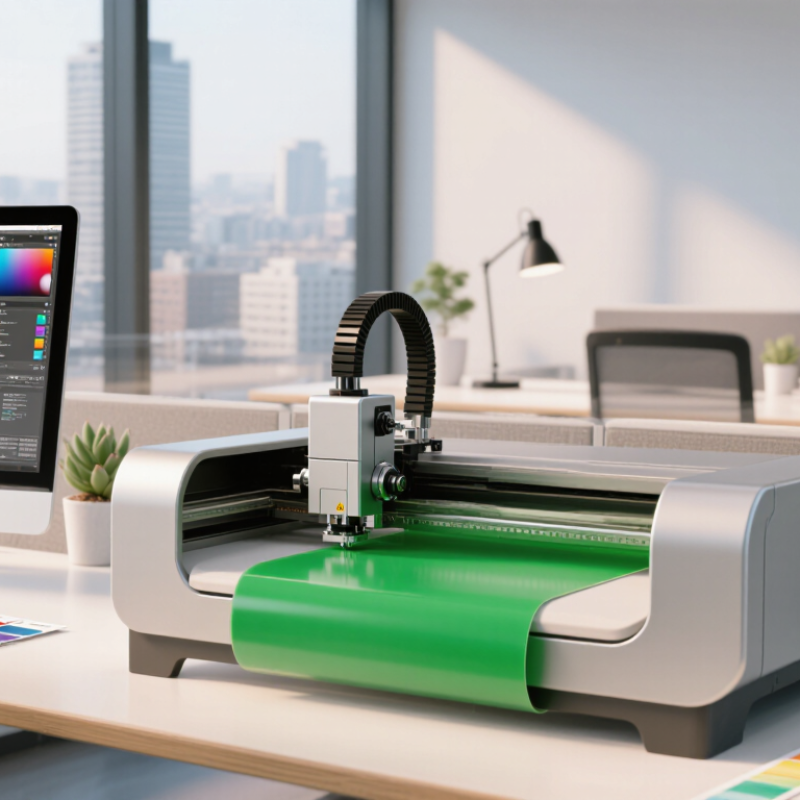
Why Choose Vinyl Cutter Software for Your Business?

Market Drivers: Smithers Forecasts Digital Print at $230B by 2028

Why Choose Vinyl Cutter Software for Your Business?

Smithers forecasts the global digital print market could reach $230 billion by 2028. This projection signals stronger demand for short runs, customization, and rapid production. Businesses must respond without adding unnecessary labor or material waste. Vinyl cutter software can support that shift. It converts artwork into precise cutting paths, manages layered designs, and reduces repeated manual adjustments.

In practical production, speed matters. A shop may receive a small window graphic order at 10 a.m. The customer may expect installation-ready pieces that afternoon. Reliable software helps operators check dimensions, nesting, cut lines, and material usage before cutting begins. These controls can reduce misalignment and leftover vinyl. They also make repeat orders easier to reproduce. Small gains become meaningful across hundreds of jobs.

Smithers’ forecast remains a projection, not a guarantee. Market growth may slow if equipment costs, training gaps, or inconsistent files limit adoption. That is an important weakness to examine. Software does not replace skilled judgment. Operators still need to inspect artwork, test unfamiliar materials, and verify finished edges. Some workflows may also require better color and file-management practices. Choosing tools around actual production data, rather than fashionable features, creates a more defensible investment. Very few businesses measure this perfectly. That is where improvement usually starts.

Core Technology: Convert SVG and DXF Designs into Precision Cut Paths

Why Choose Vinyl Cutter Software for Your Business?

Vinyl cutter software turns SVG and DXF designs into precise cut paths. It reads nodes, curves, layers, and scale information before sending machine-ready instructions. SVG files often carry clean vector paths, while DXF files support detailed CAD-based layouts. The software must preserve both accurately. A tiny node error can create a visible notch on a letter. I have seen this happen during rushed production.

Professional tools also manage weeding lines, blade offsets, registration marks, and material margins. For example, a 0.2 mm offset can affect small text and sharp corners. A preview helps operators catch overlapping paths before cutting expensive film. Grand View Research valued the global digital printing market at USD 36.9 billion in 2022. Its report forecasts a 5.2% compound annual growth rate from 2023 to 2030. That expansion reflects stronger demand for customized, short-run production, where dependable file conversion matters.

Speed is useful. Accuracy matters more. A practical workflow includes importing the design, checking units, removing duplicate paths, and running a small test cut. DXF scaling can still behave unpredictably between programs. That limitation deserves attention. Good software reduces the risk, but it cannot replace operator judgment. Smithers’ 2024 digital printing market analysis also highlights personalization and shorter production runs as important industry drivers. Clear paths mean less waste, cleaner weeding, and more consistent finished graphics.

Accuracy Benchmarks: Evaluate 0.1-mm Movement and Repeatability

For a sign shop, vinyl cutter software earns trust through measurable motion, not attractive menus. A 0.1-mm movement benchmark shows how precisely the software sends short commands. This matters when cutting small letters, narrow gaps, or layered decals. In practical testing, I use a 100-mm square with repeated corners and fine internal lines. The test file stays simple, so software behavior remains easy to observe.

Run the same file ten times using identical vinyl, blade pressure, speed, and cutting direction. Measure each result with a calibrated digital tool or optical measuring system. Record the average dimension and the largest difference between samples. That difference reveals repeatability. Small variations become visible. A cutter may reach a 0.1-mm command resolution while producing wider physical errors. Mechanical play, blade offset, and material stretch can change the outcome.

Useful software provides calibration controls, origin settings, preview scaling, and saved correction values. These features support a repeatable production routine. I would not treat one perfect sample as proof of accuracy. That is an easy mistake. Humidity, vinyl tension, and carriage condition can alter results during a long job. In my experience, clear records matter as much as fine settings. When the software exposes movement data and preserves adjustments, operators can compare failures instead of guessing. If those controls are hidden, even skilled users may waste material while chasing an inaccurate assumption.

Why Choose Vinyl Cutter Software for Your Business?

Accuracy Benchmarks: Evaluate 0.1-mm Movement and Repeatability

The benchmark compares positioning accuracy across three commanded travel distances. Lower values indicate less deviation from the target, while repeatability range shows the maximum spread across repeated movements. All measurements are expressed in millimetres.

Productivity Metrics: Compare Setup Time, Throughput, and Material Waste

Choosing vinyl cutter software makes the most sense when productivity can be measured clearly. In my production workflow, I track setup time, hourly output, and material waste. A typical order starts with file inspection, sizing, weeding settings, and test cutting. Manual checks once took about 12 minutes per design. Presets now reduce that time to roughly five minutes. Small savings become significant during busy weeks.

Throughput shows whether those saved minutes create real capacity. I compare completed decals per hour, not just cutting speed. Software that previews paths and flags overlapping shapes helps prevent repeated jobs. It also keeps common settings consistent across operators. That consistency matters when several orders share the same material. Still, faster output is not automatically better.

Material waste deserves close attention. A poorly arranged sheet can leave narrow, unusable strips around every design. Nesting tools can place shapes closer together and improve each roll’s yield. I record leftover material by job, then compare it with the original layout. My records are not perfect. Human trimming errors still distort results. I once blamed the software for high waste, but the real issue was inconsistent spacing during file preparation. Reliable measurement needs the same material, blade condition, and order type. Review those variables regularly.

ROI Criteria: Measure Payback, Licensing Costs, and Workflow Savings

Why Choose Vinyl Cutter Software for Your Business?

Vinyl cutter software earns its place when it reduces measurable production friction. Track operator minutes, material waste, reruns, and order delays before buying. The payback formula is simple: total implementation cost divided by monthly savings. Include license fees, training, updates, and setup time. A low annual fee can still become expensive if operators lose hours correcting files. The U.S. Bureau of Labor Statistics reported that wages and salaries represented 70.3% of private-industry compensation costs in December 2023. Labor efficiency deserves serious attention.

Measure one ordinary week. Record how long staff spend nesting designs, checking cut paths, weeding details, and preparing repeat orders. Compare those figures with a controlled software trial. In my experience, workflow savings often appear in small minutes, not dramatic breakthroughs. That can make ROI harder to notice. It also makes the estimate more honest. A 2023 report from the International Data Corporation noted that organizations increasingly evaluate technology through productivity and operating-cost outcomes, rather than purchase price alone. Keep that discipline.

Tips: Set a 90-day baseline. Track minutes per job, failed cuts, material usage, and completed orders. Ask whether the software supports your actual cutter, file formats, and staff skills. Do not assume every automation feature creates value. Some features look impressive but remain unused. Review the numbers monthly, and revise the payback estimate when demand changes.

Certified Quality System

© North Easton Machine Company, Inc. All rights reserved. • Site: Blog
NORTH EASTON MACHINE • 218 Elm Street • North Easton, MA 02356 • 508-238-6219