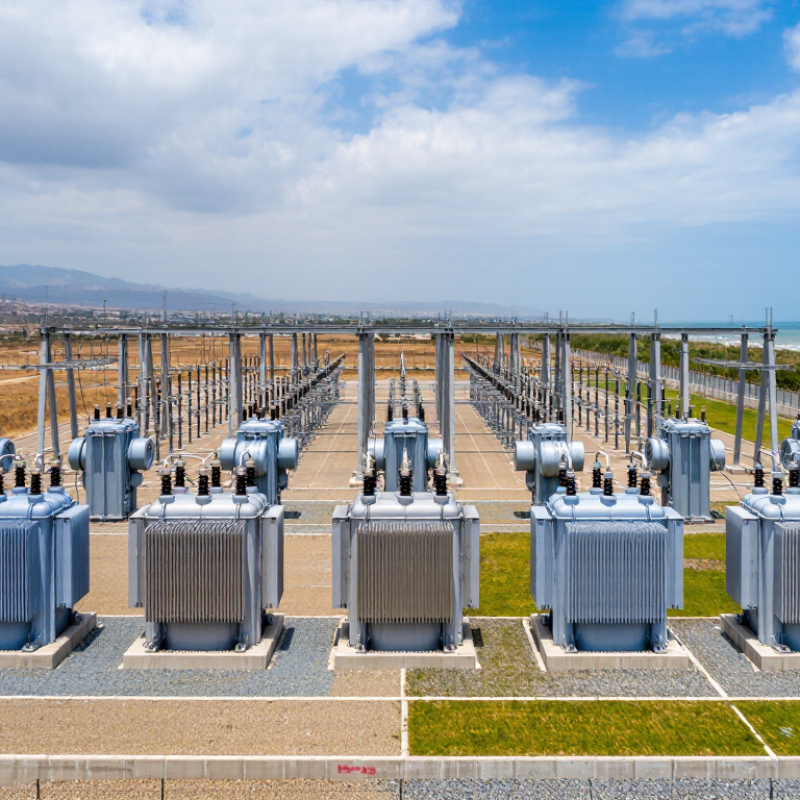
10 Best Substation Transformers for Global Buyers?
Choosing among the 10 Best Substation Transformers for Global Buyers requires more than comparing nameplate ratings. Substation Transformers must match the network’s voltage, fault level, load profile, and operating environment. A 40 MVA transformer in a dry inland substation faces different demands from one beside a humid coastline. Salt spray, dust, altitude, and daily temperature changes can affect insulation and cooling performance. Small details matter. A loose specification can become an expensive field problem.
This guide evaluates leading transformer options through practical engineering criteria, including efficiency, thermal performance, insulation strength, tap-changer design, noise control, and maintenance access. It also considers manufacturing experience, test documentation, warranty support, and the availability of replacement parts. Buyers should review routine and type-test records, not rely only on marketing claims. IEC or IEEE alignment is valuable, but local grid codes and utility practices still require careful confirmation. A technically strong transformer may perform poorly if transport limits, foundation loads, or site clearances were overlooked.
Real projects rarely fit a perfect ranking. That is worth admitting. The best choice may depend on lifecycle cost rather than the lowest purchase price. An oil-immersed unit could suit a high-capacity outdoor yard, while a dry-type transformer may better serve an urban indoor installation. Procurement teams should compare guaranteed losses, cooling stages, service response, and expected outage risks. The following selection offers a balanced starting point for global buyers, while leaving room for project-specific engineering review. Reliability begins with honest questions.
Substation Transformer Basics: Ratings from 10 to 1,000 MVA and 11–765 kV
Substation transformers commonly span 10 to 1,000 MVA and 11 to 765 kV. These figures describe scale, not quality. A 20 MVA, 33 kV unit may serve a regional industrial load, while a 500 MVA, 400 kV transformer supports bulk transmission. Extra capacity is not automatically better. It can increase transport difficulty, losses, and project cost.
IEC 60076 provides the core framework for transformer ratings, tests, insulation, and performance. IEEE C57.12.00 adds widely used requirements for liquid-immersed units. Buyers should check voltage ratio, impedance, tap range, cooling method, frequency, and short-circuit withstand. On a 220 kV transformer, even small insulation errors can create severe operating risks. Oil quality matters too. Moisture, dissolved gas, and ageing particles should be monitored during service.
The IEA Electricity 2024 report expects global electricity demand to grow by an average 3.2% annually from 2024 to 2026. That growth increases pressure on substations, renewable connections, and cross-border grids. CIGRE Technical Brochure 642 also stresses condition assessment and failure prevention. Field experience shows that delivery planning deserves equal attention. A 1,000 MVA transformer may require special roads, bridge surveys, and controlled lifting. A neat spreadsheet can still mislead. The “best” unit depends on load growth, fault levels, ambient temperature, grid code, and maintenance skills. I would challenge any specification that lists MVA and kV but ignores transport, testing, and emergency replacement time.
Substation Transformer Rating Reference
The chart shows representative substation transformer capacity classes from 10 to 1,000 MVA and commonly encountered nominal voltage levels from 11 to 765 kV. The pairings are reference examples rather than a universal design rule; actual specifications depend on grid standards, load demand, fault levels, insulation requirements, cooling method, and system planning.
Global Selection Criteria: IEC 60076, IEEE C57, Efficiency, and Loss Data
10 Best Substation Transformers for Global Buyers?
Selecting a substation transformer starts with compliance, not catalog rankings. IEC 60076 defines core requirements for power transformers, including insulation, temperature rise, and routine testing. IEEE C57.12.00 provides comparable general requirements for North American projects. Buyers should confirm voltage, frequency, tap range, short-circuit impedance, cooling method, and altitude correction. A transformer rated for 50 Hz may not suit a 60 Hz network without a verified design review.
Loss data deserves closer attention. Request guaranteed no-load loss and load loss at the contractual temperature, not only a headline efficiency figure. The U.S. Department of Energy estimates that distribution transformers consume about 60 billion kWh annually in the United States, showing why small percentage differences matter. IEA grid investment reports also show rapidly rising global spending on network infrastructure, increasing pressure to control lifecycle costs. Yet comparisons can be imperfect. Test temperatures, tolerances, and loading assumptions often differ between suppliers.
Tips: Build a loss-capitalization model using the real 24-hour load curve. Check IEC 60076-10 sound levels and IEEE C57.12.90 test methods. Ask for certified test reports, partial-discharge results, oil data, and temperature-rise records. A heavier core may reduce no-load losses, but it can increase transport weight and installation cost. Do not select the lowest bid too quickly. Your operating profile may prove otherwise.
Top 10 Transformer Types by Cooling, Insulation, Voltage, and Application
Global buyers should compare transformer types by operating conditions, not catalog labels. The IEA’s Electricity 2024 report forecasts average global electricity-demand growth of 3.2% from 2024 to 2026. That growth increases pressure on substations, especially in renewable-energy corridors and industrial zones.
Oil-immersed transformers remain practical for high-capacity substations because mineral oil removes heat efficiently. ONAN cooling suits moderate loads, while ONAF adds fans for heavier duty. Dry-type cast-resin transformers offer cleaner indoor operation and lower fire risk. Air natural cooling is simple, but heat dissipation becomes limited in compact rooms. For insulation, mineral oil, ester fluid, cast resin, and air each require different clearances, maintenance plans, and fire controls. Natural ester fluid can support safer indoor designs, though procurement costs and local availability need review.
Voltage selection divides the field further. Step-up units connect generators to transmission networks. Step-down units serve factories, buildings, and distribution feeders. Autotransformers can reduce material use between closely related voltages, but they provide less electrical separation. Traction, furnace, rectifier, grounding, and renewable-collection transformers address specialized applications. CIGRE guidance stresses condition monitoring, including oil analysis, temperature trends, and bushing inspection. U.S. Department of Energy supply-chain assessments also highlight long transformer lead times. A technically suitable unit may still arrive too late. I have seen projects over-focus on efficiency and overlook transport limits, spare parts, or local grid codes. That is an expensive blind spot.
Comparing Reliability: Load Loss, No-Load Loss, Impedance, and Life Expectancy
When comparing the 10 best substation transformers for global buyers, start with measured losses, not brochure language. Load loss shows how much energy disappears through windings under operation. No-load loss continues while the transformer is energized, even without customers connected. Small losses matter. A unit with slightly higher purchase cost may reduce operating waste across decades.
Impedance deserves equal attention. It affects fault current, voltage regulation, and coordination with protection equipment. A higher value can limit fault stress, but may also create greater voltage drop during heavy demand. Site engineers should compare test results at the specified tap position, temperature, and frequency. Numbers need context. I have seen promising specifications become less impressive after installation because cooling airflow, harmonics, and uneven loading were ignored.
Life expectancy depends on insulation temperature, moisture control, maintenance access, and daily load cycles. Conservative designs usually tolerate overloads better, yet “long life” is never guaranteed. A transformer operating beside dusty roads or coastal air needs stronger environmental protection than one inside a clean station. Field records, factory testing, thermal calculations, and service documentation offer better evidence than claims alone. Still, even careful evaluations can miss unusual grid behavior. That is where monitoring matters: winding temperature, dissolved gas trends, partial discharge, and loading history can reveal deterioration before an outage. A dependable choice balances low losses with manageable impedance and realistic maintenance conditions.
Global Buyer Checklist: Grid Codes, Factory Tests, Warranty, and Total Cost of Ownership
10 Best Substation Transformers for Global Buyers?
Choosing among the 10 best substation transformers requires more than comparing rated power. Confirm the destination grid code before requesting quotations. Check voltage class, frequency, insulation levels, noise limits, and short-circuit withstand requirements. A transformer that performs well in one country may fail another utility’s approval process. Ask for verified design calculations, reference projects, and production records. Experience matters here.
Factory tests should include winding resistance, ratio measurement, insulation tests, losses, temperature rise, and impulse testing when specified. Request calibrated equipment records and signed test reports. Witness testing can reveal small issues before shipment. It costs time. It can save months. The warranty should define coverage, response times, spare parts, and site-service responsibilities. Vague wording creates expensive arguments later. I have seen buyers focus on purchase price and underestimate transport, oil treatment, installation, maintenance, and outage costs.
Tips: Build a five-year total cost model. Include energy losses, inspections, oil sampling, cooling-fan replacement, insurance, and disposal. Compare guaranteed losses, not optimistic estimates. Ask how performance is measured at site. Also check delivery packaging, lifting points, and local technician availability. A lower-cost unit may require special cranes or imported parts. That detail is easy to miss. Leave room for uncertainty, because operating conditions rarely match the spreadsheet perfectly.
10 Best Substation Transformers for Global Buyers? - Global Buyer Checklist: Grid Codes, Factory Tests, Warranty, and Total Cost of Ownership
| No. | Recommended Transformer Configuration | Typical Best-Fit Application | Typical Rating Range | Typical Voltage Class | Cooling and Insulation | Grid-Code and Design Checks | Factory Acceptance Test Checklist | Typical Warranty Benchmark | Total Cost of Ownership Priorities |
|---|---|---|---|---|---|---|---|---|---|
| 1 | Mineral-Oil Distribution Transformer | Urban and rural medium-voltage substations, commercial feeders, and industrial distribution networks. | 100 kVA–5 MVA | 6.6–36 kV / 0.4–11 kV | ONAN; sealed-tank or conservator design; cellulose paper insulation in mineral oil. | Utility earthing method, insulation coordination, tap range, short-circuit withstand, ambient temperature, altitude, and local fire regulations. | Winding resistance, voltage ratio and phase displacement, no-load loss and current, load loss and impedance, applied-voltage test, induced-voltage test, leak and pressure checks. | Commonly 24 months after commissioning or 30 months after shipment, subject to contract terms. | Low purchase cost; prioritize low no-load losses, serviceable bushings, oil-quality monitoring, corrosion protection, and accessible spare parts. |
| 2 | Low-Loss Amorphous-Core Distribution Transformer | Projects with lightly loaded transformers, long operating hours, or regulated energy-efficiency targets. | 50 kVA–2.5 MVA | 6.6–24 kV / 0.4–11 kV | ONAN; oil-immersed; amorphous-metal core designed to reduce no-load loss. | Applicable minimum-efficiency rules, utility loss-capitalization method, harmonic loading, voltage regulation, and metering requirements. | Routine electrical tests plus verified no-load loss, load loss, impedance, temperature-rise test where specified, sound-level test, and dielectric tests. | Usually 24 months after commissioning or as negotiated with an extended-life option. | Higher initial price can be offset by lower core losses over 20–30 years; calculate savings using the actual load profile and local electricity tariff. |
| 3 | Large Utility Power Transformer | Transmission substations, grid interconnections, and high-capacity generation or load centers. | 20–1,000 MVA | 66–550 kV and above, depending on system design | ONAN/ONAF/OFAF; conservator or sealed system; on-load tap changer commonly used for voltage control. | System fault level, neutral insulation, lightning and switching impulse levels, tap-changer duty, parallel operation, transport limits, and utility protection philosophy. | Ratio and vector group, winding resistance, impedance and load loss, no-load loss, applied and induced voltage, lightning impulse, temperature rise, sound level, partial discharge, oil tests, and OLTC functional tests where applicable. | Commonly 24 months after commissioning, with negotiated extensions for major components and accessories. | Transport and outage risk are major cost drivers; evaluate efficiency, redundancy, online monitoring, oil containment, spare-part strategy, and repair lead time. |
| 4 | Renewable-Energy Collector Transformer | Solar parks, wind farms, battery-energy-storage plants, and medium-voltage collector systems. | 1.6–10 MVA per unit | 0.69–1.5 kV / 10–36 kV | Oil-immersed ONAN or KNAN; compact skid-mounted design; optional ester fluid for enhanced fire and environmental performance. | Converter harmonics, rapid load variation, bidirectional power flow, reactive-power operation, energization inrush, grounding, protection coordination, and plant-level voltage-control requirements. | Routine transformer tests, impedance and losses, temperature rise, harmonic or non-sinusoidal load assessment where specified, sound level, dielectric tests, pressure or leak test, and accessory functional tests. | Typically 24–60 months for renewable projects, often linked to commissioning and availability obligations. | Focus on efficiency under the project load profile, inverter compatibility, corrosion protection, cooling reliability, spare units, and the cost of production losses during failure. |
| 5 | Generator Step-Up Transformer | Thermal, hydro, wind, solar, and other generation plants connecting generators to the transmission or sub-transmission grid. | 10–800 MVA | 6.6–27 kV / 66–550 kV | ONAN/ONAF/OFAF; oil-immersed; fixed ratio or tap changer according to generator and grid requirements. | Generator terminal voltage, neutral grounding, transient recovery, over-fluxing, harmonics, system fault current, insulation coordination, and synchronization requirements. | Ratio, winding resistance, load and no-load losses, impedance, applied and induced voltage, lightning impulse, partial discharge, temperature rise, sound level, oil quality, and protection/accessory checks. | Normally 24 months after commissioning, with performance guarantees and optional extended service agreements. | Capital cost is less important than availability; assess efficiency, bushing and OLTC reliability, online dissolved-gas monitoring, fire protection, and emergency repair capability. |
| 6 | Dry-Type Cast-Resin Transformer | Indoor substations, high-rise buildings, tunnels, hospitals, data centers, and locations with strict fire or oil-containment restrictions. | 100 kVA–20 MVA | 3.3–36 kV / 0.4–11 kV | AN or AF; cast-resin solid insulation; no liquid oil, with optional forced-air cooling. | Indoor ventilation, fire classification, acoustic limits, humidity and condensation, partial discharge, harmonic heating, enclosure IP rating, and seismic requirements. | Winding resistance, ratio and phase displacement, no-load and load losses, impedance, applied and induced voltage, partial discharge, temperature rise, sound level, and enclosure or accessory checks. | Commonly 24 months after commissioning; longer coverage may apply to monitoring and cooling systems. | Higher purchase cost may be balanced by reduced fire protection, oil handling, and room-containment costs; include ventilation energy and cleaning requirements. |
| 7 | Ester-Fluid Environmental Transformer | Urban substations, environmentally sensitive sites, indoor or semi-indoor installations, and areas with high fire-safety requirements. | 250 kVA–40 MVA | 6.6–66 kV / 0.4–36 kV | ONAN or ONAF; natural or synthetic ester fluid; sealed-tank or conservator arrangement. | Fluid approval, biodegradability or fire-point requirements, temperature-rise limits, compatibility of seals and materials, environmental permits, and local utility acceptance. | Standard routine tests, fluid breakdown voltage and moisture tests, leak and pressure tests, temperature rise, dielectric tests, and verification of fluid and accessory compatibility. | Usually 24 months after commissioning, with fluid-quality obligations defined in the maintenance plan. | Higher fluid and equipment cost may reduce fire-protection, spill-remediation, and environmental-liability costs; confirm fluid replacement and disposal procedures. |
| 8 | Phase-Shifting Transformer | Interconnectors, congested transmission corridors, loop networks, and systems requiring controlled active-power flow. | 50–1,000 MVA | 66–550 kV | Oil-immersed; two-core or multi-core phase-shifting arrangement; on-load tap changer for phase-angle control. | Permitted phase-angle range, circulating current, system stability, fault withstand, OLTC duty, protection interlocking, harmonic performance, and transmission-operator control interfaces. | Routine transformer tests plus phase-angle verification, ratio and impedance by tap position, OLTC operation, temperature rise, short-circuit withstand where specified, impulse tests, partial discharge, and control-system tests. | Commonly 24 months after commissioning, with extended OLTC and control-system support negotiated separately. | High engineering and commissioning cost; evaluate avoided congestion costs, auxiliary power, OLTC maintenance, spare modules, and outage consequences. |
| 9 | Mobile Emergency Substation Transformer | Disaster recovery, temporary grid reinforcement, planned outage support, remote projects, and rapid replacement service. | 5–100 MVA | 33–245 kV, depending on platform and project | Oil-immersed; transportable tank or trailer-mounted package; plug-and-play accessories and compact radiators. | Road and rail transport limits, lifting points, temporary grounding, connection interfaces, protection settings, climate conditions, rapid energization procedures, and local operating permits. | Routine electrical tests, transport vibration or securing inspection, leak and pressure checks, ratio and impedance, dielectric tests, accessory function tests, and site re-commissioning tests. | Often 12–24 months after commissioning, with separate rental, refurbishment, or emergency-response terms. | Evaluate availability value rather than purchase price alone; include transport, deployment time, storage, inspection, spare cables, connectors, and operator training. |
| 10 | Traction and Industrial Rectifier Transformer | Railway traction substations, electrolysis, steel, mining, data-intensive industry, and other rectifier or high-harmonic loads. | 1–100 MVA | 6.6–132 kV / 0.4–36 kV DC-side arrangements | Oil-immersed or dry-type; multi-winding, phase-shifting, or rectifier-duty design with enhanced harmonic capability. | Rectifier pulse number, harmonic current, DC bias, cyclic overload, voltage unbalance, stray-flux heating, insulation coordination, grounding, and railway or industrial authority requirements. | Ratio and phase displacement for all windings, losses, impedance, temperature rise under specified duty, dielectric tests, partial discharge where applicable, harmonic-load verification, sound level, and accessory tests. | Typically 24 months after commissioning, with duty-cycle and overload conditions explicitly stated in the contract. | Select for the real duty cycle, not only nameplate MVA; assess harmonic losses, cooling energy, vibration, maintenance access, rectifier compatibility, and downtime cost. |

Buyer note: Ratings, voltage classes, losses, test scope, warranty periods, and applicable grid requirements are indicative industry benchmarks. Final values should be confirmed against the purchasing utility’s technical specification, the project load-flow and short-circuit studies, and the applicable edition of IEC 60076, IEEE C57 standards, or the governing national standards.
Article Source:
NORTH EASTON MACHINE • 218 Elm Street • North Easton, MA 02356 • 508-238-6219