Top 10 Occupancy Sensors for Smart Building Automation?
Occupancy Sensors are essential in smart building automation. These devices detect the presence of people in a space. According to a report by ResearchAndMarkets, the occupancy sensor market is expected to reach $1.5 billion by 2025. This growth highlights their role in energy efficiency and intelligent systems.
Smart buildings utilize these sensors to adjust lighting and HVAC systems. A study from the U.S. Department of Energy indicates that occupancy sensors can reduce energy costs by 30%. However, the effectiveness of these sensors depends on proper installation and calibration. Misconfigurations may lead to discomfort or wasted energy.
Occupancy Sensors contribute to sustainability goals. They help reduce the carbon footprint of buildings. Yet, it's crucial to recognize potential challenges. Factors like sensor placement and environmental conditions can impact performance. Ensuring reliable operations requires ongoing assessment and adaptation.
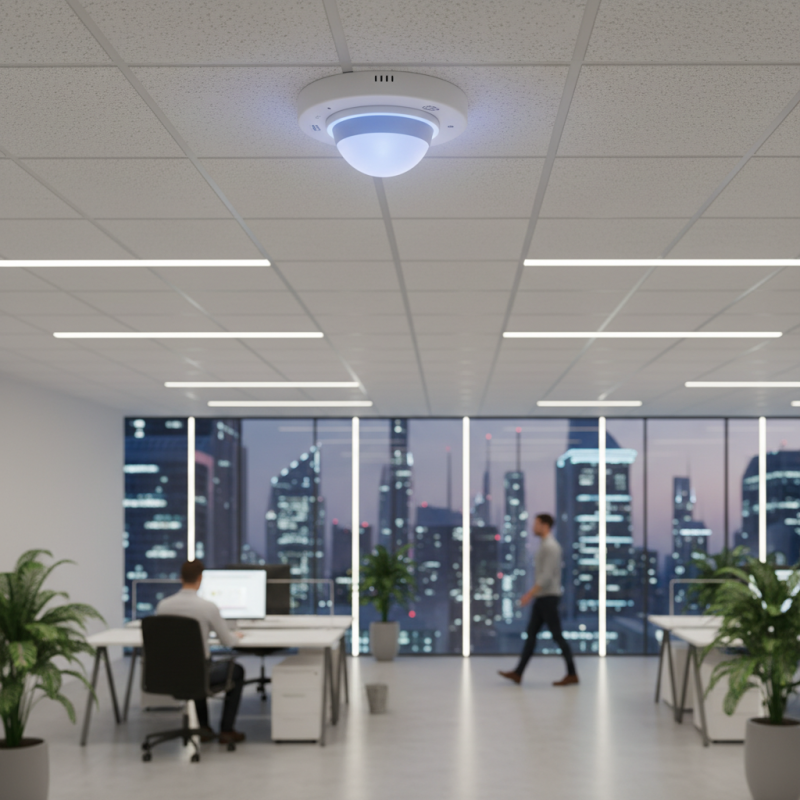
Overview of Occupancy Sensors in Smart Building Automation
Occupancy sensors play a crucial role in smart building automation. These devices detect human presence to optimize energy usage. They can adjust lighting and HVAC systems based on occupancy patterns. This technology not only improves comfort but also reduces energy costs.
In a busy office, occupancy sensors can switch off lights in unused rooms. They can track foot traffic in real time. This data aids in effective space management. However, reliance on these sensors can sometimes lead to inefficiencies, especially if they misinterpret movement. Regular calibration is essential to maintain their effectiveness.
Implementing occupancy sensors requires careful planning. Incorrect placement can result in blind spots. Users may feel uncomfortable if sensors are too sensitive. It's vital to balance responsiveness with user privacy. Ultimately, integrating these technologies enhances building operations, but it's important to assess performance regularly.
Key Features to Consider When Choosing Occupancy Sensors
Selecting the right occupancy sensor is crucial for efficient building automation. There are several key features to consider. One primary aspect is the sensor type. Passive Infrared (PIR) sensors detect heat emitted by people. Ultrasonic sensors, on the other hand, use sound waves. Each type has its advantages and disadvantages, depending on your specific needs.
Another essential consideration is the coverage area. Some sensors cover small spaces effectively, while others can manage large areas. It is vital to assess the layout of your building to determine optimal placement. Additionally, sensitivity settings are important. A sensor too sensitive may trigger unnecessary alerts. Conversely, one that's not sensitive enough may fail to detect occupancy.
Moreover, connectivity options should not be overlooked. Wireless sensors can integrate seamlessly into smart buildings, but they rely on stable networks. Battery life is another critical factor. A sensor that frequently needs recharging can lead to inconsistent performance. Ultimately, weighing these features can help you make an informed choice. Each option has trade-offs, and careful consideration is necessary. These small details can significantly impact energy efficiency and user experience.
Top 10 Occupancy Sensor Models for Smart Building Applications
In modern smart buildings, occupancy sensors play a vital role in energy efficiency and automation. These devices detect the presence of individuals in a space and adjust lighting, heating, and cooling systems accordingly. The top models vary in technology, from passive infrared to ultrasonic sensors, catering to different environments and needs.
When choosing an occupancy sensor, consider the layout and size of your space. Some sensors work best in open areas, while others are more effective in small rooms. Be cautious about sensor placement. If too high, they may miss activity. If too low, they may trigger false readings.
Tips: Always test different models before permanent installation. Small changes can significantly impact performance. Regular maintenance ensures accuracy. Understand that no single model fits all scenarios. Smart building automation is about finding the right balance for your specific environment. Experiment and adjust to maximize effectiveness.
Comparative Analysis of Occupancy Sensors Based on Performance
Occupancy sensors play a critical role in smart building automation. They help optimize energy use and enhance occupant comfort. According to a recent industry report, buildings equipped with occupancy sensors can reduce energy consumption by up to 30%. Such data highlights the significance of these technologies in achieving sustainability goals.
When analyzing occupancy sensors, various performance metrics come into play. Detection range, accuracy, and response time are essential. Studies show that sensors with a detection range of more than 30 feet significantly outperform others in larger spaces. However, some sensors struggle with false positives, triggering lights unnecessarily. This issue affects energy savings and user experience.
Moreover, sensor types, whether passive infrared or ultrasonic, have their strengths and weaknesses. Passive infrared sensors excel in small to medium spaces. Ultrasonic sensors, however, offer better coverage in complex environments. Yet, both types require careful calibration to avoid inefficiencies. An ideal occupancy sensor should balance performance, reliability, and user adaptability.
Top 10 Occupancy Sensors for Smart Building Automation
| Sensor Type | Detection Range (ft) | Power Source | Response Time (s) | Connectivity | Price ($) |
| PIR Sensor | 30 | Battery | 0.5 | Wired | 15 |
| Ultrasonic Sensor | 40 | AC Power | 0.3 | Wireless | 25 |
| Dual Technology Sensor | 35 | Battery | 0.4 | Wired | 30 |
| Photoelectric Sensor | 25 | AC Power | 0.6 | Wireless | 20 |
| Microwave Sensor | 50 | Battery | 0.2 | Wired | 35 |
| Infrared Sensor | 20 | Battery | 0.7 | Wired | 18 |
| Smart Sensor | 45 | AC Power | 0.3 | Wireless | 40 |
| Smartphone-Controlled Sensor | 30 | Battery | 0.4 | Wireless | 28 |
| Wall-Mounted Sensor | 28 | AC Power | 0.5 | Wired | 22 |
| Ceiling-Mounted Sensor | 40 | AC Power | 0.4 | Wired | 32 |
Future Trends in Occupancy Sensing Technology for Smart Buildings
The future of occupancy sensing technology in smart buildings is evolving rapidly. Advanced sensors are increasingly using artificial intelligence and machine learning. This integration allows for better accuracy in detecting human presence. Systems can learn patterns over time, adjusting settings for energy efficiency.
Expect to see trends like improved wireless technology and miniaturization of sensors. These developments will enable more flexible installation options. As sensors become smaller, they can be hidden seamlessly in building designs. This adaptability can lead to enhanced user experience and greater privacy.
However, challenges remain. Data privacy concerns are paramount. Users often feel uneasy about constant monitoring. The need for transparent data usage policies is critical. Balancing efficiency with personal privacy will be a key focus in the coming years. Embracing innovation while addressing these issues will shape the future landscape of smart building occupancy sensors.



 Find Your Solutions ▶