
China Top 10 12V RV Fridge Manufacturers?

Choosing a reliable 12v Rv Fridge manufacturer in China requires more than comparing factory prices. Product quality, cooling performance, certification support, and after-sales service can vary widely between suppliers. This guide introduces ten manufacturers that deserve attention from RV builders, distributors, and outdoor equipment brands.

Our evaluation considers practical evidence. We examine manufacturing experience, compressor systems, insulation design, temperature stability, power consumption, and production capacity. We also consider OEM flexibility, sample quality, communication, and export experience. A dependable supplier should explain its testing process clearly. It should also provide realistic specifications, usable installation guidance, and consistent documentation.

Details matter. A good 12v Rv Fridge should maintain stable cooling during long road journeys. It should operate efficiently from a vehicle battery or solar-supported system. Strong door seals, sensible interior layouts, and low-noise operation can improve daily use. Small weaknesses may appear only after months of vibration and temperature changes.

No ranking is permanently correct. Factory capabilities, certifications, and service policies can change. Some manufacturers may excel in compact models, while others focus on higher-volume production or private labeling. Therefore, buyers should request current samples and verify test reports before making a final decision. We may also miss emerging suppliers, especially smaller factories with limited online visibility. Still, this comparison offers a practical starting point for identifying capable Chinese manufacturers and asking better purchasing questions.
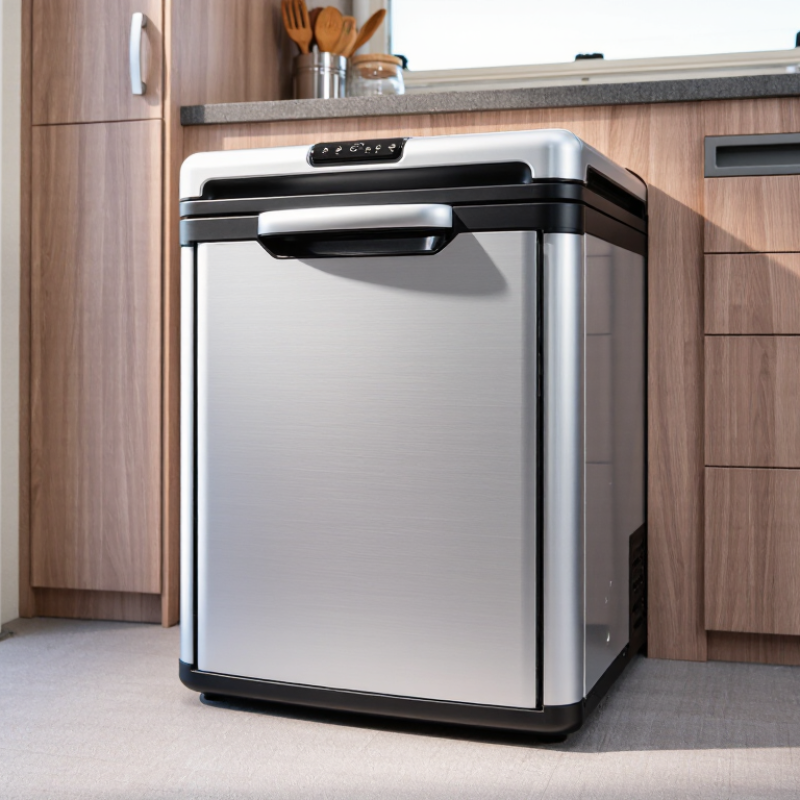
China Top 10 12V RV Fridge Manufacturers?

What Defines a 12V RV Fridge and Its Key Applications

A 12V RV fridge is a compact refrigerator designed to run directly from a vehicle’s low-voltage electrical system. Unlike traditional absorption models, it commonly uses a DC compressor and refrigerant circuit. The compressor cycles according to cabinet temperature, ambient heat, and door openings. Good insulation matters. Energy use may seem modest, but startup current can briefly increase. This detail is easy to overlook.

In a campervan, the fridge preserves fresh food during overnight parking without campground electricity. It also serves boats, work vehicles, mobile clinics, and remote cabins with reliable battery storage. A 40- to 60-liter cabinet can hold drinks, vegetables, and several meal containers for short trips. Ventilation around the compressor prevents heat buildup. Leave clear airflow behind the cabinet, and protect the circuit with suitable wiring and a fuse.

When comparing Chinese manufacturers, buyers should verify compressor efficiency, insulation thickness, temperature testing, wiring protection, and service documentation. Ask for measured consumption at a stated ambient temperature, not only a best-case figure. A 100Ah battery may not support every load overnight, especially with aging cells or winter conditions. Solar charging helps, but clouds and shading change the calculation. Energy estimates often fail because users ignore other appliances. Direct 12V operation is usually simpler, though simple is not always foolproof.

How to Evaluate China’s 12V RV Fridge Manufacturers

How to Evaluate China’s 12V RV Fridge Manufacturers

Choosing among China’s top 12V RV fridge manufacturers requires more than comparing online prices. Check the factory’s production experience, testing equipment, and technical staff. A reliable supplier should explain compressor selection, insulation thickness, temperature control, and low-voltage protection clearly. Vague answers deserve caution.

Ask for recent test reports and sample units. Measure cooling performance inside a warm vehicle, not only in a showroom. A practical test should record temperature, power consumption, noise, and recovery time after opening the door. Check whether the fridge maintains stable cooling at 12V and during voltage fluctuations. Small details matter.

Inspect the factory or request a live video audit. Look for organized assembly lines, traceable components, and final inspection records. Confirm warranty terms, spare-part availability, packaging strength, and response times before placing a large order. Ask how they handle compressor failures and damaged deliveries. Written promises are useful. Evidence is better.

A polished website proves little. Certifications should match the actual model, not a similar product. It is easy to overvalue appearance and underestimate after-sales support. I would also question unusually low prices, because thinner insulation or cheaper control boards may appear later. One weakness remains: remote evaluation cannot reveal every production problem. Regular sampling and independent inspection reduce that uncertainty.

China’s Top 10 12V RV Fridge Manufacturers and Their Strengths

China’s Top 10 12V RV Fridge Manufacturers and Their Strengths

China has a wide 12V RV fridge manufacturing base, serving campers, van converters, and marine users. The top ten manufacturers often differ in practical strengths rather than appearance. Some focus on compressor efficiency, while others specialize in portable designs, slim built-in units, or dual-zone cooling. Several factories provide private-label production, custom cabinet sizes, and voltage protection for vehicle use. Their strongest advantage is flexible manufacturing. Buyers can often request different insulation thicknesses, door layouts, control panels, and battery settings.

Quality still varies. This matters. Experienced manufacturers usually test cooling performance, vibration resistance, wiring safety, and temperature recovery. Reliable suppliers should explain compressor origin, insulation materials, warranty coverage, and replacement-part availability. A strong factory may also offer sample testing before large orders. However, product pages can sound better than real performance. Independent testing remains useful, especially in hot climates or poorly ventilated compartments. I have found that a quiet fridge is not always the most efficient one. That assumption needs checking.

Tips: Compare usable storage, not only external capacity. Ask for power consumption at different temperatures. Check whether the fridge protects batteries from excessive discharge. Confirm the plug, fuse, ventilation space, and mounting points. Request a sample if the fridge will face rough roads. Read the manual carefully. Small details matter. Also, leave room for imperfect conditions, because laboratory results rarely match a crowded RV in summer.

Core Technologies, Features, and Quality Standards to Compare

China Top 10 12V RV Fridge Manufacturers?

Comparing 12V RV fridge manufacturers requires more than checking cooling capacity or factory size. In practical installations, compressor efficiency, battery protection, and voltage stability matter every day. A dependable unit should cool consistently at 43–45°C ambient temperature, not only in a showroom. Ask for measured energy consumption, startup current, recovery time, and noise levels. Small details matter.

Core technology deserves close attention. Variable-speed compressors can reduce cycling and improve battery endurance. Thick cabinet insulation, a tight magnetic gasket, and balanced airflow help maintain temperature on rough roads. Look for low-voltage cut-off settings that protect batteries without causing sudden food spoilage. Temperature sensors should be calibrated and replaceable. A useful test checks the fridge after twelve hours, with a full load and repeated door openings.

Quality standards should include traceable production records, incoming component inspection, and documented final testing. ISO 9001 certification can indicate controlled processes, but it cannot replace product evidence. Check electrical safety, electromagnetic compatibility, refrigerant compliance, and applicable RoHS requirements. Request sample inspection reports rather than accepting certificates alone. That is important.

From supplier evaluations, I have found wiring quality and connector protection are often underestimated. Corrosion-resistant terminals, secure hinges, and vibration testing reveal more than polished brochures. Some published capacity figures appear optimistic. I would verify them independently. A manufacturer with clear warranty terms, spare-parts support, and responsive technical communication is usually safer for long-term RV use. Still, no comparison is perfect; field conditions can expose weaknesses that laboratory tests miss.

China Top 10 12V RV Fridge Manufacturers? – Core Technologies, Features, and Quality Standards to Compare

Technical comparison framework for evaluating Chinese 12V RV refrigerator suppliers without displaying company or brand information.

Comparison Dimension Market-Realistic Reference Data Core Technology to Compare Important Product Features Relevant Quality or Compliance Evidence Buyer Verification Method
1. Cooling Architecture Compressor-based 12V/24V DC systems are the normal choice for efficient off-grid RV refrigeration. Hermetic DC compressor, variable-speed controller, evaporator plate, condenser and capillary tube or electronic expansion control. Fast pull-downStable low-temperature controlWorks during vehicle motion Compressor and electrical components should have traceable model numbers and technical datasheets. Review system schematic, compressor datasheet and cooling test report.
2. Rated Voltage and Input Range Common configurations are 12V DC, 24V DC, or dual-voltage 12/24V DC. A practical operating range is normally specified by the controller manufacturer. Low-voltage DC compressor controller with reverse-polarity, over-current and under-voltage protection. Vehicle battery compatibilitySolar-storage compatibilityReduced startup stress Electrical safety and EMC documentation should correspond to the exact product configuration. Confirm rated voltage, allowable voltage range, fuse recommendation and cable-size requirements.
3. Energy Consumption Typical daily energy use varies substantially with capacity, ambient temperature, thermostat setting, insulation and door-opening frequency. Published figures should state test conditions. Variable-speed compressor control, optimized condenser airflow and high-density insulation. Battery-friendly operationEco modeAdjustable thermostat Energy data should identify ambient temperature, set point, load, voltage and test duration. Request a 24-hour or 48-hour energy test under a documented test protocol.
4. Refrigerant Selection R600a is widely used in modern small refrigeration systems and has a very low global warming potential. R134a has a much higher GWP and is being phased down in many applications. Factory-sealed refrigeration circuit with controlled refrigerant charge and leak-tested joints. Low refrigerant chargeLeak resistanceService labeling Refrigerant type, charge quantity and safety classification must be declared on the product label or technical file. Check refrigerant declaration, charge quantity, safety instructions and leak-test records.
5. Thermal Insulation and Cabinet Rigid polyurethane foam is commonly used because it provides good thermal resistance in a compact wall structure. High-density PU foam, sealed cabinet joints, magnetic door gasket and thermally optimized liner. Lower heat gainReduced condensationBetter temperature stability Material specifications, foam density records and door-gasket inspection criteria should be available. Inspect wall thickness, gasket compression, hinge alignment and cabinet temperature uniformity.
6. Battery Protection Quality 12V RV refrigerators normally provide configurable or pre-set low-voltage cut-off protection to help prevent excessive battery discharge. Electronic battery-protection circuit with restart hysteresis and protection against over-voltage and reverse polarity. Low-battery cut-offAutomatic restartFault indication Protection thresholds must be stated in the controller manual rather than described only as “battery safe.” Test cut-off and restart points using a calibrated DC power supply.
7. Temperature Performance Compressor RV refrigerators can provide a refrigerated compartment near 2–8°C when correctly sized and operated; freezer performance depends on design and ambient conditions. Digital thermostat, temperature sensor, evaporator design and airflow management. Temperature displayAdjustable set pointOptional freezer zone Temperature results should include ambient temperature, empty or loaded condition and stabilization time. Request temperature-mapping data from multiple points inside the cabinet.
8. Noise and Vibration Noise depends on compressor speed, mounting, fan selection and cabinet installation. A single noise value is meaningful only when the test distance and environment are stated. Rubber compressor mounts, balanced fan, variable-speed drive and vibration-isolated chassis. Night modeLow-speed operationReduced cabinet resonance Noise measurement should identify distance, room background noise and operating condition. Conduct an on-site or sample-unit test at defined compressor speeds.
9. Electrical and EMC Compliance Common export documentation may reference CE, RoHS and applicable EMC requirements. CE marking is a conformity declaration, not an independent product-quality rating. EMI filtering, grounding strategy, controller shielding and conducted/radiated-emission control. Stable operation near radiosReduced interferenceDocumented wiring Relevant references may include EN 55014-1, EN 55014-2, CISPR 14-1/-2, RoHS Directive 2011/65/EU and amendment (EU) 2015/863. Verify test reports, declarations, product model numbers and sample-unit markings.
10. Manufacturing and Quality System ISO 9001 certification indicates a quality-management system; it does not by itself prove refrigeration performance or long-term reliability. Incoming inspection, controlled assembly, refrigerant evacuation, leak testing, burn-in and final functional inspection. Traceable productionConsistent batchesService documentation Useful evidence includes a valid ISO 9001 certificate, process-control records, final inspection reports and corrective-action procedures. Audit production records and compare pre-shipment samples with approved specifications.
Evaluation note: The values above are industry reference points and verification criteria, not claims about any specific company or brand. Actual performance depends on refrigerator volume, ambient temperature, insulation, installation ventilation, battery condition, cable length and operating settings. For supplier ranking, compare like-for-like samples using the same cabinet volume, set point, ambient temperature and test duration.

How to Select the Right Chinese Supplier for Your RV Fridge Needs

China’s RV market is expanding with practical demand for compact cooling. The RV Industry Association recorded 313,174 wholesale RV shipments in 2023. That figure shows why supplier selection matters. A low quotation can still become expensive.

Ask each Chinese manufacturer for compressor data, wiring diagrams, thermal test results, and a current quality certificate. Check whether the factory controls production or outsources key assembly. Request a sample with your intended cabinet opening, hinge direction, and ventilation space. Test it at 12 volts under a controlled 35–38°C ambient temperature. Measure starting current, average energy use, noise, and internal temperature after 24 hours. Demand evidence, not promises. EN 60335-2-24 and relevant EMC requirements can guide electrical and safety checks, but market-specific certification remains essential.

Review the supplier’s production records and corrective-action process. One polished sample proves little. Ask for batch inspection photos, component traceability, spare-part availability, and written warranty terms. The compressor may be reliable, while the door seal or thermostat fails early. That detail is easy to miss. Compare at least three factories using the same scorecard: cooling stability, power consumption, documentation, lead time, and after-sales response. I would also inspect packaging after a simulated transport test. A fridge can pass factory testing and still arrive with a shifted door. Supplier selection is not only about price; it is about repeatable performance when the vehicle is parked in real heat.

Certified Quality System

© North Easton Machine Company, Inc. All rights reserved. • Site: Blog
NORTH EASTON MACHINE • 218 Elm Street • North Easton, MA 02356 • 508-238-6219