
What Is a Moved Chipper Machine and How Does It Work?
A Moved Chipper Machine is a mobile wood-processing unit designed to travel between logging sites, farms, parks, and urban tree-care projects. The term is not perfectly standardized. In many technical markets, it describes a mobile or towable wood chipper. That distinction matters because capacity, transport method, and safety controls vary widely.
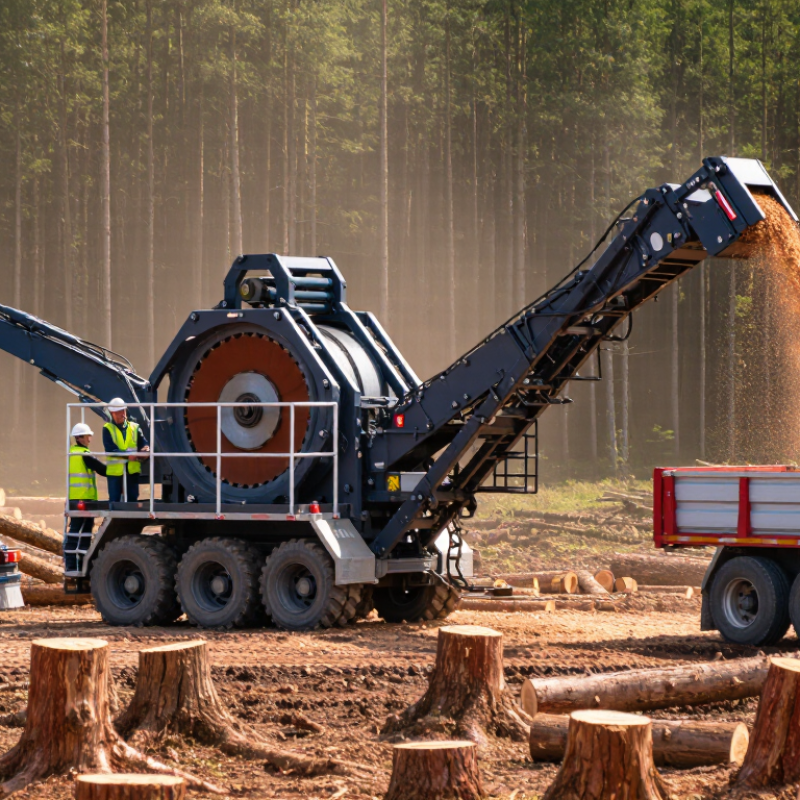
The machine converts branches, trunks, and other woody residues into smaller chips. An operator places material into a feed hopper. Hydraulic rollers pull the wood toward rotating knives mounted on a disc or drum. The cutting chamber reduces the material rapidly. A discharge chute then throws the chips into a truck, trailer, or collection area. Some models use screens to control chip size. Others rely on knife design and rotor speed.
Scale changes everything.
According to the FAO Global Forest Resources Assessment 2020, forests cover about 31% of the world’s land area. That vast resource creates continuous demand for efficient residue handling. The U.S. Department of Energy’s 2023 Billion-Ton Report also identifies woody biomass as an important potential feedstock for bioenergy and bioproducts. These reports support the machine’s practical relevance, but they do not guarantee safe or profitable operation.
Real performance depends on moisture, wood diameter, knife sharpness, engine power, and feeding technique. A wet branch may leave uneven chips. A dull knife can increase vibration and fuel use. The U.S. Occupational Safety and Health Administration emphasizes guarding, lockout procedures, and controlled feeding around chipping equipment. This guide examines how a Moved Chipper Machine works, where it performs best, and which operating assumptions deserve closer review.
What Is a Moved Chipper Machine?
A moved chipper machine is a mobile wood-chipping unit designed to travel between work sites. The term is not perfectly standardized. In technical writing, “mobile wood chipper” is usually clearer. It may be mounted on wheels, a trailer, or a tracked frame. Operators use it near pruning areas, forests, farms, and construction sites. This reduces the need to carry bulky branches over long distances.
The machine pulls branches into a feed hopper. Rollers grip the material and guide it toward sharp knives or a cutting disc. The cutting system reduces limbs into chips, while a discharge chute directs them into a truck or storage pile. Hydraulic controls regulate feeding speed. A practical detail matters here: wet, twisted, or oversized wood can slow the process and increase vibration. The machine is powerful, but not careless-proof.
The U.S. Department of Energy’s 2016 Billion-Ton Report estimated that the country could supply nearly one billion dry tons of biomass annually by 2040. Mobile chippers can support this supply chain by processing residues closer to where they are produced. The FAO’s Global Forest Resources Assessment 2020 recorded about 4.06 billion hectares of forest worldwide, showing the scale of potential residue management. Still, output depends on species, moisture, knife condition, and operator experience. It is easy to overstate capacity. Field conditions often prove less predictable than laboratory figures.

What Are the Main Parts of a Moved Chipper Machine?
A moved chipper machine is a mobile unit designed to process branches, trunks, and pruning waste near the worksite. Its chassis, wheels, and towing connection allow relocation between sites. The FAO Global Forest Resources Assessment 2020 recorded about 4.06 billion hectares of global forest, supporting continued demand for efficient biomass processing. However, mobility adds vibration, uneven-ground risks, and transport concerns.
The main parts begin with the feed hopper, where operators place prepared material. Feed rollers then grip and control the branches. Behind them, rotating knives mounted on a disc or drum reduce the wood into chips. The rotor is decisive. A hydraulic motor or engine supplies power, while belts, bearings, and a flywheel transfer that force. The discharge chute directs chips into a truck or container. Adjustable screens influence chip size and help prevent oversized pieces from leaving the chamber.
A strong frame supports these systems and limits movement during operation. Guards surround moving components, while emergency stops and interlocked access panels reduce exposure to hazards. The U.S. Bureau of Labor Statistics reported a 2023 fatal injury rate of 110.4 per 100,000 full-time-equivalent workers in logging occupations. That figure is not chipper-specific, but it shows why guarding and operator training deserve attention. Small gaps matter. In field use, I have seen maintenance rushed after wet material clogs the feed path. That habit needs reconsideration. Cutting edges also require inspection, because blunt knives increase vibration, fuel use, and uneven chip production.
What Is a Moved Chipper Machine and How Does It Work? - What Are the Main Parts of a Moved Chipper Machine?
| Machine Area | Main Part | Function and Working Principle | Typical Technical Data | Important Operating Consideration |
|---|---|---|---|---|
| Mobility | Towable Chassis and Wheels | Supports the chipper and allows it to be moved between work locations by hand or by a suitable towing vehicle. | Common transport widths are approximately 1.2–2.5 m; operating weight often ranges from 300 kg to more than 2,000 kg. | Use approved towing equipment, secure the machine before transport, and follow local road regulations. |
| Power System | Engine or Electric Motor | Provides rotational power to the cutting rotor, disc, or drum through a belt, clutch, gearbox, or direct-drive arrangement. | Small units commonly use about 5–15 kW; larger mobile units may use approximately 30–100 kW or more. | Required power depends on wood diameter, moisture, feed rate, knife design, and desired chip size. |
| Material Intake | Feed Hopper | Guides branches, brush, and other woody material toward the feeding mechanism while helping keep the operator away from the cutting chamber. | Typical hopper openings are about 300–800 mm wide, depending on machine capacity. | Never place hands or feet into the hopper. Use a push tool for short or awkward material when permitted by the operating manual. |
| Feeding | Infeed Rollers | Powered rollers grip the material and pull it into the cutting chamber at a controlled speed. Some machines use one roller, while larger machines use two or more. | Hydraulic roller systems commonly allow variable feed speeds, often around 10–40 m/min. | Feed rollers should be adjusted and maintained so that they grip material without excessive crushing or slipping. |
| Cutting Assembly | Chipper Disc or Drum | The rotating disc or drum carries knives that cut branches against a fixed anvil or counter-knife. | Rotor speeds are commonly about 1,000–2,500 rpm; actual speed varies with rotor diameter and design. | The rotor must be balanced, correctly guarded, and stopped completely before inspection or servicing. |
| Cutting Tools | Chipper Knives and Anvil | Sharp knives slice the wood, while the anvil provides the stationary cutting edge and controls the cutting clearance. | Knife clearance is often adjusted to roughly 0.5–3 mm, depending on the machine and material. | Dull or incorrectly set knives increase fuel use, vibration, noise, and the risk of producing oversized chips. |
| Power Transfer | Belts, Clutch, Gearbox, or Hydraulic Drive | Transfers engine or motor power to the rotor and feed system while helping regulate torque and rotational speed. | Belt drives may include a centrifugal or electromagnetic clutch; hydraulic systems commonly operate the feed rollers and controls. | Inspect belts, guards, fluid levels, and couplings regularly. Do not bypass the clutch or overload protection. |
| Chip Handling | Discharge Chute and Deflector | Directs processed chips away from the cutting chamber and controls the discharge angle and throwing distance. | Chutes are commonly rotatable through about 180°–360°; discharge height often ranges from 1.5–3.5 m. | Keep people, vehicles, buildings, and overhead hazards outside the discharge area. |
| Safety System | Emergency Stop and Feed-Reverse Control | Stops the feed mechanism or reverses material when a blockage or unsafe condition occurs. | Controls may include a perimeter safety bar, emergency-stop button, reverse switch, and engine shutdown control. | Test safety controls before operation and keep the emergency-stop area accessible at all times. |
| Protection | Guards, Covers, and Interlocks | Prevent contact with rotating parts, belts, chains, knives, and other hazardous components. | Access panels may be fitted with mechanical or electrical interlocks that prevent operation when open. | Never operate the machine with missing, damaged, or defeated guards and interlocks. |
| Control and Monitoring | Operator Panel and Instrumentation | Allows the operator to start, stop, reverse, and monitor the machine while controlling feed speed and engine performance. | Common indicators include engine speed, hydraulic temperature, oil pressure, operating hours, and fault alarms. | Operators should remain within the designated control position and monitor vibration, unusual noise, and chip quality. |
| Output Material | Wood Chips | Branches are reduced into chips as the rotating knives shear or slice the material against the anvil. | Typical chip lengths are approximately 10–50 mm, depending on knife projection, rotor design, and feed settings. | Output size is not perfectly uniform and can change with wood species, branch diameter, moisture, and knife sharpness. |
| Work Capacity | Processing Capacity | Determines how much woody material the machine can process over a given period under specified operating conditions. | Small mobile chippers may process roughly 1–5 m³/h; larger professional machines can exceed 10 m³/h. | Actual production is affected by feeding method, material preparation, operator skill, blockage frequency, and maintenance condition. |
| Maintenance | Service Points | Include knife sharpening or replacement, anvil adjustment, bearing lubrication, belt inspection, hydraulic checks, and engine servicing. | Knife inspection is commonly required at the start of each work period; lubrication and other intervals follow the equipment manual. | Isolate the energy source, remove the ignition key, and wait for all moving parts to stop before maintenance. |
| How the machine works: A movable chipper is transported to the work area, where an engine or electric motor powers the feed and cutting systems. Material enters through the hopper, is pulled forward by feed rollers, and is cut by rotating knives against an anvil. The resulting chips pass through the discharge chute. The technical values shown are typical ranges for mobile or towable wood chippers; specifications vary by machine design and operating conditions. | ||||
How Does a Moved Chipper Machine Process Materials?
A moved chipper machine is a mobile wood-processing unit relocated between work areas. It handles branches, logs, and pruning waste close to where materials are collected. This reduces repeated hauling and keeps the site more organized. Operators usually position the machine on firm, level ground before processing begins. Small details matter. Wet soil can affect stability, while poor access can slow feeding and removal.
The process starts at the feed hopper, where branches enter a controlled path. Feed rollers grip the material and guide it toward rotating knives or cutting discs. These cutting parts slice the wood into smaller chips. An internal screen helps control chip size, although results can vary with wood species, moisture, and branch shape. Dry timber may produce cleaner chips. Fresh, flexible branches can create uneven pieces.
A discharge chute then directs the chips into a trailer, pile, or collection container. Experienced operators watch for vibration, unusual noise, and changing feed speed. These signs may indicate dull blades, overloaded rollers, or unsuitable material. The machine does not process every load perfectly. I have found that mixed branches often require slower feeding than expected. That judgment can improve with site experience, but it should never replace the operating manual. Guards must remain fitted, and trained personnel should stop and isolate the machine before clearing blockages or checking cutting components.
How Is a Moved Chipper Machine Operated Safely?
What Is a Moved Chipper Machine and How Does It Work?
A moved chipper machine is a wood-chipping unit designed for relocation between work areas. It may use wheels, a towable frame, or a compact transport system. Its feed rollers pull branches toward rotating blades, which cut the wood into smaller pieces. The discharge chute then directs chips into a pile, container, or vehicle.
How Is a Moved Chipper Machine Operated Safely?
Safe operation begins with a site inspection. Check the ground, overhead branches, nearby traffic, and the machine’s stability. Keep bystanders well away from the feeding and discharge zones. Wear eye protection, hearing protection, gloves, safety boots, and close-fitting clothing. Loose sleeves can catch quickly.
Keep it clear.
Before starting, inspect guards, belts, blades, feed rollers, emergency stops, and hydraulic lines. Read the operating instructions and confirm that every operator understands them. Feed branches from the side, not directly in front of the opening. Use a suitable branch tool when material stops moving. Never push wood by hand or reach into the hopper.
Never rush.
If a jam occurs, stop the engine, isolate the power source, and wait until every moving part stops. Then follow the approved clearing procedure. Do not rely only on an emergency button. It may stop motion, but it does not remove stored energy. Uneven ground deserves extra caution, especially when the machine is being moved. In practice, operators sometimes focus on productivity and overlook small cracks or loose fasteners. That habit needs correction. A short pre-start check is slower than expected, but far safer.
Where Are Moved Chipper Machines Commonly Used?
What Is a Moved Chipper Machine and How Does It Work?
A moved chipper machine is a mobile wood chipper transported directly to a worksite. It uses rotating knives or cutting discs to reduce branches, logs, and brush into smaller chips. Operators usually feed material through a hopper, while an engine powers the cutting system and discharge chute. The machine saves hauling time, although wet or tangled material can slow production.
Where Are Moved Chipper Machines Commonly Used?
These machines are common in municipal parks, roadside maintenance, utility corridors, forestry operations, orchards, and landscaping projects. Crews can process branches beside a damaged tree instead of loading every piece onto a truck. The U.S. Environmental Protection Agency reported 35.4 million tons of yard trimmings generated in 2018. Its data also recorded 22.3 million tons recovered through composting and other methods. Mobile chipping supports this recovery process when clean wood is separated properly.
Forestry teams also use moved chippers after thinning and storm cleanup. The FAO’s Global Forest Resources Assessment 2020 estimated that forests cover about 31% of global land area. That figure shows the potential scale of forest residues, but not every site suits chipping. Narrow paths, steep ground, and oversized logs can create practical limits. Real experience matters here; a machine may look efficient but still require extra labor.
Article Source:
NORTH EASTON MACHINE • 218 Elm Street • North Easton, MA 02356 • 508-238-6219