
China Top Pickleball Shooter Manufacturer How to Choose?
Choosing a reliable Pickleball Shooter manufacturer in China requires more than comparing prices. Buyers must examine engineering quality, testing procedures, customization ability, and after-sales support. A machine may look impressive in product photos, yet perform poorly on a real court. The feeder might jam. The wheels may lose accuracy. Small details matter.
Mark Renneson, a respected pickleball coach and educator, has said, “The best practice is practice with a purpose.” This principle should guide every purchase decision. A suitable Pickleball Shooter must create purposeful repetition, not random ball movement. Ask whether it supports adjustable speed, frequency, elevation, spin, and placement. Check how accurately it can send balls toward the backhand corner or kitchen line. Request videos of real testing, not only polished demonstrations.
A dependable China manufacturer should explain its motor system, battery capacity, ball compatibility, and safety controls clearly. Experience also matters. Companies serving clubs, academies, and professional training centers usually understand daily equipment pressure. They know that a machine must survive transport, dust, repeated charging, and long practice sessions. Still, no supplier is perfect. A factory with excellent hardware may offer weak documentation. Another may provide strong service but limited customization. That is where careful comparison becomes necessary.
Look for transparent warranty terms, replacement-part availability, inspection records, and responsive technical support. Ask for a sample unit when possible. Test it with different ball brands and court surfaces. A low quotation can become expensive after repeated repairs. The right manufacturer combines stable performance, practical design, verified production experience, and honest communication. This guide explains how to assess those qualities before signing an order.
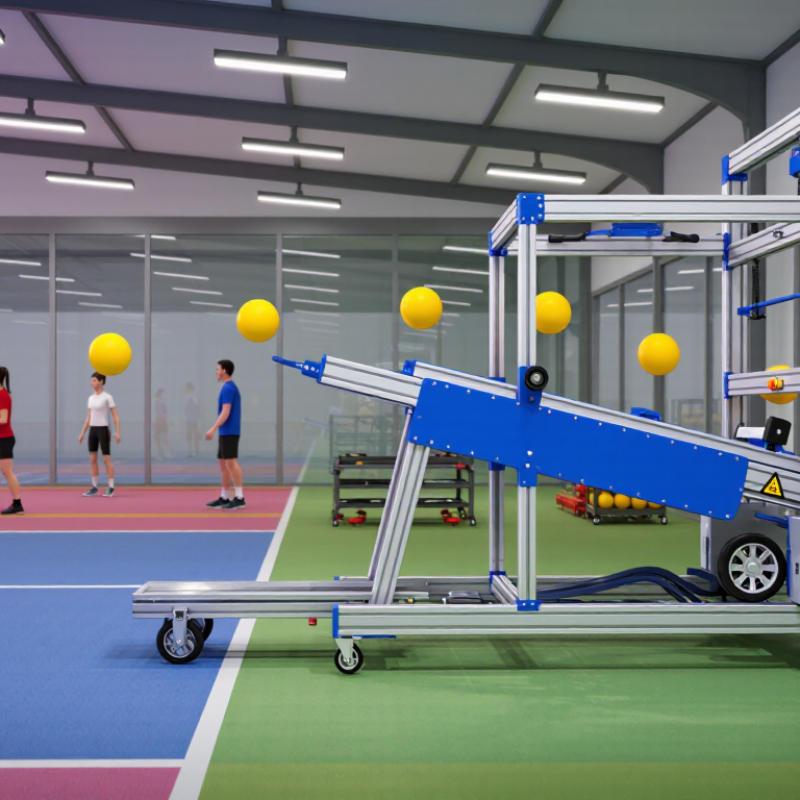
Define Pickleball Shooter Types and Key Specs: 13.6M U.S. Players in 2023 (SFIA)
China Top Pickleball Shooter Manufacturer: How to Choose?
Pickleball shooter demand is growing with participation. The SFIA 2024 Topline Report recorded 13.6 million U.S. players in 2023. That number changes equipment expectations. A serious shooter should match beginner drills, advanced training, and court conditions. The main types include wheel-driven launchers, pneumatic shooters, and compact feed machines. Wheel systems usually offer steadier speed. Pneumatic designs can create sharper pace changes. Compact machines save storage space, but often hold fewer balls.
Check the useful specifications, not only the maximum speed. Important details include speed range, feed interval, ball capacity, elevation, oscillation, remote control, and battery runtime. A practical range may cover soft returns near 20 mph and harder drives above 40 mph. Feed intervals around two to six seconds support different drills. Capacity matters too. Carrying 80 to 150 balls can reduce interruptions during a 60-minute session. Court-side noise and wheel marks also deserve attention. They are easy to overlook.
Tips: Ask for measured speed data, not a marketing peak. Test the machine with outdoor-approved balls. Confirm its charging time and replacement-part access. A higher speed is not always better. I have seen players buy powerful units, then use only gentle settings. That exposes a design weakness: impressive specifications may not equal useful practice. The SFIA participation figure shows market scale, but each training goal still needs careful matching.
China Top Pickleball Shooter Manufacturer How to Choose? - Define Pickleball Shooter Types and Key Specs: 13.6M U.S. Players in 2023 (SFIA)
| Shooter Type | Typical Use | Ball Capacity | Typical Speed Range | Feed Rate | Trajectory / Drill Functions | Recommended Buyer |
|---|---|---|---|---|---|---|
| Compact Entry-Level Shooter | Basic repetition drills and individual practice | Approximately 60–100 balls | Approximately 10–35 mph (16–56 km/h) | Approximately 1–5 seconds per ball | Fixed or manually adjustable elevation; limited randomization | New players, home users, and compact training spaces |
| Portable Intermediate Shooter | Forehand, backhand, volley, block, and transition drills | Approximately 100–150 balls | Approximately 10–45 mph (16–72 km/h) | Approximately 1–10 seconds per ball | Adjustable elevation, interval control, and side-to-side oscillation | Club players, coaches, and regular recreational users |
| Advanced Programmable Shooter | Structured multi-shot sequences and tactical movement drills | Approximately 120–200 balls | Approximately 10–55 mph (16–89 km/h) | Approximately 1–15 seconds per ball | Programmable drills, random oscillation, elevation adjustment, and spin control | Competitive players, teaching professionals, and training centers |
| High-Capacity Training Shooter | Continuous group training and high-volume court sessions | Approximately 150–250+ balls | Approximately 10–60 mph (16–97 km/h) | Approximately 1–20 seconds per ball | Wide-angle oscillation, repeatable programs, elevation, speed, and spin adjustment | Academies, clubs, schools, and multi-user facilities |
| Specification | Practical Reference Range | Why It Matters | What to Verify with a Manufacturer |
|---|---|---|---|
| Ball Compatibility | Indoor, outdoor, or both; 26-hole indoor and 40-hole outdoor balls | Ball diameter, weight, and surface affect feeding consistency | Supported ball specifications and performance with worn balls |
| Speed Adjustment | Fine adjustment across the advertised operating range | Allows progression from control drills to faster reaction training | Adjustment increments, measured speed method, and consistency |
| Feed Frequency | Approximately 1–20 seconds between shots | Controls reaction time, rhythm, and drill intensity | Minimum and maximum intervals under different ball loads |
| Elevation Control | Manual or powered adjustment, depending on model | Changes arc, bounce depth, volley height, and lob trajectory | Adjustment range, locking mechanism, and repeatability |
| Oscillation | None, horizontal, vertical, random, or programmable | Determines whether the shooter supports movement and positioning drills | Oscillation angle, sweep speed, randomization, and repeatability |
| Spin Capability | Flat feed, topspin, backspin, or selectable spin modes | Adds realism and supports advanced return and control practice | Spin direction, intensity, ball compatibility, and consistency |
| Battery and Charging | Rechargeable battery; runtime varies by speed, feed rate, and oscillation | Determines portability and uninterrupted practice time | Battery chemistry, charging time, replacement cost, and rated runtime |
| Portability | Wheels, handles, compact storage, and manageable operating weight | Important for transport between home, club, and court | Packed dimensions, net weight, wheel durability, and lifting points |
| Controls and Safety | Local controls, remote control, emergency stop, and jam protection | Improves convenience and reduces risk during solo or group use | Remote range, child safety, restart behavior, and anti-jam design |
| Outdoor Durability | Weather-resistant construction; operation should follow the user manual | Outdoor courts expose equipment to dust, humidity, and temperature changes | Ingress protection, storage requirements, operating temperature, and warranty |
Market figures above are typical comparison ranges rather than universal standards. The SFIA 2024 Topline Participation Report reported 13.6 million pickleball players in the United States in 2023; equipment specifications should be confirmed through product testing and technical documentation.

Certified Quality System

 Find Your Solutions ▶
NORTH EASTON MACHINE • 218 Elm Street • North Easton, MA 02356 • 508-238-6219