
Ultimate Guide to Choosing Forklift Solid Tires for Your Needs?
When it comes to selecting the right Forklift Solid Tires, various factors must be considered. Industry expert John Walker, known for his extensive experience in material handling, once stated, "Choosing the right tires can make all the difference in safety and performance." This highlights the significance of making an informed decision.
Forklift solid tires play a crucial role in ensuring optimal operation. They help maintain stability and traction, especially in demanding environments. Understanding the tire types on the market, and their specific features, is essential. Each business has unique needs; one solution may not fit all.
Moreover, many overlook how tire selection impacts overall efficiency and costs. Some may choose based on price alone, potentially sacrificing durability and safety. Reflecting on the long-term consequences of these choices can lead to better outcomes. Prioritizing the right forklift solid tires enhances productivity and safety in your operation.
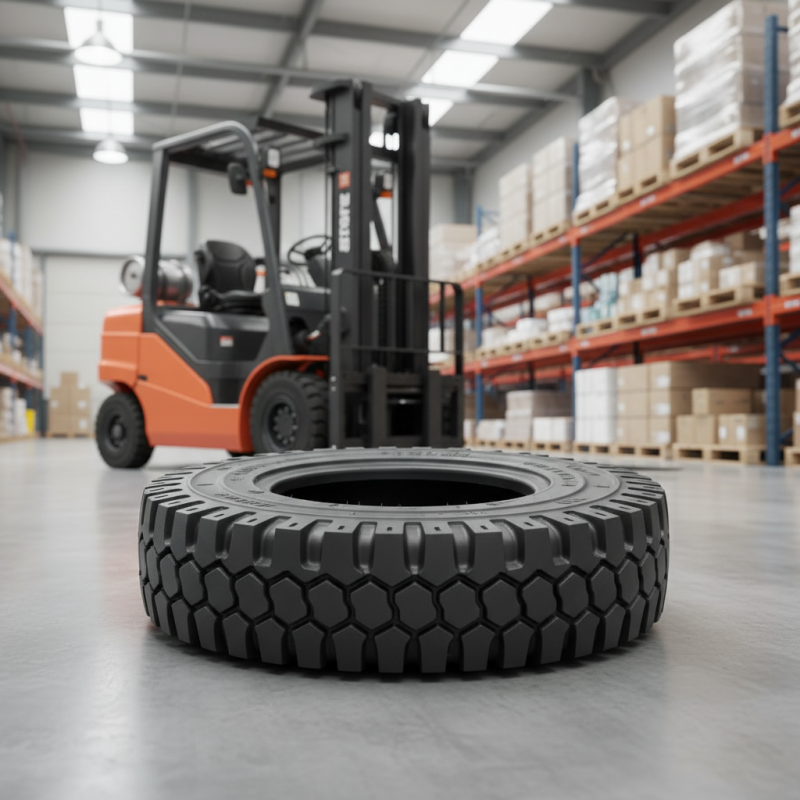
Understanding Different Types of Forklift Solid Tires and Their Uses
When it comes to forklift solid tires, understanding their different types and uses is essential. There are various designs, each serving distinct needs. For example, rubber solid tires are common. They provide good traction and shock absorption, making them suitable for indoor operations. These tires excel on smooth surfaces but may struggle on rough terrains.
Another option is polyurethane solid tires, known for their durability. They perform excellently on hard surfaces. Though more expensive, they resist cuts and abrasions, offering longevity. These tires can be ideal for warehouses with heavy loads. However, they may not perform well in wet conditions.
It's important to consider your specific operational needs. Evaluate how often your forklifts will be used and where. The wrong choice could lead to increased downtime or maintenance issues. Reflecting on your tire selection can save future headaches. Making the right decision is crucial for efficient operations.

Evaluating the Load Capacity Requirements for Your Forklift Operations
When evaluating load capacity requirements for forklift operations, it's essential to understand the significance of tire selection. Studies show that approximately 20% of forklift accidents relate to improper load handling, often due to inadequate tire support. Choosing solid tires that align with your load needs can enhance stability and safety. Solid tires provide better grip and reduce slippage, which is vital when moving heavy loads.
The load capacity of your forklift often dictates the type of tires to consider. According to industry estimates, a forklift's load capacity should be calculated based on a 1.5 times safety factor. For instance, if your maximum load is 3,000 pounds, the recommended tire rating should support at least 4,500 pounds. This buffer allows for variations during operation. Monitoring tire wear is crucial; worn tires can decrease load capacity and efficiency unexpectedly.
Moreover, tire hardness is a factor that shouldn’t be overlooked. Harder tires tend to last longer but can compromise ride comfort. Soft tires deliver a smoother ride, which may benefit environments with uneven surfaces. The challenge lies in balancing durability with operational comfort. As operations evolve, continually reassessing your forklift tire needs is vital. This practice ensures that your equipment remains both effective and safe under varying load conditions.
Ultimate Guide to Choosing Forklift Solid Tires for Your Needs
| Load Capacity (lbs) | Tire Size (inches) | Tread Pattern | Temperature Range (°F) | Applications |
|---|---|---|---|---|
| 2,500 | 16 x 6 | Smooth | -20 to 120 | Indoor Use |
| 5,000 | 18 x 7 | Standard | -10 to 110 | Warehouse & Outdoor |
| 8,000 | 20 x 8 | Deep Tread | 0 to 100 | Heavy-Duty Outdoor |
| 10,000 | 22 x 9 | Aggressive | -10 to 120 | Construction & Rough Terrain |
Assessing Environmental Conditions to Choose the Right Tire Type
Choosing the right solid tires for forklifts is essential, especially when evaluating environmental conditions. Warehousing is often subject to unique challenges. The surface material, temperature, and moisture levels can greatly affect tire performance. For instance, a report by the Material Handling Industry states that improper tire selection can lead to a 20% reduction in efficiency. This emphasizes the importance of a detailed assessment.
Consider the conditions of your operational environment. Is the surface smooth or rough? Are there chemicals present that might degrade tire materials? If operating in a cold storage facility, certain tire compounds offer better flexibility. A study published by the Tire Industry Association highlights that solid tires perform effectively in many challenging conditions, yet they can wear out faster on abrasive surfaces.
Evaluating load capacity is also vital. Heavy loads coupled with inadequate tire type can lead to accidents. A general guideline is to select tires that can support at least 10% more than your typical load. Assessing these factors thoroughly can minimize downtime. Understanding the balance between tire durability and environmental considerations is key in making an informed decision.
Determining the Importance of Tread Patterns in Solid Tires
When considering solid tires for forklifts, tread patterns play a crucial role. They influence traction, stability, and overall performance. A deeper tread can enhance grip on uneven surfaces. Conversely, a shallow tread might work well on smooth floors, but it could struggle in more demanding environments.
It’s important to reflect on the specific uses of your forklift. Are you primarily maneuvering on concrete or traversing rough terrain? Selecting the appropriate tread pattern based on your needs can significantly impact operation efficiency. Choosing an inappropriate design may result in premature wear.
Additionally, not every solid tire is suitable for every application. Observing how tires perform can offer insights. If tires wear unevenly, it might indicate a mismatch in tread design versus surface conditions. Regular evaluation can help you make informed decisions, ensuring your equipment runs smoothly and effectively.
Factors Influencing Solid Tire Longevity and Maintenance Considerations
When selecting solid tires for forklifts, it’s essential to consider factors impacting their longevity. Studies show that tire lifespan can be influenced by the load weight, surface conditions, and operating environment. For instance, when forklifts operate on rough terrains, solid tires can wear out faster, sometimes by 30% compared to smoother surfaces. This highlights the need for regular inspections and maintenance to ensure adequate performance.
Maintaining solid tires includes checking for cracks, tread wear, and air pressure levels. A slight deviation in pressure can lead to a lifespan reduction of approximately 15%. Many experts recommend rotating tires every few months to distribute wear evenly. The need for proper alignment is often overlooked, yet it can significantly prolong tire life. Uneven wear can lead to premature tire failure, causing expensive replacement costs.
In a recent industry report, approximately 40% of businesses noted that improper maintenance led to unexpected downtime. This reinforces the importance of diligent care and monitoring. Regularly documenting tire conditions can help identify patterns and prevent future issues. Effective tire management is not just about choice, but also about committed care and proactive strategies.
Article Source:
NORTH EASTON MACHINE • 218 Elm Street • North Easton, MA 02356 • 508-238-6219