
Essential Tips for Using Hexagonal Wire Mesh Effectively?
hexagonal wire mesh is a versatile material commonly used in various applications. Whether for fencing, gardening, or construction, it has unique properties. This article provides essential tips for using hexagonal wire mesh effectively.
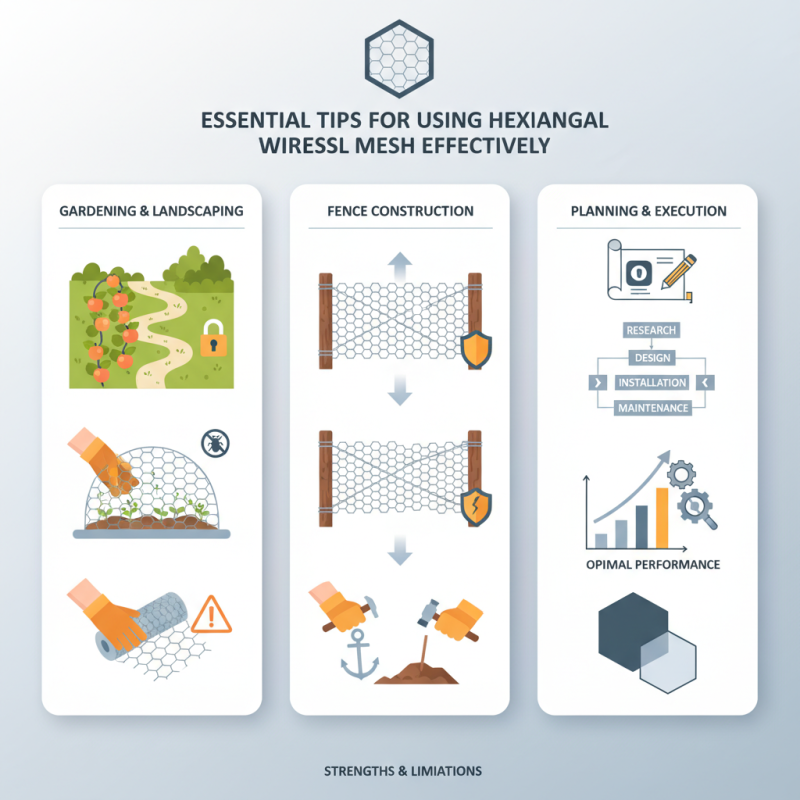
In landscaping, hexagonal wire mesh can support plants and protect them from pests. When working with this mesh, be aware of its sharp edges. Handling it requires care. For fence construction, ensure proper tension; a loose mesh may fail to provide adequate security.
Several installations do not utilize hexagonal wire mesh to its full potential. Users often overlook the importance of proper anchoring. Without it, your project could deteriorate over time. Investing time in planning and execution results in better performance. Understanding the strengths and limitations of hexagonal wire mesh leads to greater effectiveness.
Understanding Hexagonal Wire Mesh: Composition and Types
Hexagonal wire mesh is a versatile material popular in various applications. It is composed of hexagonally shaped steel wires woven together to create a durable barrier. This design allows for excellent strength while maintaining flexibility. Common types include galvanized wire mesh, which offers corrosion resistance, and PVC-coated mesh, which provides additional durability in harsh environments.
When using hexagonal wire mesh, it's crucial to consider your project's specific needs. Ensure the gauge of the wire is suitable for the intended application. Thicker wire provides greater strength but can be harder to work with. You might need to experiment with different meshes to find the best fit for your needs.
Always remember to plan your installation carefully. Lay out your mesh properly to avoid misalignment. It can be tedious to adjust later. Paying attention to detail here can save time and frustration. For added stability, secure the mesh with proper anchors or ties. This ensures it will hold up over time. Don't hesitate to ask for help if you're unsure about any aspect of your project. It can lead to better results.

Essential Tips for Using Hexagonal Wire Mesh Effectively
This chart represents the user ratings for various features of hexagonal wire mesh, illustrating its durability, versatility, cost-effectiveness, aesthetic appeal, and ease of installation. The ratings provide insight into how effectively these features are perceived by users.
Applications of Hexagonal Wire Mesh in Various Industries
Hexagonal wire mesh is versatile in various industries. One notable application is in agriculture. Farmers use it to protect crops from pests. A report by the Agricultural Innovations Institute indicated that using hexagonal mesh can reduce crop damage by 30%. That's a significant improvement for farmers.
In construction, hexagonal wire mesh strengthens structures. It serves as reinforcement in concrete applications. According to construction data analysis, projects utilizing this mesh show a 15% increase in durability. However, determining the right specifications can be challenging. Not all projects require the same gauge or coating. Selecting incorrectly can lead to potential structural failures.
Another key application is in the wildlife protection sector. Hexagonal wire mesh creates barriers for small animals, guiding them away from hazardous areas. Reports show that these applications have reduced wildlife road fatalities by 20%. Nonetheless, there are concerns about the mesh’s impact on ecosystem integrity. Ensuring proper evaluation and placement can be complex but is crucial for sustainability.
Key Considerations for Selecting Hexagonal Wire Mesh
When selecting hexagonal wire mesh, consider the material type. Stainless steel, galvanized, or plastic options exist. Stainless steel offers durability. It resists rust and corrosion but can be expensive. Plastic mesh is lightweight and affordable. However, it might not withstand harsh weather conditions.
Another important factor is the mesh size. The spacing between the wires determines what can pass through. A smaller mesh size is suitable for controlling pests. A larger size is often used for fencing or support structures. Think about the specific needs of your project. Your decision here shapes the overall effectiveness of the mesh.
Tips for effective use include proper installation techniques. Use the right tools for cutting and securing the mesh. Ensure it’s taut and well-supported to prevent sagging. Regular maintenance is also key. Inspect for wear or damage over time, especially in outdoor settings. These small details can significantly impact your project's success.
Techniques for Efficient Installation of Hexagonal Wire Mesh
When installing hexagonal wire mesh, preparation is key. Proper planning ensures a smooth installation process. According to a report by the Wire Mesh Manufacturers Association, poorly installed wire mesh can lead to structural failures. This emphasizes the importance of precise measurements and secure anchoring methods.
Tip: Always check the site conditions before starting. Uneven ground can complicate installation. Use leveling tools to identify problem areas. Purchase extra mesh to account for any miscalculations. It’s often worth having some extra material on hand.
Ensure your tools are ready and in good condition. A dull cutter can cause jagged edges, which can create hazards. Regular maintenance of tools prolongs their lifespan. Efficient installation relies on the right equipment.
Tip: Collaborate with your team. Discuss each step to avoid confusion. Involve everyone in the process to enhance the quality of the installation. Mistakes can happen, but communication can minimize these risks.
Maintenance Tips for Long-Lasting Hexagonal Wire Mesh Structures
Hexagonal wire mesh is versatile and sturdy, making it a popular choice for various applications. To ensure its longevity, regular maintenance is key. Start by inspecting the mesh for any signs of rust or damage. Even small issues can lead to bigger problems if neglected. A visual check every few months can save you time and money in the long run.
Cleaning is also crucial. Use a gentle brush and mild soap to remove dirt and debris. Harsh chemicals can weaken the wire, leading to faster deterioration. Pay attention to locations where moisture collects, as these areas are more prone to corrosion. Remember to keep the mesh away from sharp tools and heavy loads that may cause bending or breaking.
Lastly, consider applying a protective coating periodically. This step might seem tedious but is vital for preventing environmental damage. If you notice frequent maintenance needs, it might be worth re-evaluating your installation method. Reflect on your approach and adjust where necessary. Proper care can significantly extend the life of your hexagonal wire mesh structures.
Essential Tips for Using Hexagonal Wire Mesh Effectively
| Tip | Description | Frequency | Notes |
|---|---|---|---|
| Regular Cleaning | Remove dirt and debris to prevent rust and deterioration. | Monthly | Use a soft brush and mild detergent. |
| Inspection for Damage | Check for holes, corrosion, or damage regularly. | Biannually | Repair or replace damaged sections promptly. |
| Reinforcement | In areas of high stress, use additional support structures. | As needed | Consider using heavier gauge wire in these areas. |
| Proper Installation | Ensure that the mesh is installed correctly to avoid sagging or loose sections. | During initial setup | Follow manufacturer guidelines closely. |
| Protective Coating | Apply a weather-resistant coating for added durability. | Every 2-3 years | Choose a coating suitable for outdoor use. |
Article Source:
NORTH EASTON MACHINE • 218 Elm Street • North Easton, MA 02356 • 508-238-6219