What Is a CNC Screw Machine and How Does It Work?
A CNC Screw Machine is built for one demanding task: producing many small, precise components with consistent dimensions. Picture a metal bar feeding through a guide bushing while cutting tools approach from several directions. The spindle rotates the material, and programmed movements coordinate each cut. Depending on the machine, tools may turn, drill, bore, or mill features in one cycle. The result can be a finished pin, fitting, or fastener, often with little secondary work.
The name can be confusing. Modern CNC screw machines are not limited to screw production; they make a wide range of bar-stock parts. Their strength is repeatability, but that depends on more than the control system. Bar quality, tool condition, setup, and chip management all matter. A small tool wear change can affect a tight diameter. Details count.
Machining educator John Saunders is known for practical CNC instruction. A useful paraphrase of the shop-floor principle reflected in his teaching is: “Reliable machining comes from a stable setup and a process you can repeat.” This is a paraphrase, not a verified verbatim quotation. The sections ahead explain the machine’s main components, how its operating cycle works, and where its capabilities—and limits—appear in production. Not every part suits this method. Complex geometry, short runs, or difficult materials may call for another process. Understanding those trade-offs makes the machine easier to evaluate.
Definition and Operating Principle of a CNC Screw Machine
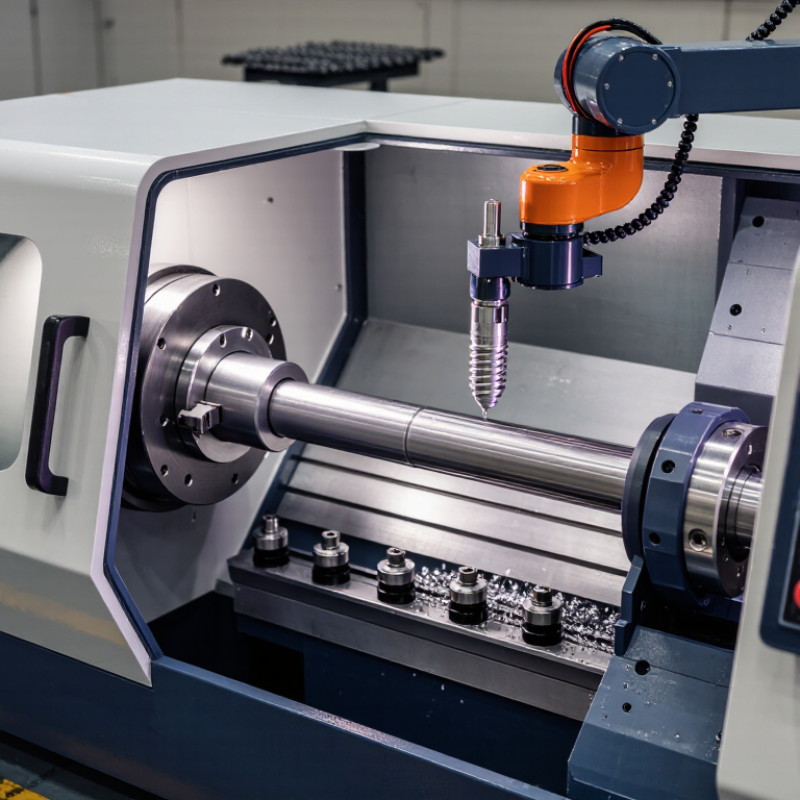
A CNC screw machine is an automated turning machine designed to make precise parts from metal or plastic bar stock. The stock rotates while cutting tools shape it. Depending on the machine design, the bar may advance through a guide bushing, or the tools may move along the workpiece. Common operations include turning, drilling, grooving, and threading. Small parts, steady repetition.
Its operating principle begins with a digital program that specifies tool paths, spindle speed, feed rate, and cutting sequence. The control system moves each tool and coordinates these actions as the spindle turns. A collet or similar holder grips the stock, while a bar feeder can supply material for longer production runs. The finished part is cut off, and the cycle repeats. Actual results still depend on tool condition, material, and setup; the program alone cannot guarantee accuracy. In practice, setup is not always tidy. A tiny alignment error can leave a visible mark or uneven diameter.
Tips: Check the bar stock for straightness, secure the workholding, and inspect the first part with suitable measuring tools. Record tool wear during a run. Small checks matter.
Key Components and Their Functions
A CNC screw machine feeds metal bar through a spindle and cuts it with programmed tools. The bar feeder supports the stock and advances it steadily, reducing manual handling between parts. At the spindle, a collet grips the bar while it rotates. This matters. Poor grip or vibration can leave marks, affect dimensions, or shorten tool life.
The tool slides or turret hold cutting tools for turning, drilling, and threading. On Swiss-type machines, a guide bushing supports the bar close to the cutting point, limiting deflection on slender parts. The CNC control reads the program and coordinates spindle speed, tool movement, and feed rate. Sensors can flag problems such as low coolant or a tool change requirement. Coolant carries heat away; the chip conveyor removes curled metal from the work area. Small details matter. The neat diagram can be misleading: setup and alignment still need careful checks.
The International Federation of Robotics’ World Robotics 2024 report recorded 541,302 industrial robot installations worldwide in 2023. This is not a CNC screw-machine statistic, but it reflects the wider growth of automated production. Reliable feeders, controls, and sensors help machines fit into that environment. Automation is unforgiving. A misaligned guide bushing or inconsistent bar feed can spoil a batch before an operator notices.
What Is a CNC Screw Machine and How Does It Work?
Typical controlled-axis counts vary by machine design. The ranges below are representative, not universal.
Key components and their functions
- CNC controller: Reads the program and coordinates machine movements.
- Spindle and collet: Rotate and grip the bar stock.
- Guide bushing: Supports the bar close to the cutting area on Swiss-type machines.
- Cutting tools: Turn, drill, or mill the workpiece as programmed.
- Bar feeder: Supplies stock to the machine for successive parts.
How the Machine Loads and Holds a Workpiece
A CNC screw machine usually receives material as a straight bar, fed through the spindle from a bar feeder. Rollers support the stock and move it forward in measured increments. Inside the machine, a collet closes around the bar and grips it firmly while the spindle turns. That grip matters. If the bar slips, the cut can drift, dimensions may change, and the tool may chatter.
On a Swiss-type machine, a guide bushing supports the bar close to the cutting tools. This limits bending, especially when machining slender parts. Other screw-machine setups may use a chuck, collet, or mechanical stop instead. The exact loading method depends on the machine and part. Before a cycle starts, the control typically checks that the stock is present and the clamping sequence is complete. The feeder then advances fresh material after each part is cut.
Clean contact surfaces help the collet hold consistently. A small chip between the bar and collet can create runout that is hard to spot by eye. Still, a setup can appear secure and produce uneven parts. Measuring the first pieces and checking the stock feed remain useful, even when the machine runs smoothly.
The Step-by-Step CNC Machining Cycle
A CNC screw machine makes turned parts from bar stock through a programmed sequence of movements. The cycle starts as a bar feeder advances material through the spindle. A collet grips the bar, and the control confirms its position. On machines with a guide bushing, the bushing supports the stock close to the cutting area. This can reduce deflection on slender parts.
The spindle then rotates the bar while selected tools approach it. Turning tools remove material to create diameters and shoulders; drills or threading tools may form holes and threads. Each tool follows programmed coordinates and feeds. Coolant helps carry away heat and chips. Small details matter. A worn tool can leave a rough surface or shift a dimension, even when the program has not changed.
After the cutting operations, a parting tool separates the finished piece from the bar. The feeder advances fresh stock, and the sequence repeats. In practice, the cycle is less tidy than a program screen suggests: chips can tangle, tool wear builds gradually, and setup errors may only show up in measured parts. Operators check critical dimensions with suitable gauges, then adjust offsets when evidence supports a correction. The first part deserves extra attention.
Common Types and Applications of CNC Screw Machines
CNC screw machines are built for accurate, repeatable production of small parts from metal bar stock. Three common types are Swiss-type, fixed-headstock, and multi-spindle machines. A Swiss-type machine moves the bar through a guide bushing, supporting it close to the cutting tool. This helps when machining long, slender components. Fixed-headstock machines suit shorter or stiffer parts, while multi-spindle models work on several parts at once. Small parts, fast.
The CNC program controls spindle movement, cutting tools, and bar feeding. Typical applications include pins, bushings, fittings, shafts, and precision fasteners used in medical equipment, electronics, and vehicles. Swiss-type machines are useful for narrow components with fine features; multi-spindle machines can improve output for large, repeated orders. Still, the best choice depends on part geometry, material, tolerances, and volume. There is no universally perfect setup, and the trade-offs can be less obvious than they look on paper.
Tips: Check the part drawing before selecting a machine. Look closely at length-to-diameter ratio, required tolerances, and surface finish. Ask how often tools need changing, too. A fast cycle is helpful, but only if inspection and material handling keep pace.
What Is a CNC Screw Machine and How Does It Work? — Common Types and Applications of CNC Screw Machines
| Machine Type | How It Works | Typical Workpieces | Common Operations | Typical Applications | Key Considerations |
|---|---|---|---|---|---|
| Swiss-Type CNC Screw Machine | A sliding headstock feeds bar stock through a guide bushing, which supports the material close to the cutting tools. The tools machine the part as the stock advances. | Long, slender, small-diameter components, often made from bar stock. | Turning, drilling, boring, threading, grooving, and cross-drilling; some machines perform multiple operations in one setup. | Precision pins, shafts, fittings, fasteners, and small medical or electronic components. | The guide bushing helps limit deflection on slender parts. Part length, material, and setup determine whether a guide bushing is appropriate. |
| Fixed-Headstock CNC Bar-Fed Lathe | The bar remains supported in the spindle while a bar feeder supplies material. Turning tools move to machine the rotating workpiece. | Short to moderately long turned parts with suitable rigidity for conventional chuck or collet workholding. | Facing, turning, boring, drilling, grooving, and threading; live tooling may enable milling or cross-hole work on equipped machines. | Connectors, bushings, valve components, fittings, and general production turned parts. | Bar diameter, spindle capacity, workholding, and part geometry influence the machine choice and achievable cycle time. |
| CNC Turret-Type Screw Machine | A programmable turret indexes different tools into position, allowing a sequence of machining operations on the workpiece. | Parts that require several turning or drilling operations and can be securely held in a collet or chuck. | Turning, facing, drilling, boring, threading, and grooving; additional capabilities depend on the machine configuration. | Production runs of fasteners, bushings, sleeves, and other rotational components. | Tool count, turret layout, workholding, and required secondary operations affect the machine’s suitability. |
| CNC Multi-Spindle Automatic Screw Machine | Multiple spindles carry workpieces through successive machining stations. Different operations can occur at the same time on different parts. | High-volume, repeatable bar-stock components suited to a multi-station process. | Turning, drilling, threading, grooving, and other station-specific operations, depending on the machine and tooling. | Large production quantities of fittings, fasteners, automotive components, and other small turned parts. | Parallel machining can support high output, but setup and process planning are more involved. It is generally most suitable when demand justifies the setup. |
| CNC Single-Spindle Automatic Screw Machine | A single spindle rotates the bar or workpiece while CNC-controlled tools perform programmed operations in sequence. | Small to medium turned components produced from bar stock or individual blanks. | Facing, turning, drilling, boring, threading, and grooving; optional tooling can add further operations. | General precision components, including pins, spacers, bushings, and threaded parts. | Compared with multi-spindle equipment, the process uses one main workpiece spindle, which can make it a practical choice for varied production requirements. |
| Typical CNC Screw-Machining Workflow | A CNC program controls spindle motion, tool movement, feed rates, and operation order. Bar stock is loaded, machined, cut off or transferred as required, and the finished part is checked. | Parts designed for repeatable machining from bar stock or workholding fixtures. | Programming, material feeding, tool changes, cutting, part cutoff or transfer, and inspection. | Repeat production of accurately machined components with consistent dimensions. | Material, part geometry, tolerances, tooling, coolant, and inspection requirements should be considered during process planning. |
Note: Capabilities and production rates vary by machine configuration, workpiece material, tooling, part geometry, and setup. A CNC screw machine is a CNC-controlled production lathe commonly used to manufacture turned components, often from bar stock.
Related Posts
-
Top Five Industries Transforming Production with Best CNC Turning Parts
-
What are the Best Cnc Machining Parts for 2026?
-
Advantages of Choosing Quality Cnc Parts for Your Global Sourcing Needs
-
Unmatched Manufacturing Excellence: Discover the Best Screw Machines from China’s Leading Factory
-
Unlocking Precision: How CNC Machining Transforms Custom Manufacturing
-
Exploring the Future of Milling Machining: Innovations Transforming the Manufacturing Landscape

NORTH EASTON MACHINE • 218 Elm Street • North Easton, MA 02356 • 508-238-6219