
How to Choose the Right Heat Transfer Tank in 2026?
Choosing the right Heat Transfer Tank in 2026 requires more than comparing price tags and storage volume. The tank becomes the quiet center of your heating system. It holds thermal fluid, supports stable circulation, and influences energy use, maintenance, and product quality. A poor choice may cause uneven temperatures, slow heat recovery, or frequent shutdowns.
Real operating conditions matter most. A food processing line may need hygienic surfaces and easy cleaning. A chemical plant may prioritize corrosion resistance, insulation, and precise temperature control. A compact workshop may face limited floor space and restricted access for installation. Check the working temperature, fluid properties, pressure range, heating method, and required capacity together. Do not size the tank from peak volume alone. Expansion space, heat loss, and future production changes also deserve attention.
Small details matter.
Experienced engineers usually inspect weld quality, insulation thickness, fittings, sensors, and drain placement before approval. They also ask how technicians will remove buildup from the bottom. That question is easy to overlook. It can later become an expensive problem. Reliable suppliers should provide material certificates, performance data, maintenance guidance, and realistic delivery information. Independent testing or documented factory inspections can strengthen confidence, but paperwork cannot replace a practical site review.
This guide explains how to compare tank designs, materials, controls, and lifecycle costs for 2026 projects. Some recommendations will depend on your process. No single tank suits every facility. Careful selection begins with honest operating data, not attractive specifications.
What Is a Heat Transfer Tank and How Does It Work?
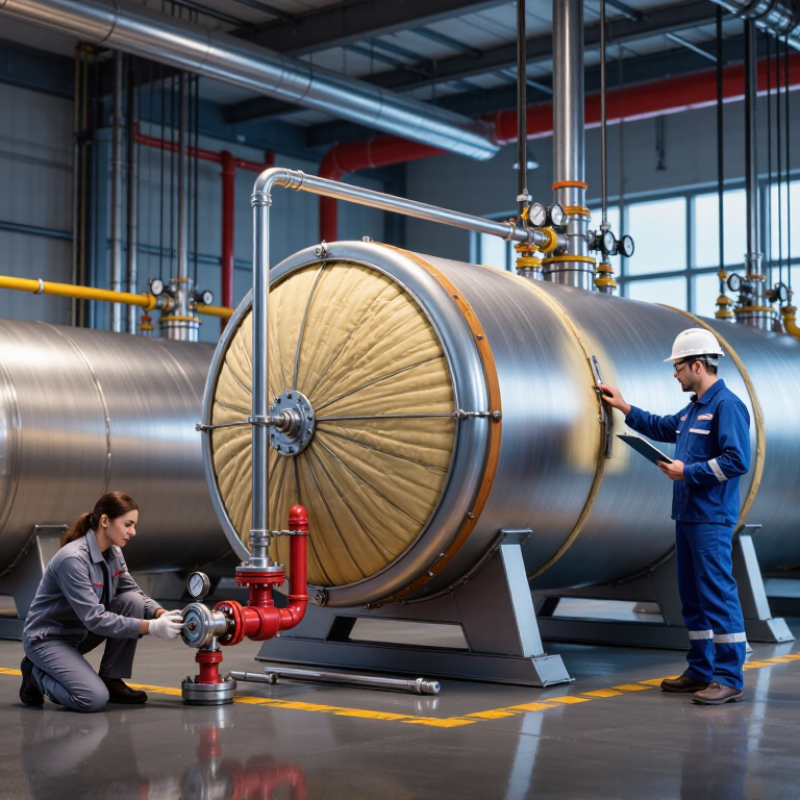
A heat transfer tank stores thermal energy in a liquid, solid, or phase-change material. Pumps move the heated fluid through a heat exchanger, where energy reaches water, air, or process equipment. Insulation slows heat loss, while sensors regulate temperature, pressure, and flow. The tank itself does not create heat.
The principle is simple. Heat enters, stays briefly, then leaves when demand rises. Sensible systems use temperature changes in water, glycol, or oil. Latent systems store energy during melting or solidification. IRENA’s Innovation Outlook: Thermal Energy Storage reports operating ranges from below 100°C to above 1,000°C across different applications. That range shows why tank materials cannot be chosen by capacity alone.
The IEA reports that buildings account for about 30% of global final energy use and 26% of energy-related emissions. A well-sized tank can shift heating or cooling away from expensive peak periods. In practice, sizing should match load profiles, fluid chemistry, operating temperature, insulation quality, and available space. A tank may look efficient on paper but perform poorly with weak controls or oversized piping. This is often missed.
During selection, engineers should verify heat-loss data, pressure ratings, corrosion resistance, maintenance access, and sensor accuracy. ASHRAE guidance also stresses design conditions, safety margins, and measured operating data. Real demand changes. The first calculation is rarely perfect.

Which Heat Transfer Tank Specifications Match Your Process?
How to Choose the Right Heat Transfer Tank in 2026?
Which Heat Transfer Tank Specifications Match Your Process?
Selecting a heat transfer tank begins with your actual process conditions, not a catalogue capacity. Record operating temperature, maximum temperature, fluid volume, viscosity, and required heating time. A tank rated for 300°C may still perform poorly if its circulation system cannot handle a thick thermal fluid. Check the required heat duty, pump flow, working pressure, and expansion space together. Stainless steel suits many applications, but material compatibility must be verified with the selected fluid and cleaning chemicals.
Control design deserves equal attention. Look for reliable temperature sensors, over-temperature protection, low-level alarms, and emergency shutdown functions. Insulation thickness should match the surrounding environment, especially near cold floors or drafty workshops. Poor insulation wastes energy and creates hot surfaces. It also makes temperature control less predictable. A larger tank is not automatically better; excess volume may increase warm-up time and operating cost. In practice, process data can be incomplete, and early estimates may be wrong. Leave room for adjustment after commissioning, and verify the final settings under real production loads.
How to Compare Tank Materials, Heating Methods, and Energy Efficiency
A good choice begins with the tank material, not the heater. Stainless steel resists corrosion and suits clean, water-based processes. Carbon steel often costs less, but it needs coatings or careful moisture control. Glass-lined tanks handle aggressive liquids well, although impact damage can create hidden weaknesses. Material compatibility matters.
For heating, compare electric elements, steam coils, thermal-oil circuits, and external jackets. Electric heating offers accurate control and simple installation. Steam can heat large volumes quickly, but it may lose energy through condensate and poorly insulated lines. Thermal oil provides stable temperatures for demanding processes. A jacket usually heats more evenly than one internal element.
Energy efficiency depends on the whole system. Select thick insulation, sealed fittings, and temperature sensors placed near the actual working zone. Variable controls can reduce unnecessary heating during idle periods. I have seen specifications promise high efficiency while ignoring standby losses. That is a costly blind spot.
Measure the heat-up time, holding temperature, and daily energy use under real operating conditions. Check the tank’s working volume, not only its advertised capacity. Smaller tanks may cycle more often, while oversized tanks waste energy during warm-up. No option wins every test. A careful comparison should also include cleaning time, maintenance access, and future temperature changes. Sometimes, the cheapest heater becomes the least economical choice.
What Safety, Control, and Maintenance Features Should You Evaluate?
How to Choose the Right Heat Transfer Tank in 2026?
Safety features should be evaluated before capacity or purchase price. The U.S. Department of Energy reports that process heating represents about 61% of manufacturing process energy use. That makes insulation, temperature stability, and heat-loss control important financial decisions. Select a tank with suitable pressure ratings, independent over-temperature protection, leak detection, and visible level indicators. ASME Section VIII can guide pressure-vessel design, while NFPA 86 addresses safety controls for industrial heating equipment.
Control quality matters on the production floor. Look for calibrated temperature sensors, redundant probes, alarm history, and automatic shutdown logic. A controller should show trends clearly, not hide them behind complicated screens. In field inspections, operators often find sensor drift before a major failure. Small warning.
Maintenance access is equally practical. Choose a tank with removable covers, drain points, sample ports, and enough clearance for inspection. DOE guidance stresses regular checking of insulation, burners, pumps, and controls to preserve process efficiency. Maintenance records should include calibration dates, fluid condition, pressure readings, and replaced components. A digital record helps, but paper checks still have value during network outages.
Do not assume the largest tank is safest. Oversizing can increase warm-up time and energy waste. Undersizing can force constant cycling and shorten pump life. A responsible evaluation compares operating temperature, fluid compatibility, duty cycle, inspection requirements, and local safety rules. The specification may still need revision after commissioning. That is normal. Reports provide direction, but actual plant conditions decide whether the design works.
How to Choose the Right Heat Transfer Tank in 2026? - What Safety, Control, and Maintenance Features Should You Evaluate?
| Evaluation Area | What to Check | Questions to Ask | Practical Selection Guidance |
|---|---|---|---|
| Process requirements | Working fluid, operating temperature range, required heat-transfer duty, batch size, and expected heating or cooling time. | Are the design assumptions based on the actual fluid, process load, and operating cycle? | Size the tank and heat-transfer surface for the process duty. Confirm operating limits with the equipment designer; avoid selecting by volume alone. |
| Pressure and venting | Whether the tank is atmospheric or designed to operate under pressure or vacuum; the applicable design pressure and vent arrangement. | Is the vessel intended for the actual pressure conditions? Can it be safely vented during filling, heating, and draining? | Do not treat an atmospheric tank as a pressure vessel. Where pressure or vacuum is possible, verify the vessel rating and required protective devices against applicable local requirements. |
| Overtemperature protection | Temperature control limits, independent high-temperature cut-out, alarm behavior, and the safe response to sensor or controller failure. | Can a separate protective device stop heating if the primary controller or sensor fails? | Look for a clearly defined high-limit protection strategy and a documented reset procedure. Setpoints must suit the fluid and process; there is no universal safe temperature. |
| Pressure relief and expansion | Thermal expansion provisions and, where applicable, correctly selected pressure-relief devices and discharge routing. | Could trapped liquid expand during heating? Is any relief device appropriate for the vessel and its service? | Confirm the system cannot be unintentionally isolated with liquid trapped between closed valves. Relief arrangements should be designed and reviewed for the specific system. |
| Materials and fluid compatibility | Tank, coil, gasket, seal, and fitting materials in contact with the process fluid and heat-transfer medium. | Are materials compatible with the fluids, temperatures, cleaning chemicals, and expected corrosion conditions? | Obtain material specifications and compatibility guidance for the actual service. Consider corrosion, contamination limits, and cleaning requirements. |
| Temperature and level monitoring | Sensor location, measurement range, display or alarm visibility, and low-level or dry-heating protection where relevant. | Does the sensor represent the process temperature? What happens if the tank level drops below the safe operating point? | Choose monitoring points that reflect the process, and verify that alarms or interlocks respond to foreseeable low-level and sensor-fault conditions. |
| Controls and interlocks | Controller functions, alarm indication, heating enable conditions, restart behavior after power loss, and manual override access. | Can operators identify a fault promptly? Does the system return to a safe state after an interruption? | Review the control sequence and failure responses before purchase. Require clear alarm meanings and controlled restart procedures appropriate to the process risk. |
| Operator protection | Insulation, hot-surface guarding, accessible valves and drains, spill management, and safe access for sampling or cleaning. | Can routine tasks be performed without unnecessary exposure to hot surfaces, hot fluid, or unexpected discharge? | Check the installed layout as well as the tank itself. Insulation and guarding should suit the operating environment and remain serviceable. |
| Inspection and maintenance | Access for inspecting the vessel, coils, connections, seals, instruments, and any installed protective devices. | Are inspection points accessible? Are maintenance intervals and functional tests documented? | Request operating and maintenance instructions, recommended inspection tasks, and records for protective-device checks. Follow applicable regulations and the equipment documentation. |
| Cleaning and drainage | Drainability, clean-out access, dead spaces, surface finish where relevant, and compatibility with the cleaning method. | Can the tank be emptied and cleaned effectively for the process and fluid being handled? | Confirm that drain connections and access points suit the actual cleaning procedure. Hygienic or contamination-sensitive service may require additional design criteria. |
| Documentation and installation | Drawings, nameplate limits, wiring information, commissioning checks, utility requirements, and site-specific installation constraints. | Can the supplier provide enough information for safe installation, operation, inspection, and troubleshooting? | Verify the tank’s rated limits and installation requirements before commissioning. Confirm local code, permitting, and inspection obligations for the site and service. |
How to Select the Best Heat Transfer Tank for 2026 and Beyond?
Selecting the best heat transfer tank for 2026 and beyond requires more than comparing capacity and purchase price. In field evaluations, I start with the fluid, operating temperature, pressure, and expected heating cycles. A tank handling thermal oil needs different seals and expansion space than one circulating water. Get this wrong, and efficiency drops quickly.
Choose construction materials after checking fluid compatibility, corrosion risk, and cleaning requirements. Stainless steel may suit hygienic water systems, while carbon steel can work in suitable closed-loop applications. Verify weld quality, insulation thickness, and access ports before approval. Small details matter. A practical tank should maintain stable temperatures, limit heat loss, and allow safe draining during maintenance. Ask for test records, pressure ratings, and clear service instructions. Independent inspection is wise when the tank feeds critical production equipment.
Future-ready selection also means leaving room for changing production demands. Consider spare connections, sensor locations, and controls that can support measured data later. Oversizing is not always safer; it can increase warm-up time and energy use. I have seen teams choose large tanks, then regret the slow response during short batches. Review actual load profiles, not optimistic estimates. One weakness remains easy to miss: supplier documentation may look complete but omit real-world cycling data. Request it, compare assumptions, and record why each specification was accepted.
How to Choose the Right Heat Transfer Tank in 2026?
Select a tank by matching its construction, pressure rating, insulation, expansion capacity, and materials of construction to the heat-transfer fluid and operating temperature. The temperature windows below are indicative engineering ranges, not guaranteed tank ratings.
Selection guidance: Water-based systems are suitable for moderate temperatures, glycol mixtures support freeze protection, thermal oils serve higher-temperature applications, and molten salts require specialized high-temperature materials, insulation, expansion management, and safety controls. Always confirm the actual fluid limits, design pressure, corrosion compatibility, and applicable tank standards before specifying the vessel.
Article Source:
NORTH EASTON MACHINE • 218 Elm Street • North Easton, MA 02356 • 508-238-6219