Why Choosing the Right Car Alternator Suppliers Matters?
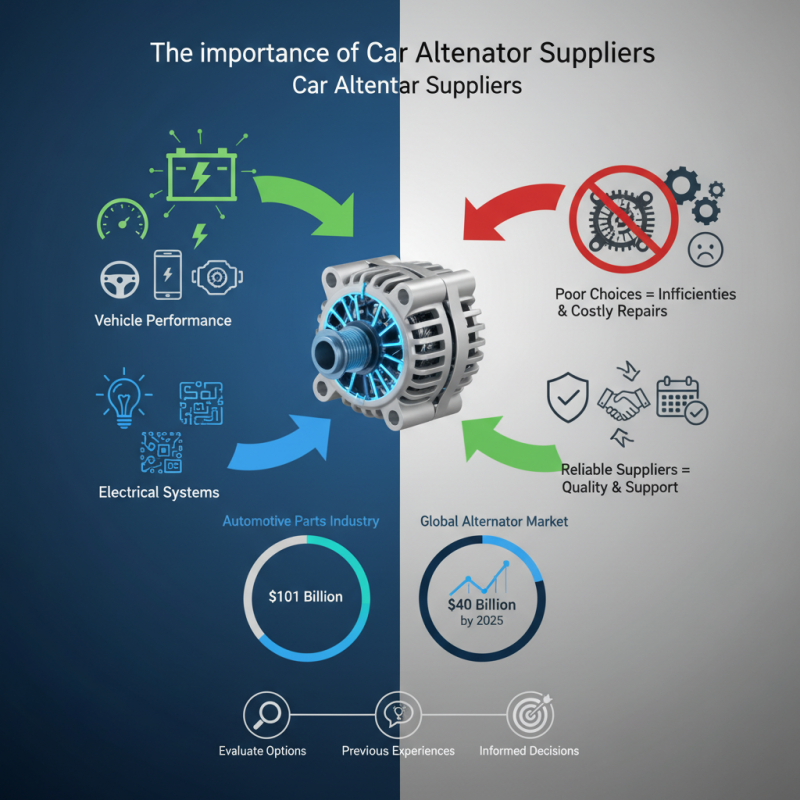
Choosing the right car alternator suppliers is crucial for vehicle performance. According to a report by IBISWorld, the automotive parts industry is worth over $101 billion. Car alternators play an essential role in powering electrical systems. They recharge the battery and support various components. Thus, reliable suppliers are vital.
A study by Grand View Research indicates that the global automotive alternator market is expected to reach $40 billion by 2025. This growth highlights the demand for quality components. Poor choices in suppliers can lead to inefficiencies. Subpar alternators often fail early, causing costly repairs.
Moreover, understanding supplier capabilities is important. Not all suppliers offer the same quality or service. Some may not provide adequate warranties or customer support. Buyers must critically evaluate available options. Reflecting on previous experiences can help in making informed decisions. In a competitive market, the right supplier can make all the difference.
Understanding the Role of Car Alternators in Vehicle Performance
Car alternators play a crucial role in the functioning of a vehicle. They generate electricity to power various components, from headlights to the entertainment system. When an alternator fails, the battery cannot recharge. This issue can lead to unexpected breakdowns and costly repairs.
Choosing the right car alternator supplier becomes vital. Quality alternators enhance performance, ensuring that electrical systems function smoothly. Poor-quality parts may cause inefficiencies. They can lead to frequent failures, putting you in difficult situations. Without reliable suppliers, you risk dealing with faulty products that compromise vehicle reliability.
Reflect on the consequences of a subpar alternator. It can reduce fuel efficiency and strain other components. An ineffective alternator might not keep up with demands. It’s essential to assess suppliers and their reputations. Transparency about manufacturing standards is crucial. The right choice can significantly impact your vehicle’s longevity and performance.
Key Factors to Consider When Choosing Alternator Suppliers
When choosing alternator suppliers, several key factors come into play. Quality is paramount. Look for suppliers who prioritize high standards. A reliable alternator should withstand varying conditions. Check for warranties that reflect their confidence in products.
Next, consider the supplier's reputation in the industry. Reviews from other customers can provide insight into their service and product reliability. A good supplier communicates well and responds promptly to inquiries. This level of communication often reflects their commitment to customer satisfaction.
Lastly, assess the pricing structure. Make sure it aligns with your budget but doesn’t compromise on quality. Some suppliers may offer lower prices but skimp on essential features. It’s important to balance cost and value. Explore different suppliers, and reflect on these choices carefully. Your decision can impact vehicle performance significantly.
Why Choosing the Right Car Alternator Suppliers Matters? - Key Factors to Consider When Choosing Alternator Suppliers
| Criteria | Importance | Considerations |
| Product Quality | High | Durability, performance standards |
| Supplier Reputation | High | Reviews, customer feedback |
| Pricing | Medium | Competitive rates, hidden costs |
| Customer Service | Medium | Responsiveness, support availability |
| Delivery Time | High | Shipping methods, lead times |
| Warranty and Returns | Medium | Warranty duration, return policy |
| Manufacturing Capabilities | Medium | Production capacity, technology used |
Evaluating Quality Standards in Alternator Manufacturing
When selecting car alternator suppliers, evaluating quality standards is crucial. The automotive industry often considers that up to 30% of vehicle electrical issues stem from poor alternator performance. Hence, high manufacturing standards are non-negotiable. Suppliers must adhere to ISO 9001, ensuring they meet established quality and efficiency benchmarks. Standards help in reducing premature failures and improving customer satisfaction.
Furthermore, the use of advanced materials in alternator production contributes significantly to longevity. Reports indicate that alternators using high-grade copper and aluminum can boost efficiency by 10-15%. This efficiency directly impacts the overall performance of a vehicle. However, many suppliers still cut costs by using lesser-quality components, leading to increased failures.
Manufacturers must also invest in rigorous testing protocols. This includes thermal cycling tests to ensure alternators withstand extreme temperatures. A surprising 25% of alternators fail stress tests, revealing a substantial gap in quality assurance. Buyers should be vigilant and inquire about quality certifications and testing results. Such details can often reflect the supplier’s commitment to excellence.
Quality Standards in Alternator Manufacturing
The Impact of Supplier Reputation on Car Alternator Reliability
The reputation of car alternator suppliers is crucial for reliability. A recent survey showed that 73% of automotive technicians prefer well-known suppliers. They associate strong names with quality products. When an alternator fails, it can lead to significant vehicle downtime and repair costs.
Data from industry reports reveals that up to 35% of alternator failures occur due to subpar parts. Lesser-known suppliers may not adhere to rigorous testing standards. This can create issues down the line for automotive service providers. A faulty alternator can result in power loss to critical systems. This does not just affect the engine but can compromise safety measures as well.
Additionally, it is important to consider warranty offerings. Suppliers with robust reputations offer warranties that reflect their confidence in product durability. Research suggests that 65% of customers report higher satisfaction with products backed by solid warranties. This trust is essential, as reliability in auto components impacts overall vehicle performance. Quality is a non-negotiable element when sourcing alternators.
Cost vs. Quality: Making Informed Decisions When Selecting Suppliers
When selecting car alternator suppliers, balancing cost and quality is crucial. According to a report by the Automotive Parts Manufacturers Association, up to 30% of vehicle failures can be attributed to electrical component issues. Choosing lower-cost alternators might save money upfront, but quality issues can lead to costly repairs later. A well-made alternator has a lifespan of over 100,000 miles, while cheaper options may fail within 30,000 miles.
Tips: Always check supplier ratings and reviews. Experienced suppliers often have a track record of reliability. Look for those who offer warranties. A quality warranty can indicate the supplier's confidence in their products.
Not all suppliers are created equal; some focus solely on price. While it can be tempting to select the cheapest option, it might not be ideal. In a survey, 40% of mechanics reported seeing repeat failures from low-cost alternators. This statistic suggests that investing in quality can ultimately save money and trouble.
Tips: Conduct a cost-benefit analysis before settling on a supplier. Determine what you value most: price, quality, or service. Don't hesitate to ask for product specifications. A lack of transparency might signal underlying issues.



 Find Your Solutions ▶