How to Choose the Right Axial Flow Fan for Your Needs?
Choosing the right Axial Flow Fan can be challenging. The market offers a wide variety of options. Each model has unique specifications. Understanding these can make a big difference in performance. An axial flow fan is designed to move air or gas along the axis of the fan. This makes them ideal for applications requiring high airflow at low pressure.
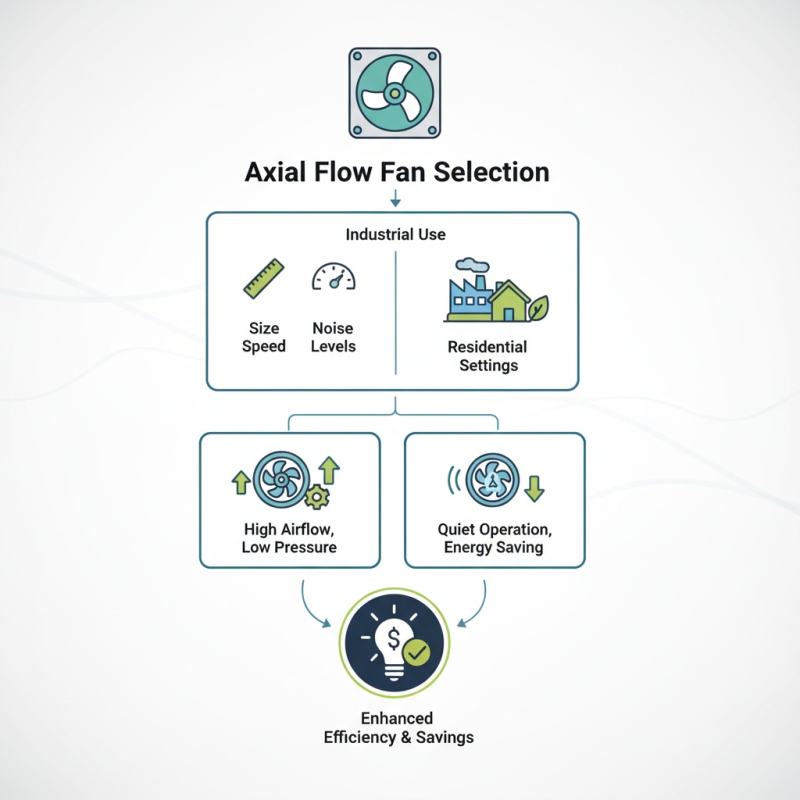
Many factors influence your choice of axial flow fan. These include size, speed, and noise levels. It is essential to consider the specific needs of your environment. Do you need a powerful fan for industrial use, or a quieter model for residential settings? Proper selection can greatly enhance efficiency. Often, users get overwhelmed by technical jargon. It’s okay to seek help from experts or consult guidelines. Reflecting on real-world experiences may also reveal unexpected challenges.
Ultimately, your decision on the axial flow fan should align with your specific requirements. Stay informed and consider various perspectives. An informed choice can lead to significant energy savings and improved airflow management.
Understanding Axial Flow Fans: Types and Applications
Axial flow fans are widely used in various applications, making their selection crucial for effective performance. These fans draw air in parallel to the shaft and expel it in the same direction. This design is efficient for moving large volumes of air at low pressure. They are prevalent in ventilation systems, cooling towers, and industrial processes.
There are several types of axial flow fans. For instance, ducted fans are commonly found in HVAC systems. These models provide enhanced airflow control. Conversely, non-ducted fans work well for open environments, helping with general air movement. Each has unique strengths and weaknesses, depending on the application's requirements.
When choosing an axial flow fan, consider the specific needs of your space. Factors such as airflow rate and noise level play a significant role. Often, the perfect fan may not exist, leading to a compromise between efficiency and performance. Understanding your environment and the fan’s characteristics will lead to better choices. Remember to evaluate installation space and power consumption as well.
Key Factors to Consider When Selecting Axial Flow Fans
When choosing an axial flow fan, several key factors come into play. Efficiency is often a primary concern. According to industry reports, fans that operate at an efficiency level above 80% can significantly reduce energy costs. Many applications require a specific air volume and pressure. Understanding the required cubic feet per minute (CFM) can help narrow down options effectively. Remember, oversizing a fan can lead to wasted energy and unnecessary expense.
Material construction is another critical aspect. Axial flow fans made of corrosion-resistant materials perform better in demanding environments. Consider where the fan will be installed. If it's outside or in a humid area, ensure it can withstand the elements. The performance curve of the fan also matters. Fans should maintain efficiency over a range of operational speeds.
**Tip**: Before making a purchase, compare performance data from multiple sources. Look for graphs that illustrate the fan’s efficiency curve.
Installation requirements should not be overlooked. Some fans may need specific mounting, while others can be more flexible. Consult a professional or manufacturer for guidance when in doubt. Industry standards can vary; unfamiliarity with these may lead to compliance issues.
**Tip**: Engage in discussions with industry experts to validate your choice and ensure it aligns with professional standards.
How to Choose the Right Axial Flow Fan for Your Needs? - Key Factors to Consider When Selecting Axial Flow Fans
| Factor | Description | Impact on Selection |
| Airflow Requirement | The volume of air that needs to be moved, measured in CFM (Cubic Feet per Minute). | Determines the size and power of the fan needed. |
| Static Pressure | The resistance against which the fan must work, usually measured in inches of water gauge. | Affects the fan's efficiency and design. |
| Noise Level | The amount of sound produced by the fan, usually measured in decibels (dB). | Influences user comfort, especially in residential or quiet environments. |
| Energy Efficiency | The amount of airflow generated per watt of electricity consumed. | Affects operational costs and environmental impact. |
| Mounting Type | How the fan will be installed (e.g., wall-mounted, ducted, etc.). | Determines design considerations and space requirements. |
| Durability and Build Quality | Material quality and construct of the fan which affects its longevity. | Ensures reliability and reduces maintenance costs. |
| Blade Design | Shape and number of blades which affect airflow and efficiency. | Can optimize performance for specific applications. |
Sizing Your Axial Flow Fan: Capacity and Efficiency Calculations
Choosing the right axial flow fan involves understanding how to size it effectively. Capacity calculations are crucial. You need to consider the volume of air required for your space. This measure is often expressed in cubic feet per minute (CFM). Start by measuring the area where the fan will operate. This will help in determining the airflow needed.
Efficiency is another aspect to evaluate. Higher efficiency means lower energy consumption. Look for fans with optimal blade designs and motor specifications. These factors directly impact the overall performance. However, achieving perfect efficiency may be challenging. Sometimes, adjustments to fan placement or operation can yield better results.
Remember, not every fan suits every environment. Trade-offs may exist between power and noise levels. Engage with industry professionals if possible. Their insights can provide valuable guidance. Testing different models and configurations may lead you to the best solution for your needs. Analyze data carefully and continuously reflect on the performance of the chosen fan.
Choosing the Right Axial Flow Fan: Capacity and Efficiency
This chart illustrates the efficiency ratings of different axial flow fan capacities. As capacity increases, the efficiency rating in CFM/Watt typically improves, indicating better performance for larger scale applications.
Noise Levels and Speed Specifications in Axial Flow Fan Choices
When selecting an axial flow fan, noise levels and speed specifications play pivotal roles. Different environments require varying noise tolerances. For instance, industrial settings can often accommodate higher noise levels, while residential applications need quieter options. According to the American Society of Heating, Refrigerating and Air-Conditioning Engineers (ASHRAE), acceptable noise levels for residential fans typically range from 19 to 25 decibels. Fans exceeding this can lead to discomfort in living spaces. Choosing a fan within this range can enhance user satisfaction.
Speed specifications also influence performance. The ideal fan speed depends on air volume requirements. For example, a fan operating at 1,200 RPM may provide optimal airflow in a standard workspace compared to a slower unit. Reports indicate that higher RPM fans, usually around 3,200-4,000 RPM, are more suitable for cooling applications in large commercial spaces. However, they produce more noise. It's essential to balance speed with noise, particularly in noise-sensitive environments, like hospitals and libraries.
Choosing the right balance requires careful consideration. More powerful fans may seem ideal but could disrupt the surrounding atmosphere. Users should assess their specific needs, considering both performance metrics and noise levels. The ideal axial flow fan minimizes disruption while delivering the required airflow efficiently.
Installation and Maintenance Tips for Optimal Axial Flow Fan Performance
When installing an axial flow fan, ensure proper mounting. The fan should be positioned securely to minimize vibrations. Mounting on a solid surface helps maintain stability. Check for alignment; misalignment can lead to inefficiencies. Use vibration isolators to reduce noise and improve performance.
Regular maintenance is crucial. Dust and debris can accumulate on the blades, impacting airflow. Clean the blades regularly with a soft cloth. Inspect the motor and bearings frequently for signs of wear or damage. Lubricating the bearings can enhance longevity.
Don't overlook the electrical connections. Loose wires can cause overheating. Periodically check connections for corrosion or wear. If you notice excessive noise or decreased airflow, troubleshooting may be necessary. Take time to reflect on the effectiveness of your setup and make adjustments as needed.



 Find Your Solutions ▶