
How to Choose the Best Piston Filler for Your Business?
Choosing the right Piston Filler for your business can be a daunting task. According to a recent report by the Packaging Machinery Manufacturers Institute, the piston filler market has seen a growth of 8% annually. This indicates a rising demand for efficient filling solutions in various industries. Industry expert Michael Thompson states, “Selecting the right piston filler can significantly improve both efficiency and product quality.”
A piston filler is critical for businesses that require precise volumetric fills. This equipment works by using a precise volume of product to fill containers consistently. However, not all models are created equal. Factors like viscosity, temperature sensitivity, and production speed must be considered. In an age where customization is key, you might find that popular choices do not always align with specific operational needs.
Recognizing these challenges can be tough. Many businesses might overlook specific requirements, resulting in inefficient operations. Investing time in understanding your unique processes and the capabilities of various piston fillers can yield significant benefits. Taking the right steps now can prevent costly mistakes in the future.
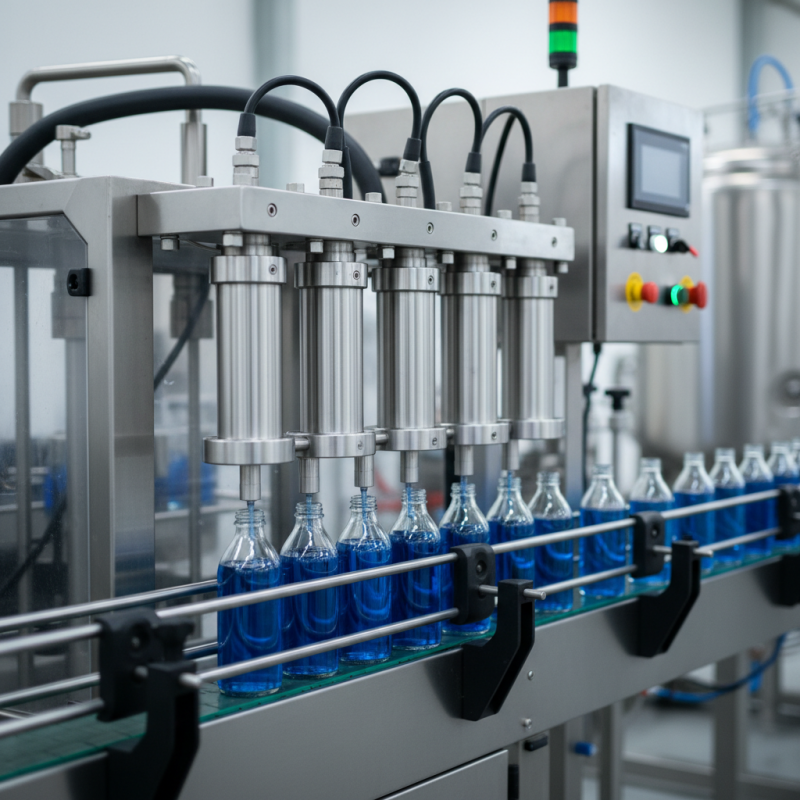
Understanding Piston Fillers: Types and Their Applications
Piston fillers are essential for businesses that need precise liquid filling solutions. Understanding the different types of piston fillers is crucial for choosing one that fits your operational needs. The most common types are volumetric and time-based fillers. Volumetric fillers dispense a fixed volume of liquid based on the cylinder's capacity. Time-based fillers, on the other hand, rely on the duration of the filling cycle.
According to industry reports, the market for piston fillers is expected to grow by 5.2% annually. This growth is fueled by the increasing demand for packaged liquids in various sectors such as food, pharmaceuticals, and cosmetics. Each application often requires a specific type of piston filler. For instance, food products often need sanitary designs, while cosmetic fillers must handle viscous materials efficiently.
Tips: When choosing a piston filler, consider the viscosity of your product. High-viscosity liquids may require a filler with robust capability. Also, think about the production rate. Ensure the filler can keep up with your manufacturing speed. Always consult with industry experts to align the right technology with your specific requirements. This helps avoid costly mistakes in production setups.
How to Choose the Best Piston Filler for Your Business? - Understanding Piston Fillers: Types and Their Applications
| Type of Piston Filler | Application | Filling Capacity (L/min) | Suitable Viscosity | Material Compatibility |
|---|---|---|---|---|
| Standard Piston Filler | Sauces, Jams, and Semi-liquids | 5-10 | Up to 10,000 cP | Glass, Plastic |
| High-Viscosity Piston Filler | Creams, Pastes, and Toothpaste | 3-8 | 10,000 - 100,000 cP | Metal, High-Density Plastic |
| Low-Viscosity Piston Filler | Beverages, Water-thin Liquids | 10-20 | Up to 1,000 cP | Glass, Food-safe Plastic |
| Multi-Head Piston Filler | High-volume Production for All Forms | 15-30 (per head) | Varies greatly | Various |
| Automatic Piston Filler | Fully Automated Production Lines | Variable | Varies greatly | Various, often custom |

Key Factors to Consider When Choosing a Piston Filler
When selecting the best piston filler for your business, various key factors are essential. The accuracy of the filler is paramount. Studies show that a filler’s precision can impact production by up to 15%. Inaccurate filling might lead to waste and increased costs. Additionally, consider the material compatibility. Depending on whether you are filling liquids, creams, or pastes, the material of the piston can greatly affect performance.
Capacity is another important factor. Understand your production needs. If you have a high output requirement, choose a filler with a larger hopper capacity. Some models can fill up to 600 bottles per hour, which can significantly improve efficiency.
Tips: Always assess ease of cleaning. A filler that is easy to disassemble will save time. Pay attention to the level of automation, especially if your business is scaling. Lastly, consider the brand’s reputation. Reliable data shows that businesses often face issues with poorly reviewed equipment. Prioritize quality and reliability to avoid future complications.
Assessing Your Business Needs for Piston Filling Machines
Choosing the right piston filler requires careful assessment of your business needs. Start by analyzing the types of products you will be filling. Consider viscosity, particle size, and potential foaming. Industry reports indicate that about 75% of manufacturers cite these factors as crucial when selecting filling equipment.
Your production volume significantly influences your choice. High-volume operations may require automatic piston fillers, while smaller businesses might find semi-automatic options sufficient. According to the National Association of Manufacturers, 70% of companies report increased efficiency after upgrading to more suitable fillers. This suggests proper alignment with your needs can lead to notable improvements.
Another key aspect is flexibility. Some businesses require equipment that can handle various volumes or product types. Studies imply that 80% of manufacturers prioritize this adaptability. Evaluate your future needs, as the wrong choice can hinder growth. Investing time in thorough research and understanding your requirements will aid in making an informed decision.
Comparing Price vs. Quality in Piston Fillers
When selecting a piston filler for your business, the balance between price and quality is crucial. While it might be tempting to go for the cheapest option, remember that lower quality often leads to higher long-term costs. Invest in a filler that delivers consistent accuracy and speed. A reliable machine can improve production rates and reduce waste, ultimately saving money.
**Tips:** Focus on the materials used in construction. Durable materials enhance longevity. Look for features like easy cleaning and maintenance. If a machine is hard to maintain, it can lead to downtime. Assess your specific needs. A filler that seems perfect might not suit your production environment.
Understanding the trade-offs between initial cost and operational efficiency is essential. A low-cost piston filler may lack the precision required for certain liquids. This can result in costly overruns or product recalls. Conversely, higher-quality machines often come with warranties and better customer support. This support can be invaluable when issues arise, making the upfront investment worthwhile. Remember, each configuration may require adjustments, and not every filler fits all products seamlessly.
Maintenance and Support: What to Look For in a Supplier
When choosing a piston filler for your business, supplier support is crucial. Look for suppliers that offer comprehensive maintenance services. Regular upkeep extends the lifespan of your filling machines, ensuring consistent performance. A good supplier should provide easy access to replacement parts. This reduces downtime during unexpected repairs.
Tips: Check if the supplier offers training sessions for your staff. This can enhance your team’s efficiency and troubleshooting skills. A knowledgeable team can often resolve minor issues on their own.
Reliability in customer support is another key factor. Select a supplier that can respond quickly to inquiries. Delays in communication can disrupt your production flow. Ask potential suppliers about their response times. A provider that prioritizes support typically ensures smoother operations.
Tips: Consider reading customer reviews. Genuine feedback can reveal the reliability and quality of the supplier’s service. Pay attention to any recurring issues in their support. This information can guide your decision-making process significantly.
How to Choose the Best Piston Filler for Your Business?
Article Source:
NORTH EASTON MACHINE • 218 Elm Street • North Easton, MA 02356 • 508-238-6219