How to Choose the Best Ceramic Mixer Machine for Your Needs?
Choosing the right ceramic mixer machine can significantly impact your production quality. With so many options available, making the right choice is not always straightforward. You may feel overwhelmed by the various features, sizes, and brands.
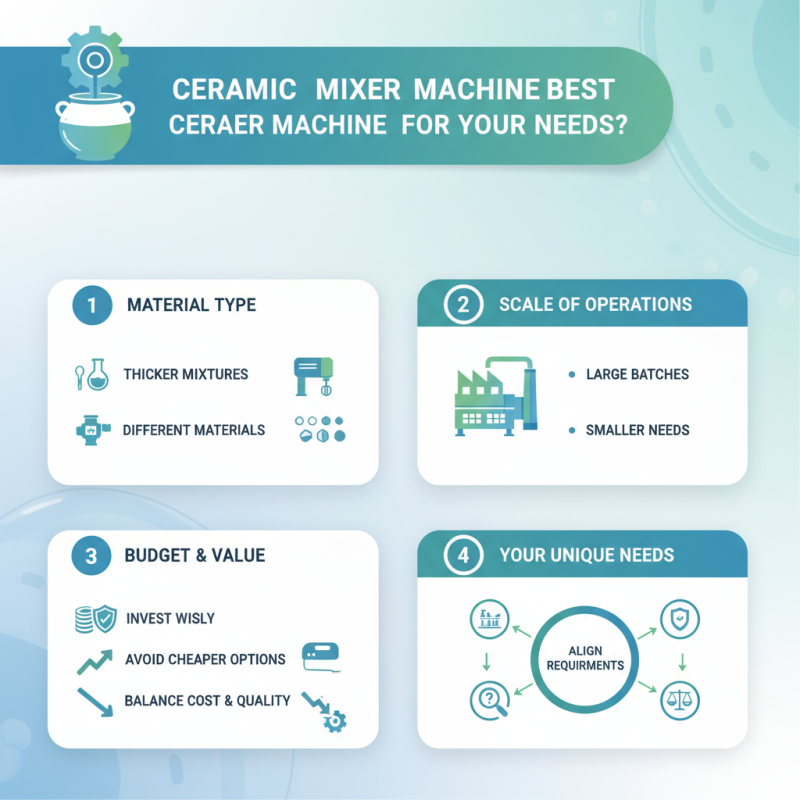
Consider what you'll be mixing. Different materials require different machines. For example, thicker mixtures may need more powerful mixers. Look for a model that meets your specific needs. Remember, a machine that works for one task may not suit another. Think about the scale of your operations too; large batches need robust machines, but smaller needs might demand portability.
Reflect on your budget. Investing in a high-quality Ceramic Mixer Machine is wise, but it shouldn't break the bank. Be cautious about cheaper options that might compromise on quality. It's crucial to balance cost against functionality and durability. Always keep in mind that the best choice is the one that aligns with your unique requirements.
Understanding the Basics of Ceramic Mixer Machines
Ceramic mixer machines play a crucial role in the production of ceramic products. They blend raw materials to create a homogenous mixture, essential for consistent quality. When choosing a ceramic mixer, understanding its basic functions is key. Mixers vary in design, capacity, and mechanism. Some are simple and suited for small batches, while others handle large volumes efficiently.
Consider the type of projects you're working on. If you're creating intricate pieces, a more precise mixer may be necessary. Look for features like adjustable speed settings and different mixing attachments. These can be vital for achieving desired textures and consistency. However, it's easy to overlook how a machine's maintenance affects its lifespan. Neglecting cleaning and upkeep can lead to costly replacements.
Size and space are also important. A compact mixer might fit your workshop, but will it handle your production needs? Think about your future as well. Will this machine still meet your needs down the line? Every choice has its trade-offs, and reflecting on them is essential before making a purchase. In the end, the right mixer is one that fits both current and future projects.
Key Features to Consider When Choosing a Ceramic Mixer
Choosing the right ceramic mixer machine is crucial for achieving quality results. When selecting a mixer, consider these key features.
First, the capacity of the mixer matters. A smaller mixer might suffice for hobbyists. However, larger productions require machines that hold up to 50 liters or more. Industry reports indicate that 70% of manufacturers prefer mid-sized mixers for flexibility.
Next, look for power options. A motor with at least 1 HP can handle dense clay mixtures effectively. This ensures consistent blending without burnout. Efficiency is key; aim for mixers that operate quietly. Noise levels above 85 dB can disrupt a workspace.
Tip: Always check the warranty. Machines with longer warranties often indicate better build quality.
Additionally, consider the ease of cleaning. Some models have removable mixing bowls, which streamline maintenance. This is important because leftover materials can contaminate future batches.
Tip: Keep a maintenance log. Regular inspections can prevent unexpected breakdowns.
Finally, look for user-friendly controls. Digital interfaces make it easy to adjust speed and timing. Look for machines that offer variable speed settings.
Types of Ceramic Mixer Machines Available on the Market
When selecting a ceramic mixer machine, understanding the types available is crucial. Several types cater to different needs. Batch mixers are popular for smaller operations. They provide flexibility and control over mixing quantities. According to industry reports, this type accounts for about 40% of market use. These mixers can handle various materials but may require more manual intervention.
[Image] Continuous mixers, on the other hand, are suited for large-scale production. They maintain a consistent flow of materials. About 30% of ceramic manufacturers prefer continuous mixers for their efficiency. However, they demand a higher initial investment. Mixing precision can sometimes lead to waste if not monitored closely. Another option is planetary mixers, known for their versatility. They combine both radial and axial mixing action. This type is often used in specialized applications.
It’s essential to weigh the pros and cons of each type before deciding. Each comes with its challenges. For example, high-energy consumption may lead to increased operational costs. In contrast, lower capacity machines can slow down production when handling large batches. Understanding your specific needs and limitations can guide you in making a more informed choice. Choose wisely to avoid future complications.
Evaluating Your Specific Needs for a Ceramic Mixer
Choosing the right ceramic mixer machine starts with understanding your specific needs. Consider the type of ceramics you work with. Do you focus on clay, porcelain, or stoneware? Each material can have different mixing requirements. Your production volume also plays a role. Are you creating small batches or large quantities?
Size and capacity are important factors. Larger mixers often handle bigger batches but may take up more space. This could impact your workspace. Also, evaluate the power source. Some mixers require a stable power supply, while others can operate on batteries or generators.
Keep in mind the features that can enhance your workflow. Some mixers offer variable speed settings. Others may have attachments for different mixing purposes. Think about your long-term goals. Investing in a more versatile machine might save you time and effort in the future. Reflect on past experiences. Have you used equipment that didn't meet your expectations? Understanding these nuances will guide you toward the best choice for your ceramic mixing needs.
Choosing the Best Ceramic Mixer Machine: Performance Comparison
Budgeting for Your Ceramic Mixer Purchase and Maintenance
When budgeting for a ceramic mixer, consider both the initial purchase and long-term maintenance costs. Prices can vary significantly, so it’s important to set a realistic budget. A good mixer is an investment, and cheaper options may lack essential features. Analyze your needs carefully. Will you be using it daily or just occasionally? If you plan on using it frequently, spending a bit more upfront might save money in repairs later.
Maintenance is often overlooked but is essential. Parts may wear out over time, especially in a busy workshop. Think about replacement parts and service availability when budgeting. Regular upkeep can prevent costly repairs in the future. Set aside a small amount each month for this purpose. It can be frustrating to face unexpected expenses. Planning ahead often makes the process smoother. Balancing quality and cost can be tough, but it’s crucial for long-term success.


 Find Your Solutions ▶