
What is the Best Machining Center for Your Business Needs?

Choosing the right Machining Center for your business is crucial. It can determine your production efficiency and product quality. A well-selected Machining Center boosts productivity and helps meet customer demands.

Machining Centers come in various types and sizes. Each serves different purposes in manufacturing. You might need a high-speed model for precision or a robust one for heavy-duty tasks. It's essential to evaluate your specific needs before making a decision.

Investing in a Machining Center is not a small feat. There are numerous factors to consider, including cost, capabilities, and space. Mistakes can lead to financial setbacks. An informed choice requires research and professional guidance. Understanding the nuances of different machining technologies is vital for long-term success.
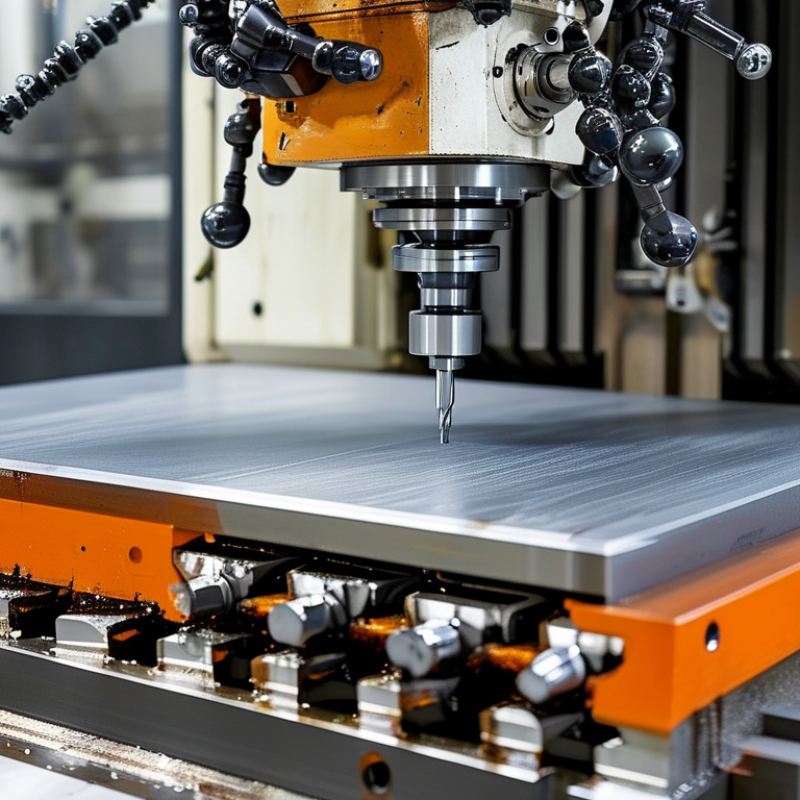
What is the Best Machining Center for Your Business Needs?

Understanding Different Types of Machining Centers: Vertical vs. Horizontal

When choosing a machining center, the decision often narrows down to vertical and horizontal types. Each has distinct advantages and limitations. Vertical machining centers (VMCs) are popular for their versatility. They excel in performing tasks such as drilling and milling. According to a recent industry report, VMCs account for 65% of the machining center market due to their adaptability in small to medium-sized production runs.

However, horizontal machining centers (HMCs) have their own strengths. They enable better chip removal and often provide quicker cycle times for large parts. A study indicates that HMCs improve productivity by up to 30% compared to VMCs in high-volume applications. Yet, they generally require a larger investment and may not be suitable for every business size.

Choosing between vertical and horizontal centers leads to crucial considerations. The potential for high efficiency must be balanced against the initial cost and space requirements. Each business must assess its production needs and budget constraints. Sometimes, a hybrid approach, integrating both types, may yield the best results, despite complicating operations.

Key Features to Consider When Choosing a Machining Center for Your Operations

Choosing the right machining center is crucial for optimizing production efficiency. Key features should be a priority during selection. One significant aspect is the spindle speed. High-speed spindles can increase productivity. According to a recent industry report, machines with spindle speeds over 10,000 RPM can enhance machining efficiency by up to 30%.

Another important feature is the machine's control system. Advanced CNC systems offer superior precision. They also allow for complex part geometries, which is vital in competitive markets. Research indicates that investing in a more advanced control system can improve accuracy by as much as 15%. However, transitioning to a new system might require additional training, which can be a hurdle for some operations.

Lastly, consider the footprint of the machining center. Smaller machines can save valuable floor space. Yet, they may sacrifice certain capabilities. This trade-off requires careful consideration. Industry data shows that choosing the wrong size can lead to efficiency losses of approximately 20%. Prioritize features that align directly with your business needs.

Evaluating Production Volume: Batch vs. Mass Production Needs in Machining

When choosing a machining center, assessing your production volume is critical. Manufacturers often face the choice between batch production and mass production. Batch production allows for flexibility. It suits businesses that require smaller quantities of various products. This method can lead to better customization and adaptability.

On the other hand, mass production focuses on high volume with low variability. This approach is efficient but may limit customization options. It’s important to analyze your market demand. For example, if customer preferences shift rapidly, batch production may be more beneficial. However, if your product has stable demand, mass production could optimize costs.

Consider your workforce and equipment capabilities, too. Some machining centers excel in batch production with quick changeovers, while others might be optimized for mass production. Reflect on your operational efficiency and how it aligns with your business goals. Making the right choice is not always clear-cut and may require further evaluation.

Cost Analysis: Budgeting for Acquisition and Maintenance of Machining Centers

When considering the acquisition of a machining center, budgeting is crucial. A recent industry report suggests that initial costs can vary widely. Basic models may start around $100,000, while advanced models can exceed $500,000. Maintenance costs typically add 5-10% of the acquisition cost annually. Ignoring these expenses can lead to budget overruns.

Operational costs also deserve attention. Power consumption, tool replacements, and labor costs can surprise many. A machining center may consume between 10-20 kWh per hour, depending on its type and operation intensity. For a facility running multiple shifts, this can amount to significant expenses monthly. It's essential to forecast these costs accurately.

Investing in a machining center isn’t just about the purchase price. Comprehensive analysis of total cost of ownership shows that neglecting ongoing expenses could result in a false sense of affordability. Decision-makers must consider both acquisition and maintenance to gauge the overall financial impact. Balancing initial investment with expected returns demands careful planning and reflection.

What is the Best Machining Center for Your Business Needs? - Cost Analysis: Budgeting for Acquisition and Maintenance of Machining Centers

Machining Center Type Acquisition Costs ($) Annual Maintenance Costs ($) Average Downtime (Hours/Year) Recommended Industry
Vertical Machining Center 50,000 5,000 40 Aerospace
Horizontal Machining Center 100,000 10,000 30 Automotive
5-Axis Machining Center 150,000 12,000 25 Medical Devices
CNC Milling Machine 40,000 4,500 50 Consumer Goods
Turning Center 60,000 6,000 35 Electronics

Future Trends in Machining Technology: Automation and Advanced CNC Systems

The landscape of machining technology is rapidly evolving, particularly with automation and advanced CNC systems. These advancements promise increased efficiency and precision in manufacturing. Automation streamlines processes, reducing human error and labor costs. CNC systems enable complex designs that were once impractical. They operate with incredible accuracy, making them ideal for intricate parts.

Despite these benefits, transitioning to automation presents challenges. Initial investments can be significant, and businesses must train staff to operate new equipment. The learning curve may slow down immediate productivity. Some companies find it hard to adapt, facing resistance from employees.

Future trends indicate a growing reliance on smart machinery. These systems collect data to optimize performance and predict maintenance needs. The shift to automation is not just a trend; it’s becoming a necessity. Companies that embrace this technology will likely outperform those that don’t. However, the journey requires careful planning and consideration of both technical and human factors.

Machining Technology Trends: The Shift Towards Automation and Advanced CNC Systems

Certified Quality System

© North Easton Machine Company, Inc. All rights reserved. • Site: Blog
NORTH EASTON MACHINE • 218 Elm Street • North Easton, MA 02356 • 508-238-6219