
10 Best Air Tube Fittings for Global Buyers
Choosing the right Air Tube Fittings can determine whether a pneumatic system runs smoothly or leaks under pressure. Global buyers face many variables. Thread standards, tube materials, temperature ranges, and delivery conditions all matter.
Anthony Esposito, a respected fluid-power author, wrote, “The purpose of a fluid power system is to transmit power.” That principle applies directly to fittings. A poorly matched connector interrupts airflow, wastes energy, and may shorten equipment life. A reliable fitting should grip the tube firmly, seal consistently, and withstand real working conditions. It should also support maintenance teams using familiar tools and clear product specifications.
This guide examines 10 Best Air Tube Fittings for Global Buyers across industrial automation, packaging, robotics, workshops, and mobile equipment. The selection considers push-to-connect designs, compression fittings, threaded adapters, flow controls, and bulkhead connectors. Materials such as nickel-plated brass, stainless steel, and engineered polymers receive attention. So do operating pressure, temperature, corrosion resistance, certifications, and replacement availability.
A fitting may look tiny. Its impact is not.
Practical testing remains essential. Buyers should confirm thread compatibility, tube outside diameter, seal materials, and manufacturer data before ordering. ISO 4414 guidance can support safer pneumatic design, but product-specific verification still matters. No ranking is perfect. Regional standards and difficult environments may change the best choice. That is why this comparison combines technical evidence with field experience, while recognizing that even careful recommendations deserve another review before purchase.
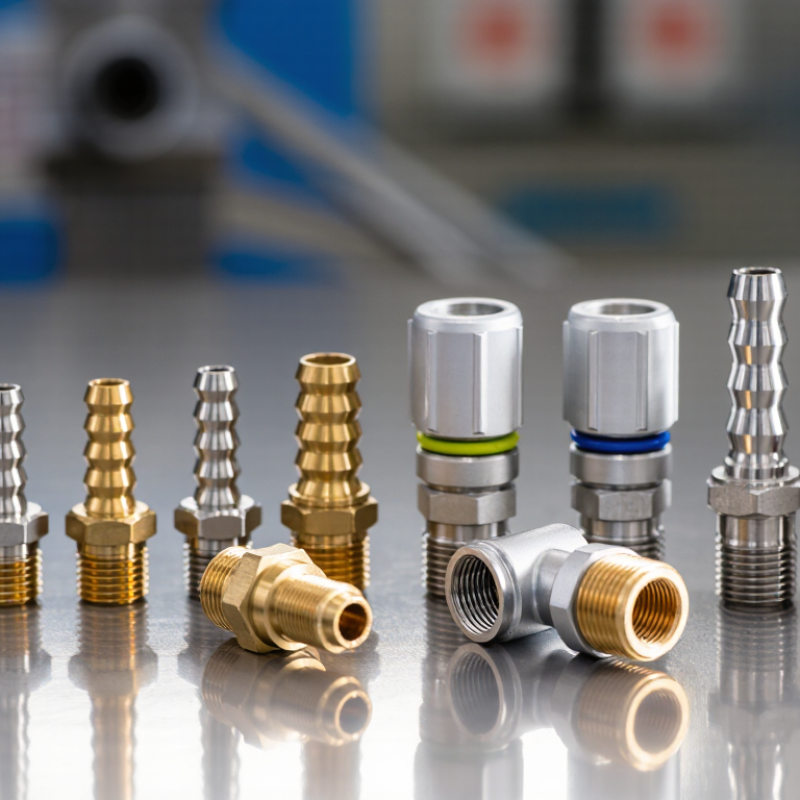
Air Tube Fitting Types and Their Main Applications
10 Best Air Tube Fittings for Global Buyers
Air Tube Fitting Types and Their Main Applications
Push-to-connect fittings are common in factory automation because installation needs no threading tools. They suit pneumatic cylinders, sensors, valves, and compact control panels. A technician cuts the tube square, inserts it, and checks the collet. Speed matters. Threaded fittings remain valuable where vibration, heat, or repeated maintenance is expected. Select the correct port standard, such as NPT, BSPP, or BSPT. A mismatch may seal briefly, then leak under cycling.
Elbow fittings redirect tubing around machine frames and reduce sharp bends. Tee and Y fittings divide airflow between actuators, but they can create uneven pressure if branches are poorly sized. Bulkhead fittings pass through cabinet walls or machine guards.
Flow-control fittings regulate cylinder speed, while silencers reduce exhaust noise near operators. Materials also affect service life. Nylon tubes work well in general factory air, while polyurethane supports tighter bends and frequent movement.
The U.S. Department of Energy reports that compressed-air systems can consume 10% of industrial electricity, with poorly managed systems losing 20–30% through leaks. Fitting choice therefore affects operating cost, not only assembly time. ISO 4414 also emphasizes safe pneumatic design, isolation, and exhaust control.
In field inspections, leaks often come from damaged tube ends or over-tightened threads. That weakness deserves attention.
Global buyers should verify pressure, temperature, tube diameter, seal material, and certification before ordering. A cheaper fitting can become an expensive maintenance point.

Key Specifications for Comparing Air Tube Fittings
When comparing air tube fittings, start with measurable specifications, not appearance. Confirm tube outside diameter, thread standard, working pressure, temperature range, and flow capacity. Push-in fittings should match ISO 14743 requirements where applicable. Threaded ports may follow NPT or ISO 7-1 standards, so visual similarity is not enough.
Material also affects service life. Nickel-plated brass handles many workshop environments, while engineering polymers reduce weight and may resist corrosion. Check seal material against oil, moisture, and temperature exposure. The U.S. Department of Energy reports that compressed-air leaks can waste 20% to 30% of compressor output. A loose fitting can become an expensive, almost invisible problem. Pressure drop matters too. A smaller internal passage may restrict airflow, even when the connection looks correct. MarketsandMarkets has projected continued growth in industrial pneumatic equipment, increasing demand for standardized, efficient connections. However, market growth does not remove selection errors.
Tips: Build a comparison sheet with six fields: tube size, thread type, pressure, temperature, material, and flow. Test samples at operating pressure, then inspect for leakage after thermal cycling. Do not trust catalog figures blindly; manufacturers may use different test conditions. I have seen well-specified fittings fail because installers mixed thread standards. That detail deserves more attention. A perfect specification table is not a perfect installation.
10 Best Air Tube Fittings for Global Buyers - Key Specifications for Comparing Air Tube Fittings
| No. | Fitting Type | Typical Application | Compatible Tube | Common Port Options | Typical Working Pressure at 20°C | Typical Body / Seal Materials | Key Selection Advantage | Relevant Standards or Checks |
|---|---|---|---|---|---|---|---|---|
| 1 | Push-In Straight Fitting | Direct connection between a pneumatic tube and a valve, manifold, or actuator. | PU, PA, and PE tubing; common outside diameters: 4, 6, 8, 10, and 12 mm. | M5, G1/8, G1/4, G3/8, G1/2; selected NPT sizes. | Up to approximately 10 bar, depending on tube, size, and temperature. | Nickel-plated brass or engineering polymer; NBR, FKM, or EPDM seal options. | Fast tool-free installation and compact straight-line routing. | ISO 14743; verify tube outside diameter, thread form, and pressure rating. |
| 2 | Push-In Elbow Fitting | Changes tube direction by 90 degrees in confined pneumatic installations. | PU and PA tubing with 4–12 mm outside diameters. | M5, G1/8, G1/4, G3/8, G1/2; metric and NPT versions are commonly available. | Typically 0 to 10 bar at 20°C. | Nickel-plated brass or polymer body; elastomer seal and stainless-steel gripping ring. | Reduces bending radius and simplifies routing around panels. | ISO 14743; check minimum bend radius and swivel-clearance requirements. |
| 3 | Adjustable Swivel Elbow | Directional adjustment at cylinders, control valves, and moving pneumatic assemblies. | PU and PA tubing; common outside diameters: 6, 8, 10, and 12 mm. | G1/8, G1/4, G3/8, G1/2; NPT alternatives may be specified. | Typically 0 to 10 bar at 20°C. | Nickel-plated brass, polymer, stainless-steel adjustment components; NBR or FKM seal. | Allows post-installation alignment and helps prevent tube twisting. | ISO 14743; confirm swivel movement, torque limits, and leakage performance. |
| 4 | Push-In Tee Fitting | Creates a branch connection for parallel cylinders, sensors, or pneumatic circuits. | PU, PA, and PE tubing; usually 4–12 mm outside diameter. | Equal tube ports or reducing combinations such as 8–6–8 mm. | Typically up to 10 bar at 20°C. | Nickel-plated brass or polymer body; NBR, FKM, or EPDM seal options. | Provides a compact branch without additional threaded adapters. | ISO 14743; match all three tube sizes and confirm flow-direction requirements. |
| 5 | Push-In Cross Fitting | Distributes compressed air to four tube branches in compact manifolding layouts. | PU and PA tubing, commonly 6, 8, and 10 mm outside diameter. | Four equal push-in tube ports; reducing versions may be available. | Typically up to 10 bar at 20°C. | Nickel-plated brass or engineering polymer; elastomer seals. | Combines several branch points while reducing component count. | ISO 14743; evaluate pressure drop and accessibility for tube release. |
| 6 | Bulkhead Fitting | Passes a pneumatic tube through a cabinet wall, machine panel, or partition. | PU and PA tubing; typical outside diameters: 6, 8, 10, and 12 mm. | Tube-to-tube connection with panel mounting nut; metric and inch tube sizes. | Typically 0 to 10 bar at 20°C. | Nickel-plated brass or polymer body; NBR or FKM panel seal. | Maintains a clean separation between internal and external tubing. | ISO 14743; verify panel-hole diameter, wall thickness, and locking method. |
| 7 | Tube Reducer Fitting | Connects different tube outside diameters in compact pneumatic circuits. | Common combinations include 8–6 mm, 10–8 mm, and 12–10 mm. | Push-in tube ports on both sides; straight and elbow configurations. | Typically up to 10 bar at 20°C. | Nickel-plated brass or polymer body; NBR, FKM, or EPDM seals. | Eliminates the need for separate threaded reducers. | ISO 14743; check the smaller tube side for flow restrictions. |
| 8 | Threaded Tube Adapter | Connects a push-in tube to a valve, actuator, manifold, or other threaded component. | PU and PA tubing; 4–12 mm outside diameter is widely used. | G1/8, G1/4, G3/8, G1/2; NPT and metric thread options. | Typically up to 10 bar at 20°C. | Nickel-plated brass or stainless steel; NBR, FKM, or pre-applied thread seal. | Offers broad compatibility across global equipment standards. | ISO 7-1 or ISO 228-1 for BSP threads; ASME B1.20.1 for NPT threads. |
| 9 | One-Touch Check Valve Fitting | Permits airflow in one direction and helps prevent reverse flow or pressure loss. | PU and PA tubing; commonly 6–12 mm outside diameter. | Push-in tube ports; straight, elbow, and threaded configurations. | Typically 0.05 to 10 bar, depending on cracking pressure and design. | Nickel-plated brass or polymer body; stainless-steel spring; NBR or FKM seal. | Supports circuit isolation and protects against unwanted backflow. | ISO 14743; verify flow arrow, cracking pressure, and reverse leakage rate. |
| 10 | Stainless-Steel Push-In Fitting | Used in corrosive, washdown, food-processing, chemical, or high-cleanliness environments. | PA, PTFE, and suitable PU tubing; commonly 4–12 mm outside diameter. | M5, G1/8, G1/4, G3/8, G1/2; NPT versions may be specified. | Commonly up to 10 bar at 20°C; confirm the exact design rating. | 304 or 316 stainless steel; FKM or EPDM seal options. | Improved corrosion resistance and durability in demanding environments. | ISO 14743; confirm material grade, chemical compatibility, cleanability, and temperature limits. |
Note: Pressure values are typical comparison ranges at approximately 20°C. The actual allowable pressure depends on fitting size, tube material, seal compound, temperature, thread type, and the manufacturer’s tested rating.
How to Choose the Right Fitting for Your Air System
10 Best Air Tube Fittings for Global Buyers
Choosing the right fitting starts with the air system, not the catalog photo. Measure the tube’s outside diameter with calipers, then confirm the fitting size. A 6 mm tube does not match every “quarter-inch” connection. Check the thread standard carefully. NPT, BSPP, and BSPT threads are not automatically interchangeable. A fitting may turn smoothly and still leak.
Review working pressure, temperature, airflow, and vibration before selecting a fitting. Push-to-connect fittings suit fast installation and frequent maintenance. Compression fittings can provide strong connections when tubing may move slightly. Elbows reduce routing space, while tees divide air lines. Stainless steel handles demanding environments better, but engineering plastic may reduce weight and cost. Confirm material compatibility with oil, moisture, cleaning agents, and outdoor exposure. I once trusted a visual match and missed the thread type. The connection failed during testing. That mistake was avoidable.
Tips: Keep tubing cuts square and clean. Push the tube fully into the fitting, then pull it gently to check engagement. Use leak-detection fluid during commissioning. Never exceed the lowest pressure rating in the assembly. Leave room around release collars for maintenance. Record sizes and thread standards on the equipment drawing. If the system operates near its limits, consult technical data and apply ISO 4414 safety practices. Small details matter. Recheck them.
Installation and Maintenance Requirements
Selecting air tube fittings is only part of achieving a dependable pneumatic installation. Proper preparation matters more than many buyers expect. I have found that a clean, square tube cut prevents most early leaks. Remove burrs without reducing the tube diameter. Push the tube fully into the fitting, then apply a gentle pull test. It should remain secure.
Check thread type, tube material, operating pressure, and temperature before assembly. Tapered threads may require a compatible sealant, while compression fittings need correct nut tightening. Excessive force can damage threads or deform the tube. A calibrated torque tool is useful, especially in high-vibration equipment. After installation, pressurize the system gradually and test every joint with approved leak-detection fluid. Never rely only on sound.
Maintenance should include visual inspections around cylinders, valves, and sharp bends. Look for cracked tubing, discoloration, loose collars, and oil or moisture buildup. Replace damaged parts after safely releasing pressure. In outdoor systems, sunlight and temperature changes can shorten tube life. Indoor installations are not automatically protected. I once overlooked a small tube bend near a moving guard; repeated flexing caused a slow leak weeks later. That mistake reinforced the need for strain relief and movement checks. Keep inspection records, including pressure readings and replacement dates. Supplier documentation should confirm material compatibility and tested performance for the intended application.
Top Factors for Global Buyers to Evaluate Suppliers
10 Best Air Tube Fittings for Global Buyers
Global buyers should evaluate suppliers beyond unit price. Air tube fittings must match tube material, thread standard, pressure range, temperature, and installation space. A fitting that works on a workshop bench may fail in a vibrating machine. Ask for dimensional drawings, material certificates, batch traceability, and pressure-test records. ISO’s Survey 2022 recorded more than 1.2 million ISO 9001 certificates worldwide, yet certification alone does not prove consistent fitting quality. Request recent inspection samples and clarify how nonconforming parts are handled.
Supplier reliability also depends on documentation and delivery control. UNCTAD’s Review of Maritime Transport 2023 states that ships carry over 80% of global merchandise trade by volume. Therefore, packaging, export paperwork, and replacement procedures deserve serious attention. Check whether the supplier can maintain stable thread gauges and sealing performance across repeated batches. Compare response times across different time zones. It sounds minor, but slow technical replies can delay an entire production line. The uncomfortable point is that a polished datasheet may still hide weak process control.
Tips: Test samples using your actual tubes and working pressure. Confirm whether dimensions follow ISO, BSP, NPT, or another specified standard. Ask for tolerance data, not only “high precision” claims. Review at least three production batches when possible. A lower quotation can become expensive after leakage, rework, or emergency freight. Supplier audits should include warehouse labeling, moisture protection, and final inspection records, not only office certificates.
10 Best Air Tube Fittings for Global Buyers
Top Factors for Global Buyers to Evaluate Suppliers
This practical evaluation index compares widely used air-tube fitting types against key global sourcing requirements, including connection reliability, installation efficiency, leak resistance, application flexibility, and maintenance convenience. Scores are normalized on a 0–100 scale and should be verified against the supplier’s material specifications, pressure ratings, tube compatibility, and applicable standards.
NORTH EASTON MACHINE • 218 Elm Street • North Easton, MA 02356 • 508-238-6219