7 Best 24V Actuators for Industrial Applications
Industrial automation is moving beyond simple motion. Machines now position valves, guards, conveyors, lifting tables, and inspection fixtures with tighter timing and greater accountability. The International Federation of Robotics reported 541,302 industrial robot installations worldwide in 2023, confirming the scale of automated production. Every motion system behind that growth needs dependable actuation.
A 24VDC solution remains practical for many industrial control cabinets. It integrates with PLCs, sensors, relays, and backup systems without introducing unnecessarily high control voltages. However, voltage alone does not define performance. An effective Actuator 24v must match force, stroke length, duty cycle, speed, mounting geometry, environmental exposure, and feedback requirements. Small differences matter. A dusty packaging line is not a clean laboratory. Neither is a washdown area.
This guide examines seven 24V actuators selected for industrial use. The evaluation considers rated load, IP protection, thermal behavior, noise, control compatibility, service life, and installation evidence. MarketsandMarkets and Grand View Research both identify automation, material handling, and factory equipment as important drivers for linear actuator demand. Their findings support a careful comparison, not a quick ranking. Manufacturer specifications also require scrutiny, because peak force is not continuous force. That detail is easy to miss. No shortlist is flawless. Real installations reveal limitations that product tables often hide. Readers should verify local safety requirements, machine-risk assessments, and supplier documentation before purchase. The best actuator is not always the strongest. It is the unit that delivers repeatable motion, predictable maintenance, and suitable protection in the actual working environment.
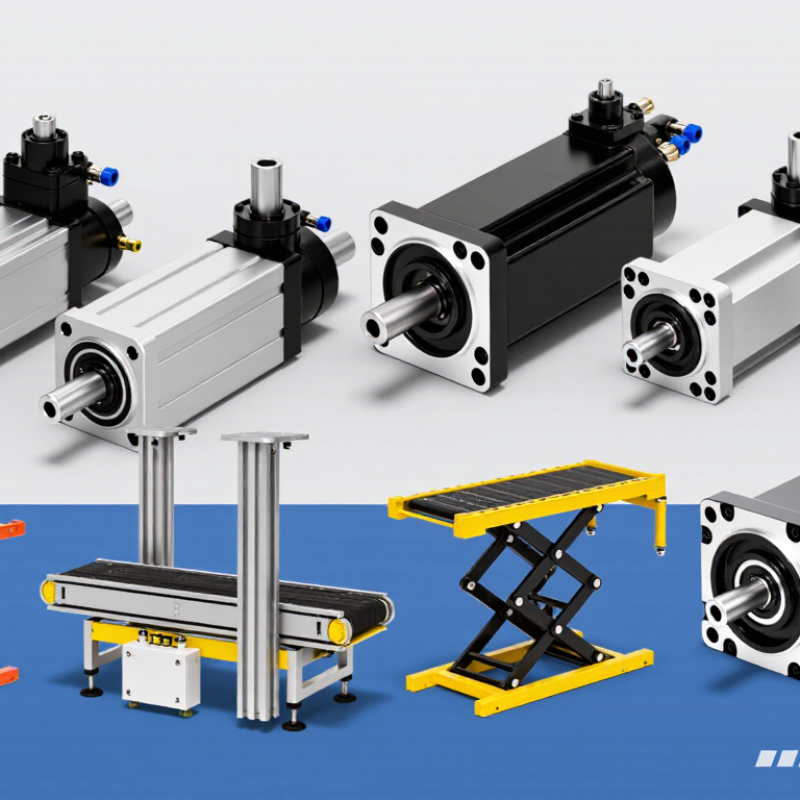
What Are 24V Actuators and How Do They Work?
What Are 24V Actuators and How Do They Work?
A 24V actuator converts electrical energy into controlled mechanical movement. Most industrial models use a DC motor, gearbox, lead screw, or linear rail. When a controller applies 24 volts, the motor turns and drives the screw. The screw then extends or retracts the actuator rod. Reversing polarity usually reverses motion. Sensors can report position, speed, or overload conditions.
The voltage is practical for factories. It supports common control cabinets and reduces shock risk compared with higher supply voltages. According to the International Federation of Robotics World Robotics 2024 report, 541,302 industrial robots were installed globally in 2023. This growth increases demand for compact positioning components around robots, conveyors, valves, and adjustable fixtures. A 24V actuator can move a guard, align a workpiece, or adjust a tooling height with repeatable force.
Specifications matter more than voltage alone. Engineers should check stroke length, load, duty cycle, speed, backlash, and ingress protection. IEC 60204-1 also emphasizes safe electrical equipment for machinery. A sealed housing helps in dusty areas, but it does not solve overheating.
That assumption is convenient, but incomplete. Long strokes can reduce speed. Repeated stalls can damage the motor or gearbox. Voltage drops in long cables may also weaken starting torque. In practical testing, measure current during startup and under real load. Laboratory figures can look excellent. Factory conditions are less forgiving.
Key Features of 24V Actuators for Industrial Use
Selecting the seven best 24V actuators starts with application conditions, not catalog ranking. The 2024 World Robotics report recorded 541,302 industrial robots installed worldwide in 2023, increasing demand for dependable motion hardware. 24V systems fit many automated machines because they offer practical control voltage, manageable wiring, and broad power-supply compatibility.
Key features matter on the factory floor. Check rated force, stroke length, speed, duty cycle, and peak current together. A 1,000-newton actuator may stall under repeated loads if thermal limits are ignored. IP65 protection helps resist dust and water jets, while feedback sensors improve positioning accuracy. For moving platforms, limit switches and overload protection can prevent costly mechanical damage. Short cables also reduce voltage drop.
Reliability needs evidence.
The International Federation of Robotics reports that Asia accounted for about 70% of global robot installations in 2023, where compact control cabinets and continuous operation are common. Select actuators with documented temperature ranges, cycle-life testing, and electromagnetic compatibility data. A 24V actuator should also match the controller’s braking method and inrush-current capacity. Engineers sometimes focus too heavily on force. That is a mistake. Noise, backlash, maintenance access, and emergency stopping behavior deserve equal attention. I would still verify every manufacturer’s test conditions, because “industrial duty” can mean very different things.
How to Compare Actuator Types, Loads, and Operating Speeds
7 Best 24V Actuators for Industrial Applications: Comparing Loads and Speeds
The best 24V actuator depends on force, travel, duty cycle, and control accuracy. Seven common options include rod linear, rodless linear, electric-cylinder, screw-driven, belt-driven, rotary, and gripper actuators. Screw systems deliver strong holding force and repeatability. Belt systems usually provide higher travel speeds, but they may lose accuracy under heavy loads. Rotary actuators suit indexing and valve movement. Compact grippers work well for controlled handling.
Calculate the real load, not only the product rating. A 100-kilogram vertical load creates about 981 newtons before friction. Applying a 1.5 safety factor requires roughly 1,472 newtons. Add acceleration, guide resistance, and possible impact. A 24V actuator producing 1,000 newtons at 50 millimeters per second needs 50 watts of mechanical power. Its electrical demand will be higher. Always check peak current, thermal limits, and duty cycle.
Speed can mislead.
A fast actuator may overheat during repeated strokes. The IEA Energy Efficiency 2023 report states that industry used about 37% of global final energy in 2022, making efficient motion design commercially important. The U.S. Department of Energy’s Industrial Decarbonization Roadmap also identifies motor-driven systems as major industrial energy users. In commissioning practice, selecting only by maximum force often causes poor stopping accuracy. I would compare rated load, continuous load, stroke speed, backlash, IP protection, and emergency stopping behavior. A neat spreadsheet still needs real-cycle testing.
Seven Recommended 24V Actuators for Different Applications
Selecting a 24V actuator depends on motion, load, duty cycle, and environmental exposure. A compact rod actuator suits adjustable fixtures, inspection gates, and light clamping tasks. A track actuator works better where side loading and limited installation space matter. For repeated pushing, an electric cylinder offers stronger guidance and cleaner force control. A tubular actuator fits lift tables and ergonomic workstations, especially when its sealed housing faces dust or occasional splashes.
A feedback actuator with a position sensor supports packaging machines and synchronized mechanisms. A heavy-duty linear actuator is suitable for conveyor diverters, valve control, and industrial lifting, but its mounting structure must handle reaction forces. A miniature actuator serves small vents, locks, and laboratory equipment. Check the 24V supply during startup, not only its nominal voltage. Measure real load peaks. Select an IP rating from actual cleaning conditions, and compare duty cycle with the machine’s timing chart. A thermal cutoff is useful, though it can interrupt production unexpectedly. One common mistake is choosing by maximum force alone. Stroke length, retracted size, noise, backlash, and maintenance access can change the result. I would also test the actuator under cold starts and uneven loading before approving production use. Specifications look precise. Installation rarely is.
7 Best 24V Actuators for Industrial Applications - Seven Recommended 24V Actuators for Different Applications
The specifications below represent practical 24V DC actuator configurations commonly used in industrial equipment. Actual performance depends on the selected model, load conditions, mounting arrangement, and duty cycle. | No. | Recommended Actuator Type | Typical Application | Typical Stroke | Typical Force | Typical Speed | Ingress Protection | Feedback Option | Why It Is Recommended |
| 1 | Compact Linear Actuator | Light-duty conveyors, inspection systems, small fixtures, and access panels | 50–300 mm | 500–2,500 N | 5–40 mm/s | IP54–IP65 | Limit switches or Hall sensors | Small footprint, simple installation, and efficient operation for moderate loads |
| 2 | Heavy-Duty Linear Actuator | Material-handling equipment, machine guards, lifting platforms, and industrial positioning | 100–600 mm | 4,000–12,000 N | 3–20 mm/s | IP65–IP66 | Potentiometer, Hall sensor, or encoder | High thrust capacity and robust construction for demanding loads |
| 3 | High-Speed Linear Actuator | Automated sorting, packaging machinery, pick-and-place systems, and rapid adjustment mechanisms | 50–400 mm | 300–2,000 N | 30–100 mm/s | IP54–IP65 | Encoder or Hall sensors | Short movement times support higher machine throughput |
| 4 | Precision Linear Actuator | CNC auxiliary axes, optical equipment, laboratory automation, and precision alignment | 25–250 mm | 100–1,500 N | 1–25 mm/s | IP40–IP65 | Optical encoder or potentiometer | Designed for controlled motion, repeatability, and accurate positioning |
| 5 | Washdown-Resistant Actuator | Food-processing machinery, beverage equipment, cleaning systems, and humid production areas | 50–500 mm | 1,000–6,000 N | 5–35 mm/s | IP66–IP69K | Hall sensors or sealed potentiometer | Sealed housing and corrosion-resistant materials improve durability in wet environments |
| 6 | Fail-Safe or Brake-Equipped Actuator | Safety guards, adjustable platforms, valves, dampers, and vertical load control | 100–500 mm | 1,500–8,000 N | 3–30 mm/s | IP54–IP66 | Limit switches, Hall sensors, or encoder | Brake or self-locking mechanisms help hold position during power loss |
| 7 | Synchronized Multi-Actuator System | Height-adjustable workstations, lifting tables, ergonomic production lines, and large platforms | 200–800 mm | 2,000–10,000 N per actuator | 5–30 mm/s | IP54–IP65 | Encoders or Hall sensors with control module | Electronic synchronization helps maintain level movement and balanced loads |
Installation, Control, Safety, and Maintenance Considerations
7 Best 24V Actuators for Industrial Applications
Installation, Control, Safety, and Maintenance Considerations
Choosing among seven 24V actuators requires more than comparing force and stroke. The International Energy Agency reports that electric motor systems consume roughly half of global electricity. Small efficiency losses still matter across continuous-duty equipment. During installation, measure voltage at the actuator terminals, not only at the power supply. Long cables can create voltage drop, slow movement, and nuisance faults. Leave access around the rod, connector, and limit switches. A tidy cabinet is helpful, but it can still hide poor grounding.
Control design should match the actuator’s real feedback method. Digital limit switches support basic positioning. Encoders provide better repeatability but need compatible PLC inputs. Use current protection, controlled acceleration, and a defined stop response. Never assume a 24V circuit is automatically safe. IEC 60204-1 and ISO 13849-1 provide useful machinery-safety frameworks. An emergency stop should interrupt hazardous motion through a validated safety circuit, not software alone. Mechanical load holding also deserves testing, especially when gravity can back-drive the actuator.
Maintenance teams should record travel time, current draw, noise, and temperature during normal cycles. The U.S. Department of Energy’s Operations & Maintenance Best Practices Guide reports potential maintenance-cost savings of 12–18% through preventive practices. Inspect mounting bolts and cable jackets. Check seals after washdown. Replace worn limit switches before positioning becomes unstable. This is where many plans become too optimistic. A clean inspection sheet cannot replace a real load test. Keep one spare connector and document every adjustment.
7 Best 24V Actuator Configurations for Industrial Applications
The chart compares representative nominal force requirements for common industrial 24V actuator applications. Actual selection must account for load direction, stroke, duty cycle, speed, environmental protection, emergency-stop behavior, and the machine manufacturer’s specifications.
For installation, provide rigid mounting and correct alignment. For control, use a properly rated 24VDC power supply, limit switches, current protection, and a suitable PLC or relay interface. For safety, prevent unexpected motion with guarding, interlocks, overload protection, and a documented emergency-stop strategy. For maintenance, inspect mounting points, wiring, seals, lubrication requirements, noise, backlash, and abnormal current draw at scheduled intervals.



 Find Your Solutions ▶