
2026 Top Single Gauge Manifold Types for Global Buyers?

Global buyers entering 2026 are reassessing how small instrumentation choices affect safety, maintenance, and measurement quality. A Single Gauge Manifold combines isolation, venting, and pressure connection functions in one compact assembly. It can reduce tubing, leak points, and installation time around pressure transmitters and gauges.

Industry data supports this attention. MarketsandMarkets’ Industrial Valves Market research identifies process automation, energy infrastructure, and water treatment as important demand areas. Grand View Research also reports continued growth in industrial instrumentation, supported by digital plants and stricter process-control requirements. These trends do not guarantee every manifold purchase will deliver savings. Material selection, pressure rating, temperature range, and seal compatibility still decide field performance.

Details matter.

For example, a stainless-steel manifold installed beside a vibrating pump needs reliable thread integrity and accessible valve handles. Buyers should compare ASME, ISO, and manufacturer test documentation, rather than relying on catalog photographs. Reports from ARC Advisory Group and ISA emphasize lifecycle reliability, maintenance planning, and measurement integrity across automation systems. However, market reports often classify manifolds under broader valve or instrumentation categories. Their figures are useful, but not perfectly comparable.

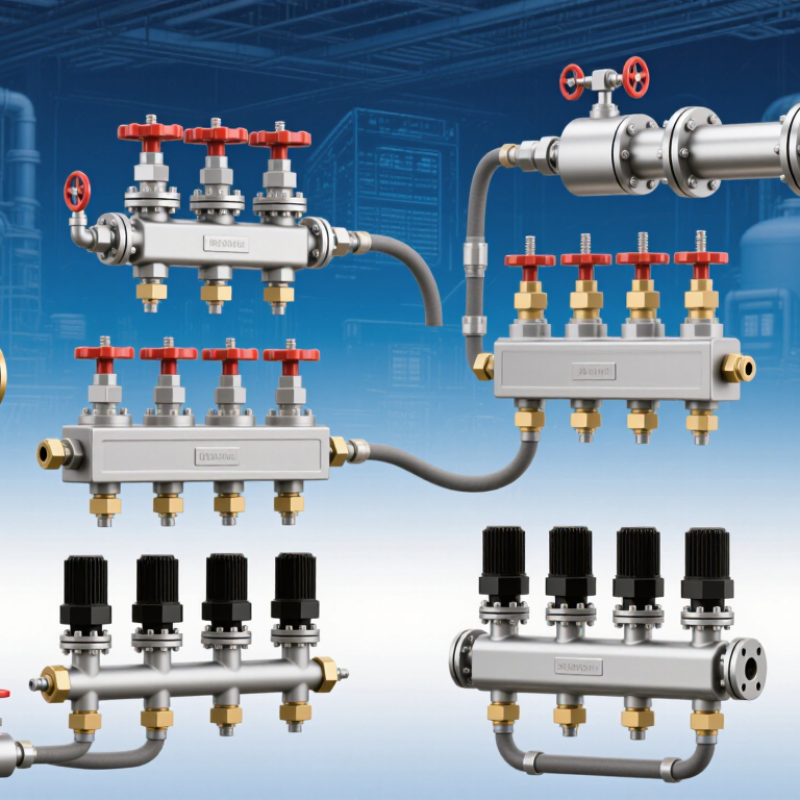
This 2026 guide examines leading Single Gauge Manifold types for international buyers. It considers two-valve, three-valve, five-valve, block-and-bleed, and customized configurations. It also reviews connection standards, pressure classes, materials, certification records, and supplier support. The practical question is simple: which design fits the process, not merely the specification sheet?
2026 Top Single Gauge Manifold Types for Global Buyers?

Single Gauge Manifolds: Definition, Purpose, and Core Components

A single gauge manifold is a compact valve assembly connecting one pressure gauge to a process line. It usually combines an isolation valve with a vent or bleed path. Some designs include a calibration port. The exact arrangement varies by pressure class and service. That boundary is not always obvious.

Its purpose is practical: isolate the gauge, release trapped pressure, and support safer inspection or replacement. The main components include a machined body, process connection, gauge connection, valve stem, seat, packing, and vent outlet. Materials must match pressure, temperature, and fluid conditions. ASME B16.34 addresses valve pressure-temperature ratings, while ASME B40.100 covers pressure gauge performance and selection. ISO 5208 also provides leakage-testing methods for industrial valves.

Market data shows why small components deserve serious attention. MarketsandMarkets estimates the industrial valves market could grow from about USD 78 billion in 2024 to nearly USD 98 billion by 2029. Its analysis links growth to process industries, energy projects, and water infrastructure. A manifold can reduce connection points, but fewer joints do not guarantee safety. Installation errors still occur, especially when operators confuse the bleed valve with a full isolation device. Field inspection should verify thread condition, stem movement, leakage, and gauge zeroing. I have found that documentation is often weaker than the hardware. That needs improvement.

2026 Top Single Gauge Manifold Types for Global Buyers

Single Gauge Manifolds: Definition, Purpose, and Core Components

A single gauge manifold is a compact valve assembly installed between a pressure gauge and a process line. Its main purpose is to isolate the gauge, release trapped pressure, support calibration, and simplify maintenance. The chart compares common two-valve, three-valve, and five-valve configurations by their typical functional valve arrangement.

The valve counts represent conventional functional layouts: isolation valves, equalizing valves, and bleed or vent valves. Actual configurations may vary according to pressure rating, temperature, fluid compatibility, connection type, and applicable international standards.

Key Types of Single Gauge Manifolds Available in 2026

Key Types of Single Gauge Manifolds Available in 2026

Single-gauge manifolds remain practical for pressure isolation, venting, and measurement in compact systems. The two-valve manifold is the most common type. It combines an inlet isolation valve with an outlet isolation valve and supports fast gauge inspection. Three-valve versions add a vent or equalizing path, improving maintenance control. This design suits process lines, hydraulic equipment, and compressed gas applications.

Material selection depends on pressure, temperature, and fluid compatibility. Stainless steel manifolds offer strong corrosion resistance for demanding industrial environments. Brass versions are economical and work well with clean, non-corrosive media. Lightweight alloy bodies can reduce panel weight, but their pressure limits require careful checking. Direct-mount manifolds save space near the gauge, while remote-mount designs simplify access when piping is crowded.

Look for rated pressure, port size, seal material, temperature range, and connection standard. Calibration access also matters. A clear dial does not guarantee reliable readings. Check whether the gauge can be isolated without stopping the entire line. Small details matter.

In field installations, poor alignment can stress the gauge connection and cause slow leaks. Technicians should support the manifold independently and tighten fittings to specified values. A polished finish may look professional, yet internal cleanliness is more important. Some catalog descriptions remain vague, so buyers should request test records, material certificates, and current technical drawings before ordering.

2026 Top Single Gauge Manifold Types for Global Buyers

Key Types of Single Gauge Manifolds Available in 2026

Manifold Type Typical Valve Arrangement Gauge Connection Typical Pressure Capability Common Materials Primary Applications Main Purchasing Advantage
2-Valve Block-and-Bleed Manifold One isolation valve and one bleed or vent valve Single gauge port Commonly available from vacuum service up to approximately 420 bar, depending on body, seal, and connection design 316 stainless steel, carbon steel, brass, or nickel alloys Pressure gauges, pressure switches, test points, hydraulic and pneumatic measurement lines Compact construction, simple operation, and convenient gauge isolation for maintenance
3-Valve Equalizing Manifold Two isolation valves plus one equalizing valve Single gauge port Often specified for medium- to high-pressure instrumentation service; exact rating depends on the selected model and end connections 316 or 316L stainless steel, carbon steel, brass, and corrosion-resistant alloys Gauge protection, line isolation, calibration checks, and pressure comparison in process systems Allows controlled equalization and safer isolation of the connected pressure instrument
4-Valve Gauge Manifold Two isolation valves, one equalizing valve, and one bleed or vent valve Single gauge port Frequently selected for demanding process and instrumentation duties; pressure ratings commonly range from medium to high pressure 316 stainless steel, carbon steel, brass, and special alloys for corrosive media Process pressure measurement, instrument maintenance, calibration, and controlled depressurization Combines isolation, equalization, and venting functions in one assembly
Direct-Mount Gauge Manifold Compact block design with integrated or close-coupled isolation and bleed functions Single gauge port Typically selected according to the gauge connection, process connection, and body pressure rating 316 stainless steel, brass, carbon steel, and nickel-based alloys Direct installation on pressure gauges, compact skids, panels, and space-restricted systems Reduces tubing, leakage points, installation space, and assembly time
Flanged Single-Gauge Manifold Isolation and bleed or equalizing functions integrated with flanged process connections Single gauge port Selected to match flange class, temperature range, process media, and pressure design requirements Stainless steel, carbon steel, duplex stainless steel, and nickel alloys Refinery, chemical, power-generation, and large process piping installations Suitable for engineered systems requiring robust flanged connections and easier maintenance access
Threaded Instrument Manifold Threaded inlet and outlet connections with isolation, bleed, or equalizing valves Single gauge port Commonly offered for low-, medium-, and high-pressure applications, subject to thread type and material selection 316 stainless steel, brass, carbon steel, and corrosion-resistant alloys General industrial instrumentation, compressed gas systems, hydraulic equipment, and utility lines Broad international compatibility through NPT, BSP, metric, and other connection options
Monoflange-Style Gauge Manifold Integrated isolation valve with bleed or test function in a compact forged body Single gauge port Often used in high-pressure and high-integrity service; rating must be verified against the complete assembly 316 stainless steel, duplex stainless steel, carbon steel, and nickel alloys Oil and gas, chemical processing, offshore equipment, and critical pressure measurement points Fewer joints and reduced potential leakage paths compared with multi-piece tubing assemblies
Panel-Mount Single Gauge Manifold Compact valve body with mounting holes or brackets for instrument panels Single gauge port Available across a broad range of instrument pressure ratings; panel temperature and vibration conditions should be checked 316 stainless steel, brass, aluminum, and plated carbon steel Control cabinets, test benches, hydraulic power units, and packaged equipment Improves layout consistency, accessibility, and serviceability in centralized instrument panels

Buyer note: Pressure capability, temperature limits, leak-tightness, and media compatibility vary by design. Before ordering, confirm the required pressure rating, process temperature, connection standard, seal material, valve configuration, flow direction, and applicable installation or pressure-equipment requirements.

How to Compare Pressure Ratings, Materials, and Port Configurations

For 2026 buyers, single-gauge manifolds usually fall into two-valve, three-valve, and five-valve designs. A two-valve unit offers isolation and venting. A three-valve version adds equalization for safer transmitter maintenance. Five-valve manifolds add calibration access. More ports are not always better. They can increase leak points and installation space.

Pressure ratings must match the complete assembly, not only the body. Check the valve, tubing, fittings, gauge connection, and temperature derating. ASME B16.34 provides pressure-temperature guidance for pressure-containing valves, while ISO 15156 helps assess materials in sour-service environments. Common stainless-steel bodies suit many process systems, but alloy selection should follow chloride exposure, temperature, and media chemistry. Hastelloy-type alloys may resist severe corrosion, yet the cost can be difficult to justify. MarketsandMarkets’ Industrial Valves Market report projected growth from about USD 79 billion in 2024 to more than USD 100 billion by 2029, increasing pressure for reliable standardization. Still, market growth does not prove product suitability. It is easy to overlook this.

Port configuration should reflect the actual piping route. Bottom-entry ports can simplify vertical impulse lines. Side-entry ports may reduce bending near a panel. Specify NPT, BSP, or tube-f connection carefully; thread assumptions create avoidable leaks. Verify pressure-test records, material certificates, and calibration compatibility. The right manifold is the one that fits the process, not the catalogue.

Selection Criteria for Global Buyers Across Industries and Regions

2026 Top Single Gauge Manifold Types for Global Buyers

Selection Criteria for Global Buyers Across Industries and Regions

Single gauge manifolds support pressure measurement, isolation, and controlled venting in compact assemblies. Common types include two-valve, three-valve, and block-and-bleed configurations. Two-valve models suit straightforward gauge isolation and maintenance. Three-valve designs add a vent path for safer pressure release. Block-and-bleed units help separate the gauge from the process line during inspection.

Global buyers should match the manifold to pressure range, temperature, fluid compatibility, and connection size. Stainless steel often suits corrosive or outdoor environments. Carbon steel may fit controlled industrial areas with lower material demands. Seal selection also matters. Heat, chemicals, and repeated cycling can shorten service life. Small details matter here. A 1/2-inch connection is not automatically compatible across every regional standard.

Industry and location can change the preferred design. Process plants may require strong sealing and documented pressure tests. Energy facilities often prioritize vibration resistance and easy field access. Laboratory systems may need fine adjustment and clean internal passages. Cold regions require materials and seals that remain reliable below freezing. Coastal sites need better corrosion protection. Procurement teams should verify thread standards, calibration requirements, traceability, and local installation practices before ordering.

A catalog can look complete.

Yet one weakness remains: buyers sometimes compare price before checking total maintenance effort. That approach can create fitting changes, delayed commissioning, or unclear spare-part planning. Experienced engineers usually request drawings, test records, and service guidance. Even then, selection is not perfect. Actual operating conditions may expose assumptions that paperwork cannot show.

Installation, Certification, Maintenance, and Sourcing Considerations

2026 Top Single Gauge Manifold Types for Global Buyers

Installation, Certification, Maintenance, and Sourcing Considerations

Single-gauge manifolds support compact pressure measurement in process lines, test benches, and instrumentation panels. Common types include two-valve block-and-bleed designs, panel-mount versions, and direct-mount manifolds. Select the configuration according to pressure range, media compatibility, access space, and gauge connection. Small details matter. A side outlet can simplify tubing, while an incorrect thread standard can delay commissioning.

Installation should include clean tubing, suitable sealing methods, and a verified flow direction. Technicians must isolate and depressurize the line before fitting or removing any component. Do not rely on appearance alone. Check for leakage under controlled pressure, then confirm gauge readability and valve operation. Certification documents should identify pressure ratings, materials, heat numbers, test results, and calibration status. For regulated markets, buyers may also require conformity records, traceability, and calibration from an ISO/IEC 17025 accredited laboratory.

Maintenance teams should inspect threads, packing areas, handles, and gauge connections during scheduled shutdowns. Corrosion, vibration, and repeated temperature changes can weaken seals. Replace damaged seals with media-compatible materials, not simply the most available option. Sourcing decisions should compare total service life, spare-part access, delivery reliability, and technical documentation. A low purchase price can become expensive after one missing certificate or unplanned replacement. Some specifications remain unclear in practice, especially when suppliers list “standard” threads without stating the exact norm. Confirm every dimension in writing before ordering.

Certified Quality System

© North Easton Machine Company, Inc. All rights reserved. • Site: Blog
NORTH EASTON MACHINE • 218 Elm Street • North Easton, MA 02356 • 508-238-6219