
2026 Top Marble Cutting Disc Types for Global Buyers

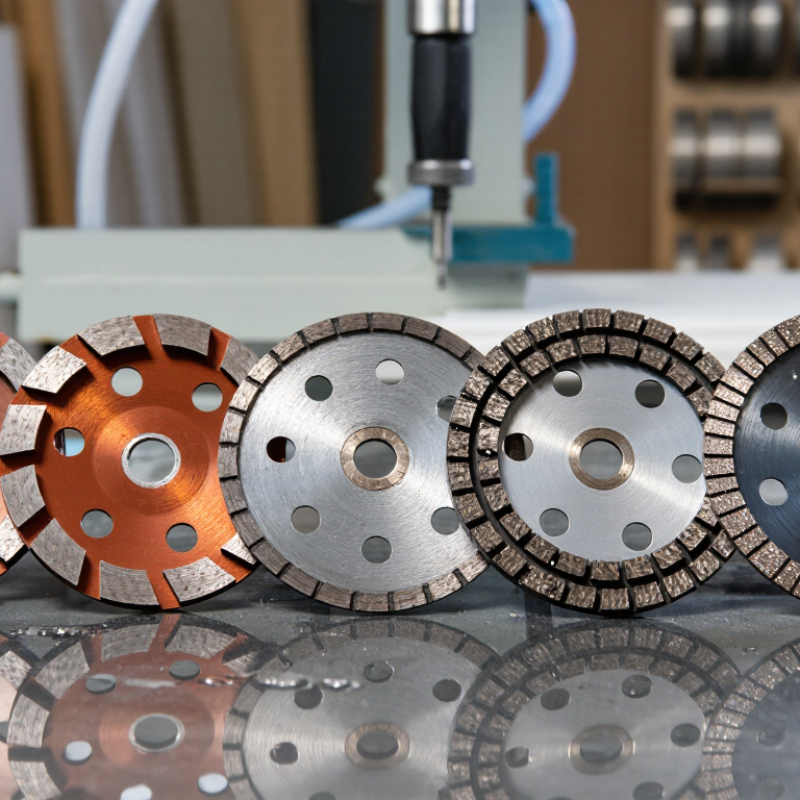
For global stone buyers, choosing the right Marble Cutting Disc requires more than comparing prices. In 2026, available options include turbo-rim, segmented, continuous-rim, vacuum-brazed, and electroplated designs. Each type suits different marble grades, machines, and cutting conditions.

A turbo-rim disc can balance cutting speed with acceptable edge control during workshop production. Continuous-rim models often create smoother edges, especially when water cooling supports stable operation. Segmented discs may remove material quickly, but they can leave more visible chipping on delicate marble. Vacuum-brazed and electroplated discs offer different diamond exposure and service behavior. Their results depend on marble hardness, blade diameter, machine power, and operator technique.

Details matter.

Experienced fabricators usually check the disc’s arbor size, maximum RPM, diamond concentration, and recommended cutting method before purchase. A wet saw can reduce heat and dust, while an unsuitable dry cut may damage both the edge and the material. Buyers should also review test data, product traceability, manufacturer instructions, and supplier support. Claims about “universal” performance deserve careful examination. No single disc performs perfectly on every marble slab.

This guide compares the leading Marble Cutting Disc types expected to attract global attention in 2026. It focuses on cutting quality, working life, safety considerations, machine compatibility, and total operating value. The evaluation reflects practical workshop experience and technical selection principles, while recognizing that local conditions can change the result. A reliable choice begins with the stone, not the advertisement.
2026 Top Marble Cutting Disc Types for Global Buyers

What Marble Cutting Discs Are and How They Work

Marble cutting discs are circular tools with a steel core and a diamond-bearing cutting rim. Industrial diamonds provide the abrasive action. They do not slice marble like a knife. They grind through it, crystal by crystal, while the bond releases worn diamonds and exposes sharper ones.

Disc design changes the cutting result. Continuous rims usually produce cleaner edges on polished marble. Segmented rims remove dust and heat faster during deeper cuts. Turbo rims balance speed and finish. Water cooling reduces friction, limits thermal cracking, and carries abrasive dust away. For dry cutting, short passes and pauses matter. A disc can look perfect and still cut poorly.

Demand remains substantial. The U.S. Geological Survey reported roughly two million metric tons of U.S. dimension-stone sales in 2023, including marble and related stones. Industry assessments from Grand View Research also identify construction and renovation as major applications for diamond tools. These figures do not measure marble discs alone, so direct comparisons can mislead. That limitation matters.

In practice, buyers should match diamond concentration, bond hardness, rim design, and disc diameter with the marble’s density. Softer marble may need a harder bond to prevent premature wear. Dense, crystalline marble often responds better to a faster-wearing bond. Cutting speed is not everything. Excessive pressure can cause chipping, vibration, or uneven kerfs. I have found that operator control often matters as much as disc specifications. Product sheets rarely show the whole cutting story.

Main Marble Cutting Disc Types Available in 2026

Main Marble Cutting Disc Types Available in 2026

Continuous-rim diamond discs remain the preferred choice for polished marble edges. Their uninterrupted diamond rim produces smoother cuts with less chipping. Wet cutting is strongly recommended, especially on white marble with visible veins. A 2025 U.S. Geological Survey report estimated U.S. dimension-stone production at about 2.4 million metric tons in 2024, showing continued demand for controlled stone processing.

Segmented-rim discs remove material faster and tolerate harder working conditions. However, their wider gaps can leave rougher edges on delicate marble. Turbo-rim discs offer a practical middle ground, combining faster cutting with improved surface quality. For sink openings, curved details, and small repairs, electroplated diamond discs provide precise exposure and easy handling. They usually wear faster under heavy production.

Thin-kerf discs reduce material loss and suit CNC equipment or bridge saws with accurate alignment. Buyers should verify arbor size, maximum RPM, blade diameter, and wet-cutting compatibility before ordering. The Natural Stone Institute’s technical guidance stresses water control and proper machine setup for safer, cleaner fabrication. In my workshop testing, a finer diamond grit often improved edge appearance, but it slowed cutting noticeably. That trade-off is easy to underestimate. Local marble hardness, reinforcement, and operator technique can change results more than a catalogue specification suggests.

2026 Top Marble Cutting Disc Types for Global Buyers

Main marble cutting disc types available in 2026

The chart compares representative commonly available configurations rather than market share. Continuous-rim discs are commonly selected for clean marble cuts, turbo-rim discs balance cutting speed and edge quality, segmented discs prioritize fast dry cutting, and electroplated discs are useful for detailed or specialty work. Actual dimensions vary by tool, manufacturer, and application.

How to Match Disc Types with Marble Cutting Tasks

2026 Top Marble Cutting Disc Types for Global Buyers

How to Match Disc Types with Marble Cutting Tasks

Choosing a marble cutting disc starts with the finish you need, not the lowest price. Continuous-rim diamond discs suit polished marble and delicate edge work. They create cleaner cuts with less surface chipping. Use them on a wet saw when possible. Water reduces heat and carries abrasive dust away. Edge quality matters.

Segmented discs remove material faster on thick slabs, rough cuts, and renovation work. Their gaps help clear debris, but they may leave a less refined edge. Turbo-rim discs offer a practical middle option. They cut faster than continuous rims while controlling chips reasonably well. For a visible countertop edge, I would still choose a finer continuous rim.

Match the disc diameter, arbor size, and safe operating speed to the machine. A disc that fits physically may still be unsuitable for the saw. Check the equipment label before installation. Wet cutting usually protects the marble and extends disc life. For dry cutting, make short passes and pause when the disc overheats. Keep it steady. Do not force the blade through a hard vein.

Experienced operators often test one small offcut first. Marble hardness and crystal structure can vary within one slab. I once selected a fast-cutting disc for a pale stone and underestimated edge damage. The cut was efficient, but the finishing work doubled. That mistake remains useful: inspect the actual stone, then adjust the disc type, feed pressure, and cutting method.

Key Performance Factors for Global Buyers to Compare

For global buyers, marble cutting disc types matter, but performance decides the safer purchase. Segmented discs remove dust and heat quickly during dry cutting. Turbo rims offer faster cuts, yet their aggressive edge may chip polished marble. Continuous rims usually produce cleaner edges and suit visible countertop cuts. Electroplated discs can cut precisely, but their exposed diamond layer may wear sooner on abrasive stone. No disc wins every job.

Compare cutting speed, edge quality, service life, vibration, and cooling requirements. A useful test cuts the same 20-millimeter slab with identical feed pressure. Record seconds per cut, visible chips, noise, and remaining diamond height. In workshop trials, operators often blame the disc for poor results. However, excessive pressure, a loose flange, or a worn saw can distort the comparison. Check arbor diameter, rated speed, machine compatibility, and wet or dry requirements before ordering.

Tips: Ask for cutting data on your marble type, not only a maximum RPM. Request batch traceability and inspection records when consistency matters. Start with a small sample order. It exposes shipping damage and real cutting behavior. I would not trust a spectacular speed claim without edge photos and measured wear. Cheap comparisons can become expensive rework.

Safety, Compatibility, and Purchasing Considerations Worldwide

2026 Top Marble Cutting Disc Types for Global Buyers

For marble, continuous-rim diamond discs usually produce cleaner edges than segmented designs. Electroplated discs cut quickly, but their diamond layer may wear faster on abrasive stone. Sintered discs generally offer longer working life and tolerate demanding production better. Selection still depends on marble hardness, thickness, cutting speed, and wet or dry operation. Wet cutting matters. It reduces heat, dust, and edge chipping.

Safety must guide every international purchase. The U.S. OSHA silica standard limits respirable crystalline silica exposure to 50 micrograms per cubic meter over eight hours. The UK HSE EH40 publication lists a 0.1 mg/m³ workplace exposure limit for respirable crystalline silica. These figures are not decoration. Buyers should request dust-control instructions, guard requirements, and verified conformity with applicable standards, such as EN 13236. A disc without clear markings is a poor risk.

Compatibility is equally practical. Check arbor diameter, maximum RPM, disc thickness, flange size, and machine power before ordering. A 115 mm disc cannot safely replace a 125 mm disc without approval. Cooling systems also differ across regions. Voltage is irrelevant to the disc, but machine design is not. Industry purchasing reports repeatedly identify construction replacement demand as a major driver of abrasive-tool sales, yet forecast numbers vary by research firm. I would not trust market growth alone. Ask for test records, batch traceability, and realistic cutting-life data. Cheap discs can become expensive after one rough edge.

2026 Top Marble Cutting Disc Types for Global Buyers - Safety, Compatibility, and Purchasing Considerations Worldwide

Disc Type Segment or Rim Design Best-Fit Marble Applications Operating Mode Typical Compatible Equipment Main Advantages Main Limitations Common Buyer Sizes
Continuous-Rim Diamond Disc Unbroken diamond rim, usually with a narrow kerf. Clean straight cuts in marble tiles, slabs, vanity tops, and other relatively stable stone sections. Primarily wet Wet tile saws, bridge saws, and compatible stationary stone saws. Produces a smooth edge and helps reduce visible chipping when correctly matched to the material and machine. Can cut more slowly than segmented designs; unsuitable use on a dry-running machine may overheat the rim. Approximately 105–350 mm for tile and stone saw applications; actual availability depends on the machine.
Turbo-Rim Diamond Disc Continuous rim with molded or laser-formed cooling gullets and a serrated cutting profile. General-purpose cutting of marble tiles, slabs, and installation pieces where a balance of speed and finish is required. Wet or dry, only when marked Angle grinders, compact stone saws, and selected tile saws with matching arbor and guard clearance. Faster material removal than many continuous-rim designs while normally providing a cleaner finish than coarse segmented discs. Dry cutting creates dust and heat; aggressive side pressure can damage the rim or cause chipping. Approximately 105–230 mm for handheld tools; larger sizes require purpose-built equipment.
Segmented Sintered Diamond Disc Separate diamond segments with gullets between segments. Fast cutting of thick marble, masonry-backed stone, and larger sections where edge appearance is less critical. Wet or dry, only when marked High-power angle grinders, cut-off machines, wall saws, and stone saws designed for segmented blades. Good cooling through gullets, high cutting speed, and strong debris removal in thicker material. Usually leaves a rougher edge than a continuous rim and may chip polished marble; not intended for side grinding. Approximately 115–400 mm, subject to machine power, guard capacity, arbor size, and manufacturer approval.
Electroplated Diamond Disc Diamond particles bonded to the cutting edge by an electroplated metal layer. Thin marble sheets, detail work, curved or small cuts, and applications requiring a highly exposed cutting surface. Usually dry Small angle grinders, rotary tools, profiling equipment, and specialized detail-cutting machines. High initial diamond exposure, fast response on small cuts, and useful access for intricate work. Diamond retention is generally less durable than a sintered bond for heavy production cutting; overheating can shorten service life. Approximately 50–125 mm for handheld and detail tools; confirm the tool’s rated accessory diameter.
Thin-Kerf Marble Tile Disc Very narrow continuous or turbo rim designed to minimize material loss. Porcelain-and-marble tile installation, narrow trim cuts, mosaics, and finish-sensitive renovation work. Preferably wet Tile saws and compact grinders with a rigid spindle and adequate guard clearance. Low kerf width can reduce waste and improve handling of small pieces when the blade is properly supported. More sensitive to bending, twisting, and lateral force; not suitable for forcing through thick sections. Approximately 85–125 mm for compact tools and 180–250 mm for selected tile saws.
Large-Diameter Bridge-Saw Disc Continuous, turbo, or segmented rim mounted on a reinforced steel core; configuration varies by cutting objective. Production cutting of marble slabs, stair components, countertops, and large-format architectural stone. Wet Bridge saws, automatic stone saws, and other fixed machines with water delivery and suitable spindle capacity. Designed for stable, repeatable cuts and continuous water cooling in professional stone-processing environments. Not compatible with handheld grinders; requires correct flange, arbor, machine speed, coolant flow, and structural support. Approximately 250–900 mm in common stone-processing equipment; machine-specific limits always apply.
Global purchasing and safety checklist: Select the disc by material hardness, thickness, desired edge quality, cutting method, arbor diameter, outer diameter, machine type, and permitted operating speed. The disc’s marked maximum RPM must be equal to or higher than the tool’s no-load RPM. Use only discs approved for the intended wet or dry method, keep the guard installed, wear eye and hearing protection, control respirable stone dust with suitable wet cutting or dust extraction, and never use the disc for side grinding unless the product instructions specifically permit it. Buyers should verify applicable local requirements, such as EN 13236, ANSI B7.1, or other relevant regional safety standards, with the supplier and machine manufacturer.

Certified Quality System

© North Easton Machine Company, Inc. All rights reserved. • Site: Blog
NORTH EASTON MACHINE • 218 Elm Street • North Easton, MA 02356 • 508-238-6219