
2026 Best Chemical Mechanical Seals for Global Buyers?
Choosing the right Chemical Mechanical Seals in 2026 requires more than comparing catalog prices. Global buyers face different chemical concentrations, operating temperatures, pressure ranges, and maintenance capabilities. A seal suitable for a water-treatment pump may fail quickly in a solvent, acid, or abrasive slurry. Small details matter.
This guide examines practical selection factors for international purchasing teams. It considers face materials, elastomer compatibility, spring design, cooling methods, flush arrangements, and shaft dimensions. It also reviews supplier experience, quality records, testing procedures, and documentation. Reliable manufacturers should provide material certificates, dimensional drawings, pressure limits, and clear installation instructions. Application support matters too. A knowledgeable engineer can identify risks that a product page may hide.
No universal seal is best. That assumption is easy to make, and often expensive. Published ratings may not reflect real service conditions, especially during startup, dry running, thermal cycling, or sudden pressure changes. Buyers should verify chemical data, inspect mating surfaces, and confirm spare-part availability before placing large orders. A short factory test can reveal leakage, vibration, or face-temperature problems. Still, testing cannot replace accurate field information.
This overview is designed for distributors, plant managers, OEMs, and maintenance professionals seeking dependable options for 2026. It balances technical performance with total ownership cost, delivery reliability, and after-sales support. The recommendations remain practical rather than absolute. Actual results depend on equipment design, installation quality, operating discipline, and honest communication between buyers and suppliers.
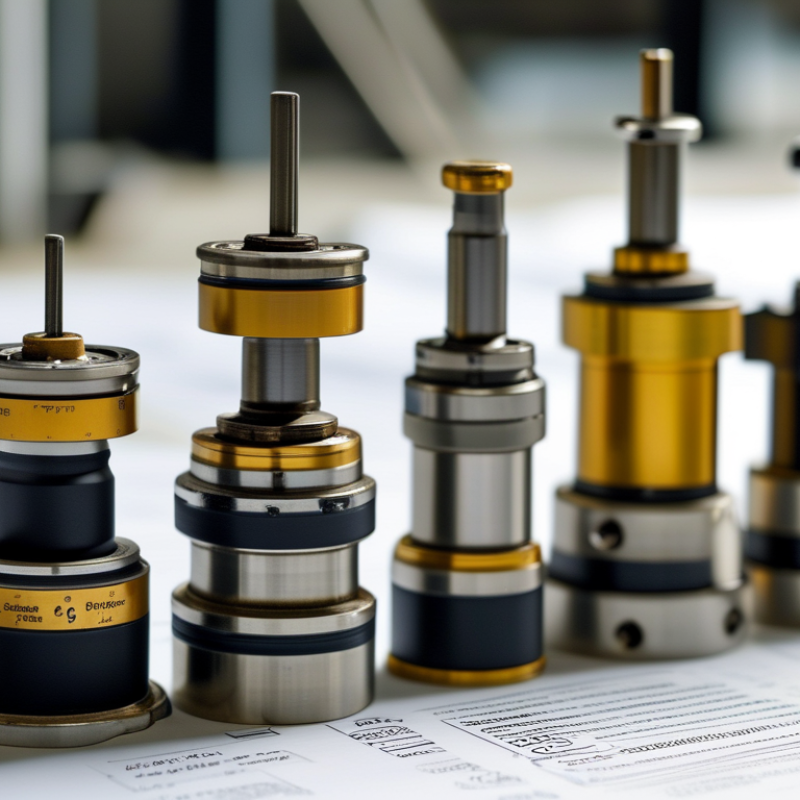
What Are Chemical Mechanical Seals?
Chemical mechanical seals are engineered barriers that prevent fluid leakage around rotating shafts. They commonly operate in pumps, mixers, reactors, and agitators. Unlike traditional packing, they use two extremely flat faces. One face rotates with the shaft. The other remains stationary inside the seal chamber.
A thin fluid film separates these faces during operation. This film reduces friction while limiting chemical escape. Seal materials must match the process fluid, temperature, pressure, and shaft speed. Silicon carbide suits abrasive or corrosive duties, while carbon often supports low-friction running. Elastomers also matter. A small incompatibility can cause swelling, cracking, or sudden leakage.
The American Petroleum Institute’s API 682 standard defines testing and selection practices for centrifugal pump seals in demanding services. The U.S. Department of Energy also reports that pumping systems can consume a significant share of industrial electricity, sometimes exceeding 20% in facilities. Poor seal alignment increases friction and can waste energy. It may also contaminate the surrounding area.
In field inspections, face damage often appears as fine scoring near the inner diameter. Dry running leaves a blue heat mark on metal parts. These details tell a clearer story than catalog ratings. Still, selection is not always perfect. Process chemistry can change after cleaning, dilution, or temperature shifts. Buyers should request compatibility data, leakage limits, pressure ratings, and documented test results before ordering. That evidence is more useful than a broad “chemical resistant” claim.

How Do Chemical Mechanical Seals Work?
A chemical mechanical seal prevents process liquid from escaping along a rotating shaft. It works through two extremely flat faces. One rotates with the shaft, while the other stays fixed in the housing. A thin liquid film separates them. This film reduces friction without creating a visible leak. Spring pressure and process pressure keep the faces together. Too much pressure can cause heat and wear. Too little pressure can allow leakage.
Behind the faces, secondary seals block fluid around the shaft or sleeve. Elastomers must match chemical compatibility, temperature, and movement. Metallic parts need resistance to corrosion and pressure cycling. In a real pump, alignment matters. Shaft runout, vibration, and dry running can quickly damage the faces. I have seen clean-looking installations fail because a flush line was blocked. Small details matter.
A controlled flush or barrier system may cool the faces and remove crystallizing solids. Its pressure must be selected carefully. Excessive pressure can contaminate the process or overload the seal. This point is often oversimplified. The seal is not a universal plug. Buyers should verify fluid concentration, temperature, pressure, speed, and equipment geometry with documented test data. Field records are useful, but they are not perfect. A seal that works in water may fail in a hot solvent. Selection should follow measured conditions, not catalogue assumptions.
Which Materials Suit Different Chemical Applications?
In 2026, chemical mechanical seal selection will depend more on fluid chemistry than equipment price. MarketsandMarkets’ 2024 report valued the global mechanical seals market at about USD 4.5 billion in 2023. It also forecasts steady growth through 2028. That growth reflects stricter leakage control and expanded chemical processing capacity.
For concentrated acids, silicon carbide faces offer strong corrosion resistance and stable wear performance. PTFE secondary seals suit many corrosive fluids, especially where temperature remains moderate. However, PTFE can creep under pressure. That detail is often overlooked. FFKM handles aggressive solvents and elevated temperatures, but its higher cost requires careful lifecycle calculation.
Alkaline solutions may suit EPDM, while hydrocarbon solvents usually require FKM or more chemically resistant compounds. For abrasive slurries, tungsten carbide faces can outperform softer carbon materials. They need clean flushing, though. Contaminated flush water can damage faces quickly. API 682 and ISO 21049 provide useful design guidance for process pumps, but neither standard replaces application testing. The U.S. Department of Energy’s Industrial Decarbonization Roadmap identifies chemicals as a major energy-intensive sector, making efficient pumps and reduced leakage increasingly important. Material compatibility charts help, but real mixtures, pressure cycling, and temperature changes can produce different results. Engineers should test a seal against the actual fluid, not only its chemical name. Small errors become expensive.
2026 Best Chemical Mechanical Seals for Global Buyers: Which Materials Suit Different Chemical Applications?
The chart presents an indicative suitability score from 1 to 5 based on general chemical-resistance characteristics of commonly used mechanical-seal materials. Silicon carbide and PTFE provide broad resistance, while elastomer selection should be verified against chemical concentration, temperature, pressure, shaft speed, and permeation requirements.
How Should Global Buyers Evaluate Seal Performance?
2026 Best Chemical Mechanical Seals for Global Buyers?
How Should Global Buyers Evaluate Seal Performance?
For global buyers, seal performance begins with operating evidence, not catalogue promises. Review fluid type, temperature, pressure, shaft speed, solids, and startup frequency. A seal handling clean water may fail quickly in abrasive slurry. Ask for test data from comparable service. Check leakage rate, face wear, and operating hours under controlled conditions. Field experience matters too. A pump starting ten times daily faces different stress than one running continuously. Small details decide reliability.
Tips: Build a written duty profile before comparing products. Confirm face materials, elastomer compatibility, spring design, and pressure limits. Request installation tolerances and inspection steps. Check performance during dry running or brief cavitation. Do not trust one impressive test result. Ask for results across several units. Review quality records, product traceability, and technical support response times. These details show whether performance is repeatable.
Global conditions also deserve practical testing. Dust, shipping delays, water quality, and local maintenance skills can influence service life. Evaluate the seal with the actual pump, not only a laboratory sample. Measure leakage after installation, then record vibration, temperature, and flush flow. Compare findings with agreed acceptance limits. Be honest about uncertainty. No seal is perfect. Some recommendations may need revision after the first inspection. That is useful engineering evidence, not necessarily failure. Reliable decisions combine verified data, qualified advice, and lessons from real operation.
Which Chemical Mechanical Seals Are Best for 2026?
The best chemical mechanical seals for 2026 will match the process, not simply the purchase price. Buyers should confirm fluid chemistry, temperature, pressure, shaft speed, and operating cycles. A seal exposed to concentrated acid needs different faces and elastomers than one handling alkaline cleaning fluid. Material compatibility must include start-up, shutdown, and contamination conditions. Small details matter.
For demanding chemical service, balanced cartridge seals with silicon carbide or tungsten carbide faces often provide strong wear resistance. Elastomers should suit the actual temperature range and chemical concentration. Double seals can protect sensitive fluids and reduce leakage risks when paired with a suitable barrier system. I have seen premature failures caused by dry running, poor flushing, and incorrect installation. The seal was not always the real problem.
Reliable buyers should request documented pressure limits, temperature ratings, leakage expectations, and test procedures. Independent testing records are more useful than vague claims. Check whether the design aligns with recognized industry requirements, such as ISO 21049 where applicable. Ask about spare parts, technician training, and inspection intervals before ordering. A local service plan can prevent long production delays. Yet no selection guide replaces field data. Process conditions can change faster than purchasing documents, and even a carefully specified seal may need revision after the first operating season.
| Mechanical Seal Type | Primary Face Materials | Typical Chemical Compatibility | Typical Temperature Range | Typical Pressure Capability | Typical Speed Capability | Recommended Applications | Relative Chemical Resistance | Key Selection Considerations |
|---|---|---|---|---|---|---|---|---|
| Carbon vs. Silicon Carbide | Resin-impregnated carbon stationary face with silicon carbide rotating face | Water-based chemicals, dilute acids, dilute alkalis, solvents, and many general process fluids | Approximately -20°C to 180°C, depending on elastomer and equipment design | Commonly up to approximately 20 bar in standard arrangements | Commonly suitable for peripheral speeds up to approximately 20 m/s | General chemical pumps, water treatment, light-duty process service, and utility systems | ★★★★☆ | Good general-purpose performance. Carbon may be unsuitable for strongly oxidizing fluids or abrasive slurries. |
| Silicon Carbide vs. Silicon Carbide | Silicon carbide against silicon carbide, commonly with secondary elastomer seals | Strong acids, many alkalis, corrosive chemicals, high-purity fluids, and abrasive process liquids | Approximately -30°C to 200°C, subject to elastomer and thermal conditions | Commonly up to approximately 25 bar, depending on seal design and operating stability | Commonly suitable for peripheral speeds up to approximately 25 m/s | Corrosive chemical transfer, wastewater, crystallizing fluids, and fluids containing fine solids | ★★★★★ | Excellent hardness, wear resistance, and corrosion resistance. Brittle faces require clean installation and proper alignment. |
| Tungsten Carbide vs. Silicon Carbide | Tungsten carbide against silicon carbide | Abrasive chemicals, slurries, contaminated liquids, and fluids with suspended solids | Approximately -20°C to 180°C, depending on the binder, elastomer, and design | Commonly up to approximately 25 bar in engineered seal arrangements | Commonly suitable for peripheral speeds up to approximately 20 m/s | Abrasive chemical processing, mineral slurries, pigments, and solids-bearing liquids | ★★★★★ | Strong resistance to abrasion and impact. Chemical compatibility should be checked because some carbide binders can be attacked by specific chemicals. |
| Carbon vs. Ceramic | Resin-impregnated carbon against alumina ceramic or reaction-bonded ceramic | Clean water, mild chemicals, dilute detergents, and non-abrasive process liquids | Approximately -20°C to 150°C, depending on the elastomer and seal construction | Commonly up to approximately 12 bar in standard pump applications | Commonly suitable for peripheral speeds up to approximately 15 m/s | Low-cost chemical pumps, cooling-water systems, and general industrial circulation | ★★★☆☆ | Cost-effective for clean fluids. It is less suitable for abrasive, highly corrosive, or thermally demanding service. |
| Tungsten Carbide vs. Tungsten Carbide | Tungsten carbide against tungsten carbide | Abrasive liquids, particle-loaded chemicals, slurry, and high-wear process fluids | Approximately -20°C to 180°C, depending on the material grade and elastomer | Commonly up to approximately 30 bar in specially engineered designs | Commonly suitable for peripheral speeds up to approximately 25 m/s | High-wear chemical processing, slurry circulation, and heavy-duty pump service | ★★★★☆ | Very good wear and impact resistance. The exact carbide grade and binder chemistry are important in corrosive service. |
| Diamond-Coated Face Pair | Diamond-coated silicon carbide or tungsten carbide faces | Highly abrasive fluids, fine solids, difficult slurries, and selected corrosive chemical mixtures | Approximately -20°C to 180°C, subject to coating system and secondary seals | Commonly up to approximately 25 bar, depending on the seal arrangement | Commonly suitable for peripheral speeds up to approximately 25 m/s | Severe abrasion, high-value process fluids, and applications where extended seal life is important | ★★★★★ | Outstanding wear resistance but generally higher cost. It requires correct face loading, lubrication, cooling, and installation control. |
| Double Mechanical Seal | Material pairing selected according to the process fluid; commonly carbon, silicon carbide, or tungsten carbide | Highly toxic, volatile, flammable, crystallizing, or environmentally sensitive chemicals | Approximately -20°C to 200°C, depending on the barrier system and elastomer | Commonly up to approximately 30 bar on the process side in engineered systems | Commonly suitable for peripheral speeds up to approximately 20 m/s | Hazardous chemical service, emissions control, aggressive solvents, and fluids that must not contact the atmosphere | ★★★★★ | Provides improved containment and lubrication control. Requires a compatible barrier or buffer fluid system and additional monitoring. |
| Bellows Mechanical Seal | Metal bellows with carbon, silicon carbide, or tungsten carbide faces | Corrosive chemicals, high-temperature fluids, and services where dynamic O-ring movement should be avoided | Approximately -40°C to 350°C for selected metal-bellows designs; elastomer-bellows designs are lower | Commonly up to approximately 25 bar, depending on bellows geometry and operating conditions | Commonly suitable for peripheral speeds up to approximately 25 m/s | High-temperature chemical pumps, thermal fluids, and corrosive services with demanding elastomer conditions | ★★★★☆ | Reduces dynamic secondary-seal wear. Temperature, pressure, corrosion allowance, bellows fatigue, and face loading must be evaluated together. |
| Technical note: The temperature, pressure, and speed values shown are typical indicative ranges rather than universal ratings. Actual suitability depends on fluid concentration, viscosity, vapor pressure, solids content, shaft size, seal arrangement, elastomer compatibility, face loading, cooling or flushing, equipment design, and applicable industry requirements. Final selection should be verified against the seal manufacturer's technical data and the pump operating conditions. | ||||||||
Article Source:
NORTH EASTON MACHINE • 218 Elm Street • North Easton, MA 02356 • 508-238-6219